After a demanding day, it can be hard to switch from work mode to recovery. This short breathing and mobility reset offers a quiet transition without turning relaxation into another workout. You will move gently through the shoulders, spine and hips while keeping your breathing comfortable. No special equipment or flexibility is needed. Choose a calm space, wear clothes that let you move freely, and treat every step as an invitation rather than a target.
Settle in and make breathing easy
Sit on a chair or lie on your back with your knees bent, choosing whichever position feels most restful. Let your hands rest loosely and notice the support beneath you. Breathe in through your nose if comfortable, then allow the breath to leave slowly without forcing it. There is no need to take unusually deep breaths or follow a strict count. Spend about a minute noticing whether your jaw, hands or shoulders can soften as you exhale. If focusing on breathing feels unpleasant, return to normal breathing and simply notice the room around you.
Release tension around the shoulders
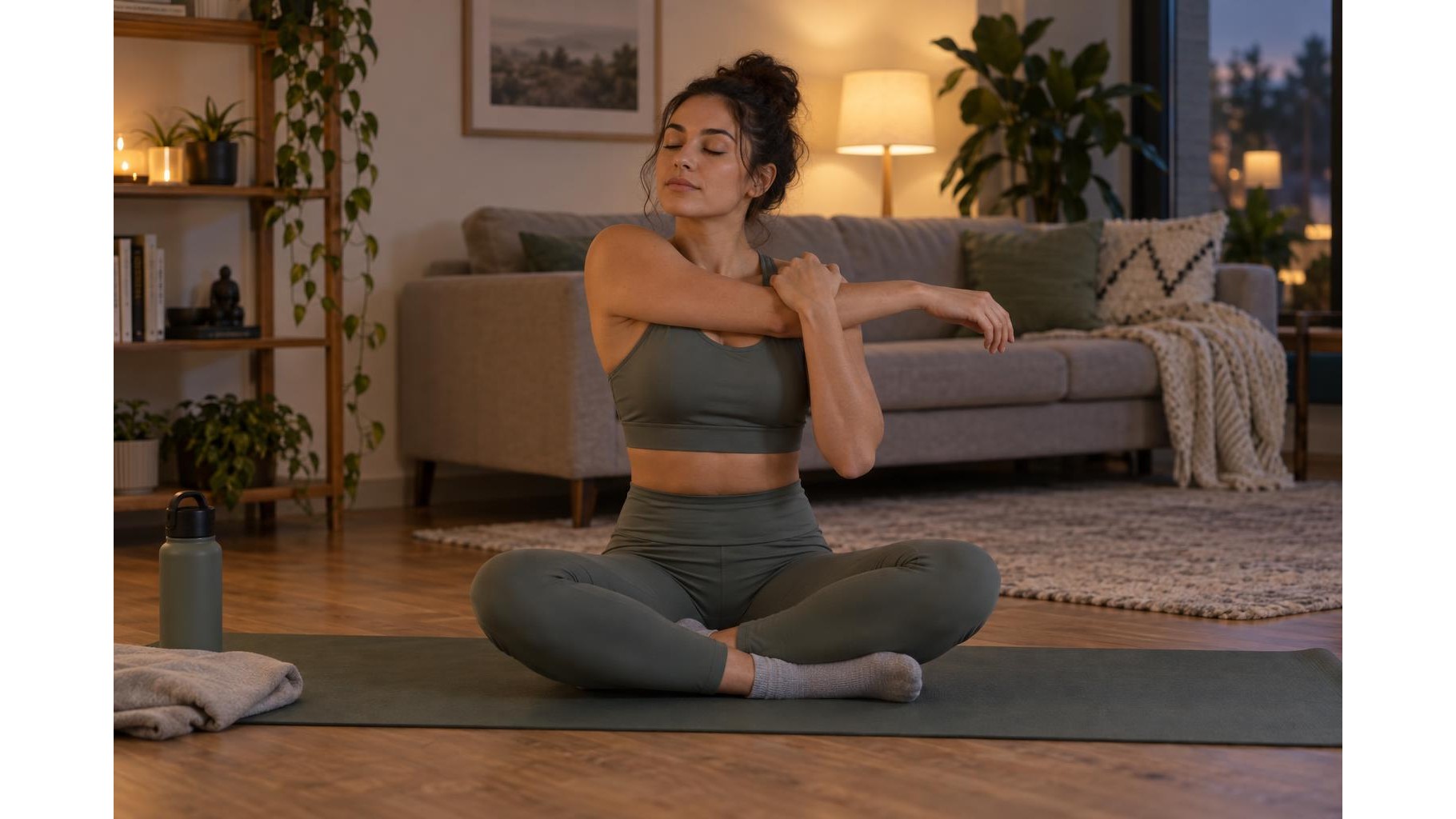
While seated or standing, let your arms hang comfortably. Slowly lift your shoulders a small distance towards your ears, then let them drop as you breathe out. Repeat a few times without squeezing or pulling. Next, make gentle shoulder rolls, moving up, back and down, then reverse direction if that feels smooth. Keep the range small and the neck relaxed. These easy shoulder movements are not stretches to push through; stop or reduce the motion if you feel pinching, pain, tingling or dizziness.
Give the spine a little movement
Sit near the front of a chair with your feet supported. As you breathe in, gently lengthen through the crown of your head and let your chest open a little. As you breathe out, allow your upper back to round slightly, keeping your movement comfortable. Continue for five or six unhurried cycles. You can also turn your chest a little to one side, return to centre, and repeat on the other side. Keep your hips facing forward and avoid pulling yourself deeper with your hands. This is a gentle spine mobility break, not a test of how far you can rotate.
Move the hips without forcing a stretch
Stay seated and place both feet flat on the floor. Slowly shift a little weight from one sitting bone to the other, keeping the movement small and easy. Then slide one foot a short distance forward and back, noticing the hip move without leaning or straining. Change sides. If you prefer to stand, hold a stable chair or wall and gently shift your weight from one leg to the other. There is no need to chase a deep hip stretch. Aim for relaxed, controlled movement and steady balance.
Keep the reset low-pressure
Spend another minute sitting or lying comfortably, letting your breathing return to its natural rhythm. You can repeat any movement that felt soothing, skip anything that did not, or finish early. Keep effort light enough that you could speak easily throughout. Stop immediately if you experience pain, unusual shortness of breath, numbness, dizziness or symptoms that concern you; seek appropriate professional advice when needed. The goal is to leave feeling settled, not to complete a prescribed number of repetitions.
Use this simple routine as a flexible bridge between a stressful day and rest. A few comfortable breaths and small movements can help you check in with your body without adding another demand to your schedule. Keep the pace unhurried, adjust the positions to suit you, and remember that doing less—or resting instead—is a valid recovery choice.