Modern fitness culture makes it feel like every home workout needs a shelf of powders and pills. Yet for many people, a smart, food-first home training plan can fully support progress without any supplements. By checking your diet quality, sleep, stress and training volume, you can decide whether you truly need extras, or whether your kitchen already holds everything required to build muscle, lose fat and boost performance.
How to know if you really need supplements
Before buying anything, audit your basics. If you consistently hit around 1.6–2.0 g of protein per kg of bodyweight, include a mix of wholegrains, fruit, vegetables, nuts and healthy fats, and drink enough water, your body likely has what it needs for typical home workouts. Ask: Am I actually training hard three to five times per week? Do I have any diagnosed deficiencies (like low iron or vitamin D) from a healthcare professional? If your training is moderate and your diet is varied, most classic fitness supplements move from “essential” to “optional convenience” rather than a must-have.
Checklist: is your diet pulling its weight?
Use this quick checklist before reaching for powders. In a normal day, do you eat 20–40 g of protein at each main meal (for example eggs or Greek yoghurt at breakfast, chicken, tofu or lentils at lunch and dinner)? Do you get at least five portions of fruit and veg, plus some wholegrains like oats, brown rice or wholemeal bread for slow-release carbohydrates? Are you including healthy fats from olive oil, nuts, seeds or oily fish a few times per week? If you can tick most of these boxes on at least 5 days out of 7, your nutrition is likely strong enough to support muscle recovery, energy and general health without supplementation.
Checklist: sleep, stress and training volume
Supplements cannot fix a lifestyle that undermines your progress. For sleep, aim for 7–9 hours per night, with a regular bedtime and wake time, limited screens before bed and a cool, dark room. For stress management, build in daily decompression: short walks, stretching, breathing or journaling. Regarding training volume, most home trainees progress well with three to five sessions per week of 30–60 minutes, combining strength and cardio. If you are under-sleeping, constantly wired, or training sporadically, powders will not compensate. Focus on these habits first; once they are solid, supplements become a fine-tuning tool instead of a crutch.
Food-first sample day for home training
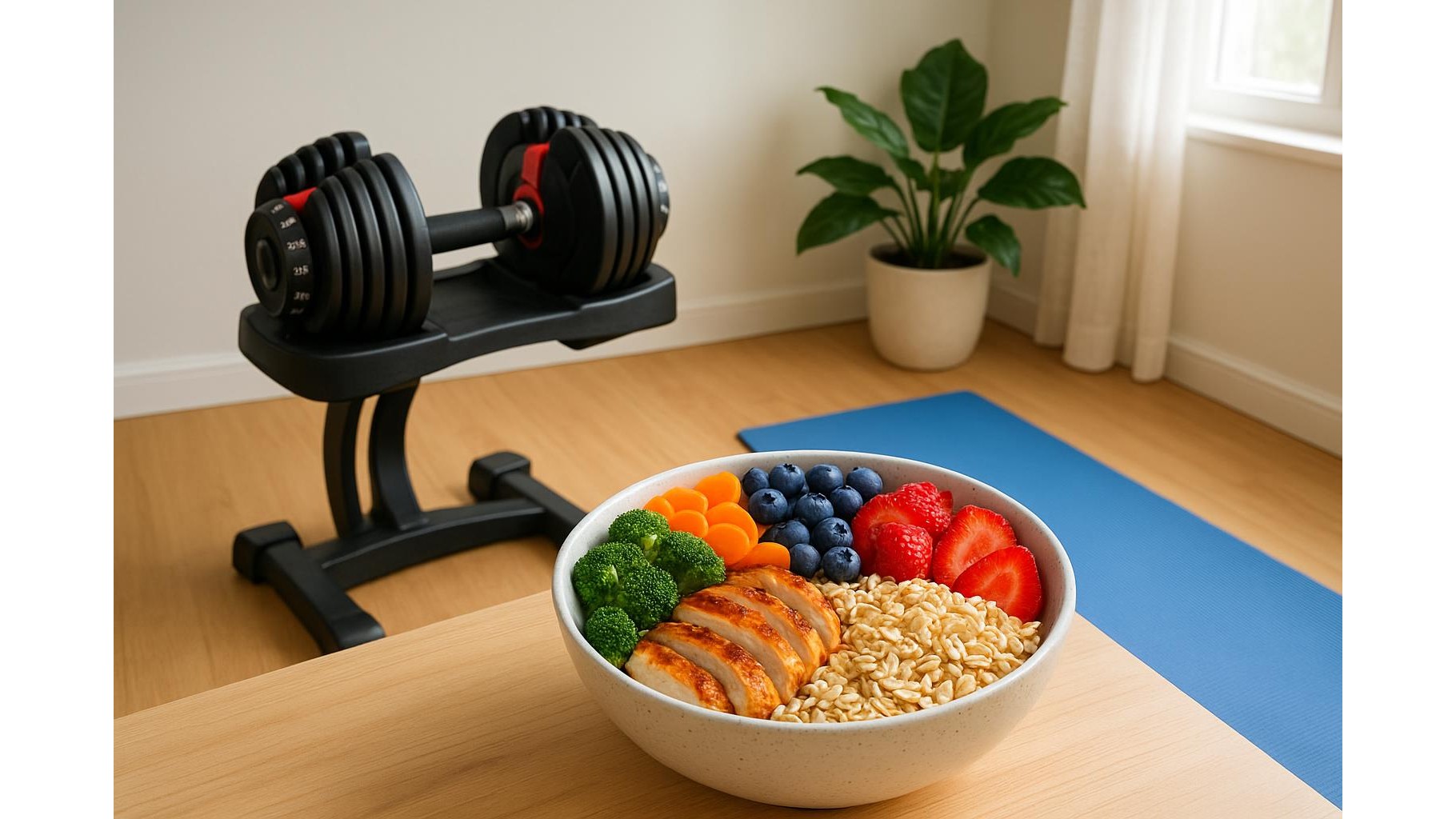
Here is an example of a food-first day that supports a tough home workout without any pills. Breakfast: oats cooked with milk, a spoon of peanut butter, a handful of berries and some Greek yoghurt for extra protein. Lunch: wholemeal pita stuffed with hummus, grilled chicken or chickpeas, salad leaves, tomatoes and olive oil. Pre-workout snack: a banana and a handful of mixed nuts for quick and slow carbs plus healthy fats. Post-workout meal: stir-fry with tofu or lean beef, mixed vegetables and brown rice. Evening snack: cottage cheese or skyr with fruit. This pattern covers protein, complex carbs, fats and micronutrients with no need for a shaker bottle.
When supplements might actually help
There are situations where supplements can be genuinely useful rather than hype. If you travel frequently, struggle to eat enough protein, or follow a restricted diet (for example vegan with low calorie intake), a simple protein powder can make hitting your targets easier. If blood tests show low vitamin D, iron or B12, targeted supplementation supervised by a professional makes sense. Very advanced athletes with high training loads may also benefit from evidence-backed options like creatine or caffeine. Even then, view them as the final 5–10% on top of a solid foundation, not the core of your plan.
In summary, a well-designed food-first home training plan built on whole foods, consistent sleep, stress control and sensible training volume is enough for most people to achieve impressive results without any supplements. By using clear checklists for diet quality, recovery and lifestyle habits, you can decide whether you truly need powders and pills or just more structure in your meals. Start by optimising what is already on your plate and in your routine; only then, if genuine gaps remain, consider carefully chosen supplements as optional support.