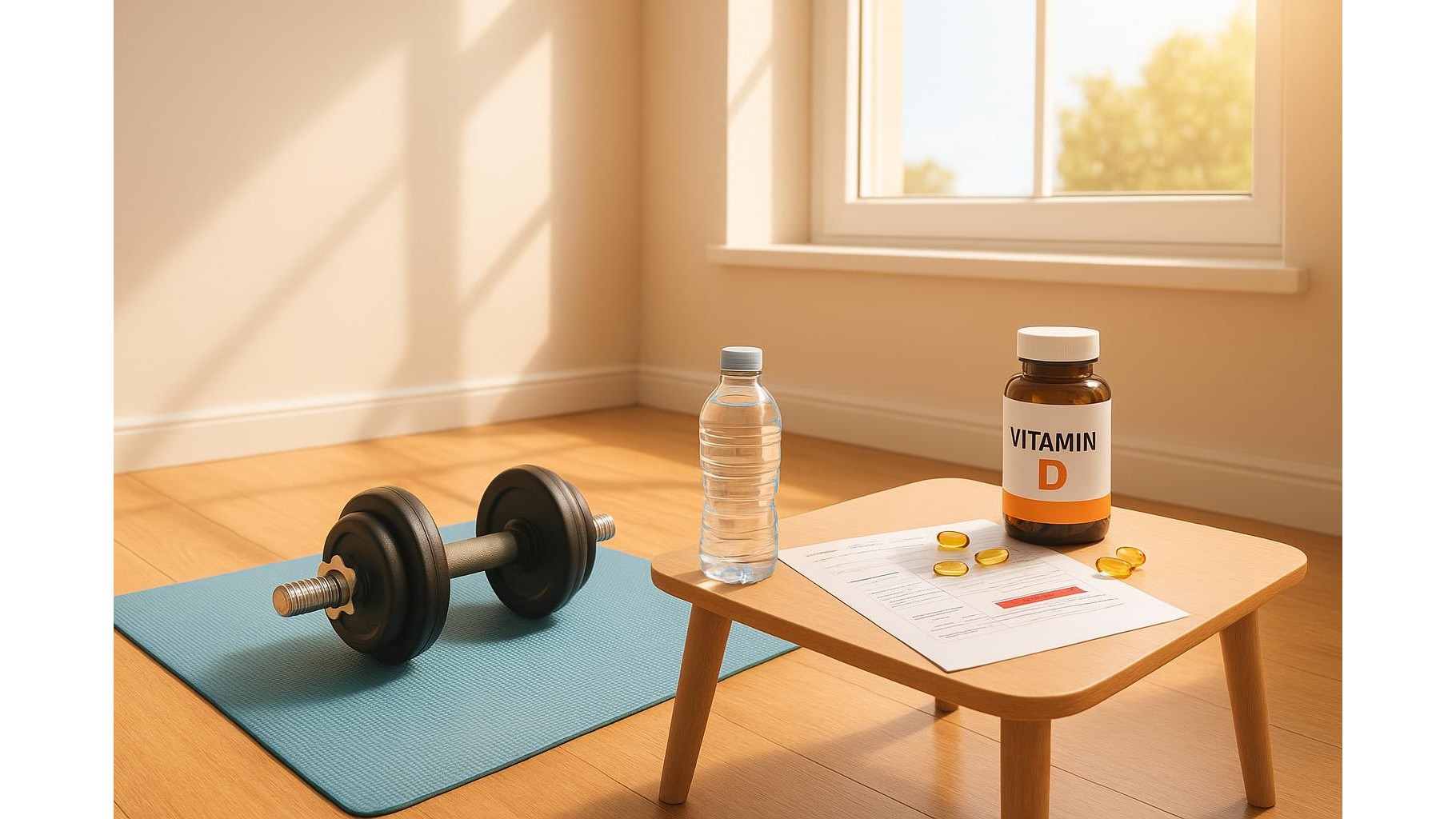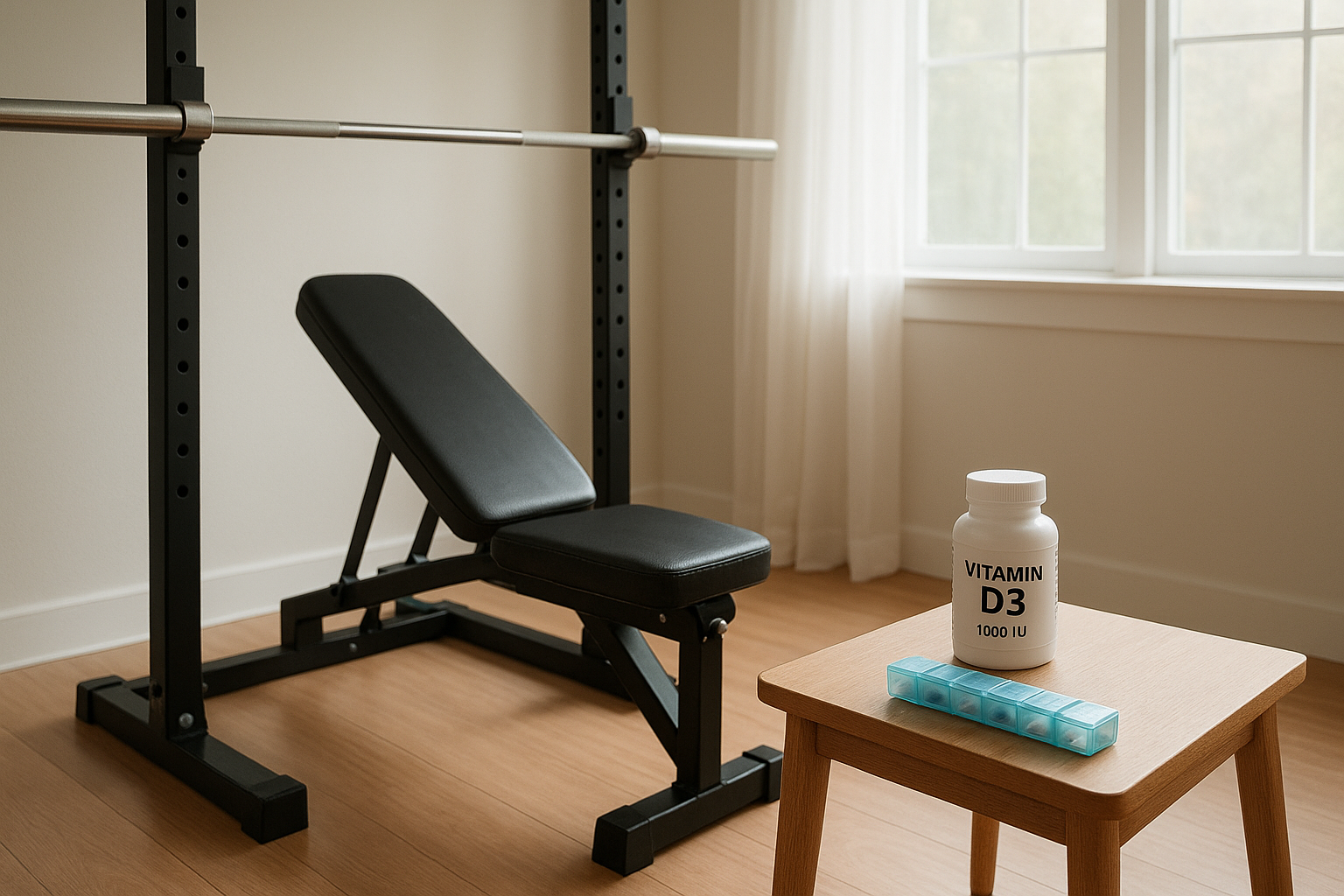
Spending most of your training life inside a home gym is great for consistency, but it often means less sun exposure and a higher risk of low vitamin D. This hormone‑like vitamin plays key roles in muscle function, bone strength, and immune support – all crucial if you want to lift heavy, recover well and avoid unnecessary setbacks. In this guide we look at what the science says about vitamin D for indoor athletes, how much you really need, when to test your blood levels, and how to use supplements safely.
Table of contents
Why vitamin D matters if you train indoors
Vitamin D is mainly produced in your skin when exposed to UVB sunlight. If you train in a garage, spare room or commercial gym and commute in the dark, your natural production can be very low, especially in autumn and winter at northern latitudes like the UK. Low vitamin D is linked with reduced muscle strength, poorer power output, increased injury risk and even more frequent respiratory infections. For lifters and endurance athletes alike, that can mean stalled progress, more deloads than necessary and more sick days away from your programme.
Key health and performance benefits
For home trainees, the most relevant benefits of adequate vitamin D status are its effects on bones, muscles and immunity. Vitamin D helps your gut absorb calcium and phosphorus, supporting bone mineral density – important if you are routinely loading your skeleton with heavy squats, presses and jumps. At the muscle level, research suggests vitamin D receptors influence fast‑twitch fibres, neuromuscular function and recovery, which may contribute to better strength gains when deficiency is corrected. On the immune side, adequate levels are associated with fewer colds and flus, helping you stick to your training plan more reliably across the year.
How much vitamin D do indoor athletes need?
General public guidelines in many countries suggest around 400–800 IU (10–20 µg) of vitamin D3 daily, but for people who get minimal sun exposure, many sports nutrition experts consider 1000–2000 IU a reasonable maintenance range, especially in winter. The actual requirement depends on your baseline blood level, body weight, skin tone and where you live. Darker skin, higher body fat and more northerly latitudes all increase the risk of deficiency. Extremely high intakes (for example, 10,000 IU per day for months) can be harmful, so more is not always better. Think in terms of achieving a healthy blood level, not chasing mega doses.
Blood tests: when they make sense
The most accurate way to individualise your intake is a blood test for 25‑hydroxyvitamin D [25(OH)D]. This is useful if you train mostly indoors, rarely see the sun, or have symptoms like frequent illness, bone pain or unusual fatigue. Testing in late winter often reveals your yearly low point. Many experts consider values around 75 nmol/L (30 ng/mL) or slightly higher as a good target for active people, while very low values may justify a temporary loading dose under medical supervision. If that is not accessible, a practical alternative for most indoor trainees is a conservative daily supplement in the 1000–2000 IU range, monitored over time with your healthcare provider when possible.
Choosing and using a vitamin D supplement
For most home athletes, a simple vitamin D3 capsule or softgel taken with a meal that contains some fat is sufficient to support levels through the darker months. Look for clear labelling of dose in IU and micrograms, third‑party testing where available, and avoid products that bury vitamin D in complex proprietary blends. Pairing vitamin D with other basics – such as adequate protein, omega‑3 fats and good sleep – will do far more for your performance than chasing exotic boosters. Remember that supplements are there to fill a gap in sun exposure and diet; they do not replace smart programming, progressive overload or good recovery habits.
Putting it all together in your home gym routine
If you spend most of your training life indoors, managing vitamin D is a low‑effort, high‑impact habit. Aim to get some direct daylight exposure on your skin when weather and schedule allow, especially in spring and summer. In the darker months, consider a moderate daily D3 supplement, particularly if you live in northern regions or train before sunrise and after sunset. When possible, confirm your status with a blood test and adjust your intake accordingly with professional guidance. By treating vitamin D like any other part of your training plan – measured, consistent and evidence‑based – you support stronger bones, better muscle function and a more resilient immune system, helping you make the most of every session in your home gym.
In summary, vitamin D is a quiet foundation of strength, health and recovery for indoor athletes. You do not need extreme doses or complicated stacks; you need awareness of your sun exposure, an understanding of safe intake ranges and, ideally, occasional blood testing. Combined with smart training and nutrition, that is enough to keep your performance progressing steadily, season after season.