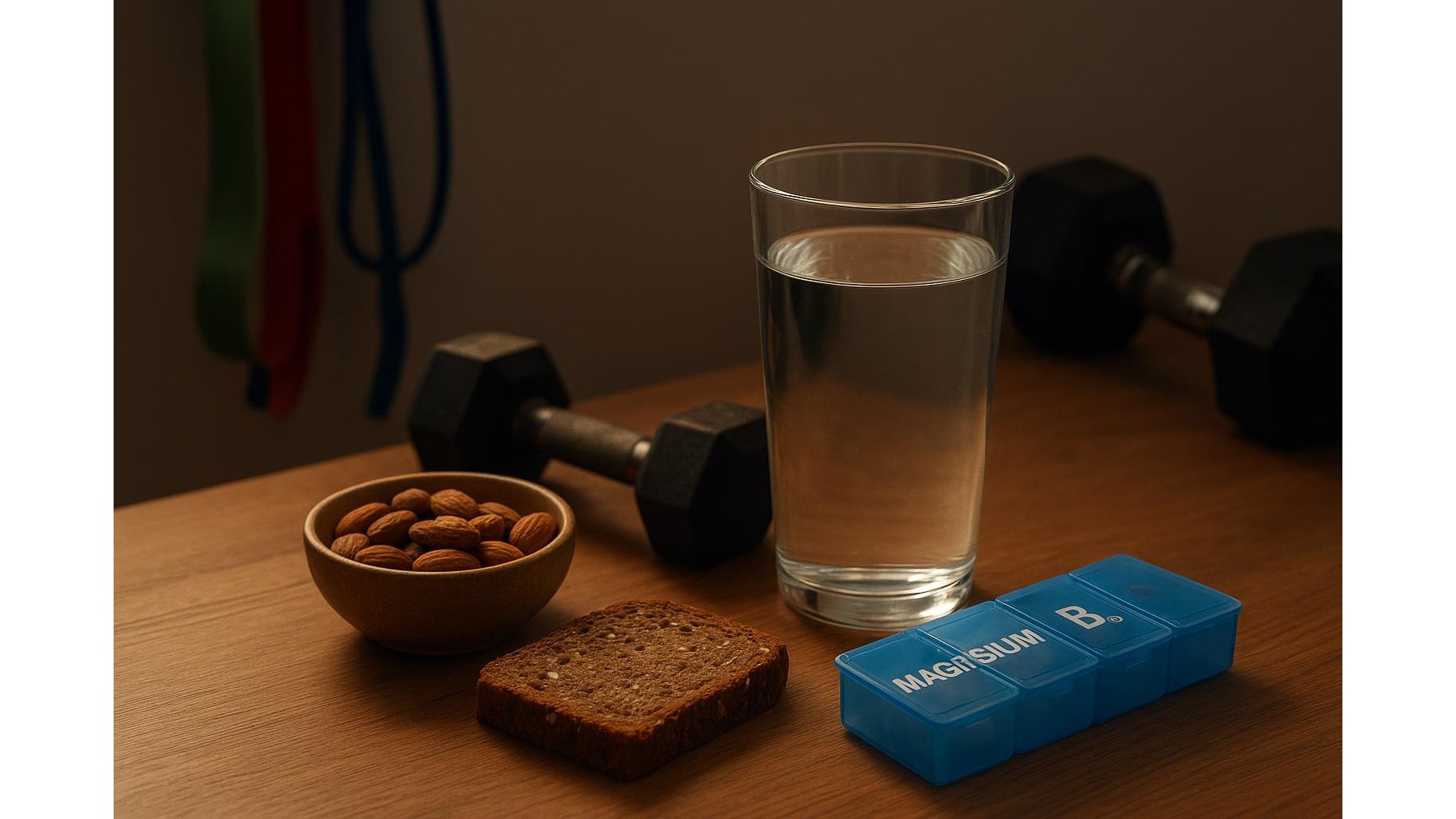
Training consistently in your home gym is great for strength, mood and long‑term health. But many home athletes still struggle with night‑time cramps, poor sleep and post‑workout tension. One of the most common supplement tips is to use vitamin B6 and magnesium together. In this article we look at what current science actually says, realistic benefits for people who train at home, how to use food first, and when a targeted supplement can make sense.
Why magnesium and vitamin B6 matter for home training
Magnesium is involved in more than 300 enzymatic reactions, including muscle contraction and relaxation, energy production (ATP) and nervous system regulation. If your intake is low, you may notice twitching, fatigue and difficulty winding down after late workouts. Vitamin B6 supports the metabolism of amino acids and glycogen and helps produce neurotransmitters such as serotonin and GABA, which influence mood and sleep. For home athletes who work all day and train in the evening, this combo is interesting because it targets exactly the systems that are under pressure: muscles, nerves and recovery. However, deficiency is not automatic just because you train; it depends on diet quality, stress load, sweat losses and total calorie intake.
What the research really says about cramps and sleep
Evidence on magnesium for muscle cramps is mixed. Some studies in older adults and pregnant women show a modest reduction in nocturnal leg cramps, while others find no clear benefit. In athletes, data are limited, but there is a plausible mechanism: magnesium helps muscle fibres relax and may reduce excessive nerve excitability. For sleep, low magnesium status is associated with poorer sleep quality and more awakenings, and some trials in people with insomnia show improvements when deficiency is corrected. Vitamin B6 appears to support the synthesis of calming neurotransmitters and can slightly shorten sleep onset in those who are low, but mega‑doses do not turn it into a sleep pill. Overall, the combo seems most useful if your diet is marginal and you recognise signs like frequent twitching, low mood, difficulty relaxing and night cramps, rather than as a miracle fix for every problem.
Food first: how to cover B6 and magnesium with your diet
Before adding supplements, it is worth optimising your home‑friendly food choices. Good magnesium sources include whole grains (oats, whole‑wheat pasta, brown rice), nuts and seeds (almonds, cashews, pumpkin seeds), legumes (lentils, chickpeas, black beans) and dark leafy greens. For a home athlete, a bowl of oatmeal with peanut butter at breakfast and a lentil‑based dinner already covers a large part of daily needs. Vitamin B6 is abundant in poultry, fish, potatoes, bananas and fortified cereals. If you are cutting calories to lose fat, you may unintentionally reduce these foods, increasing deficiency risk. Building each meal around a protein source, a whole‑grain carbohydrate and some nuts or seeds is a practical strategy to support performance, recovery and micronutrient intake without relying solely on pills.
Safe dosages, timing and who should be careful
For most active adults, typical supplemental intakes of around 200–300 mg of elemental magnesium per day and 1.4–5 mg of vitamin B6 are considered within a safe range when diet is also supplying some. Higher B6 doses (50–100 mg and above) taken for long periods can cause nerve issues and tingling, so more is not better. Many athletes prefer taking magnesium in the evening, 1–2 hours before bed, as some forms have a mild relaxing effect and may reduce post‑workout tension. To minimise gastrointestinal upset, start with a lower dose and take it with food. People with kidney disease or those on medications such as certain diuretics, proton‑pump inhibitors or antibiotics should always speak to a healthcare professional before using magnesium or B6 supplements, as interactions and accumulation are possible.
Practical tips for home athletes using B6 and magnesium
If you want to test the B6–magnesium combination, track your symptoms and training for at least two weeks. Note cramp frequency, sleep latency (how long you take to fall asleep), night awakenings and next‑day energy. Combine the supplement with good habits: adequate hydration with electrolytes on long or very sweaty sessions, a balanced post‑workout meal, and a consistent bedtime routine with screens off. Remember that many products also combine magnesium with zinc and other B vitamins; check labels carefully to avoid exceeding safe upper limits, especially for B6. If you notice no change in four to six weeks, the underlying issue may be training load, overall energy deficit or sleep hygiene, rather than a micronutrient gap.
Used intelligently, vitamin B6 and magnesium can be a useful tool in a broader recovery strategy for home athletes, especially when diet is patchy and stress is high. Science does not support miracle claims, but it does support correcting low intakes to help muscles relax, nerves settle and sleep become more restorative. Start with food, add a moderate‑dose supplement only if your lifestyle suggests you might benefit, and always consider the bigger picture of training programming, hydration and sleep habits when chasing better performance and fewer night‑time cramps.