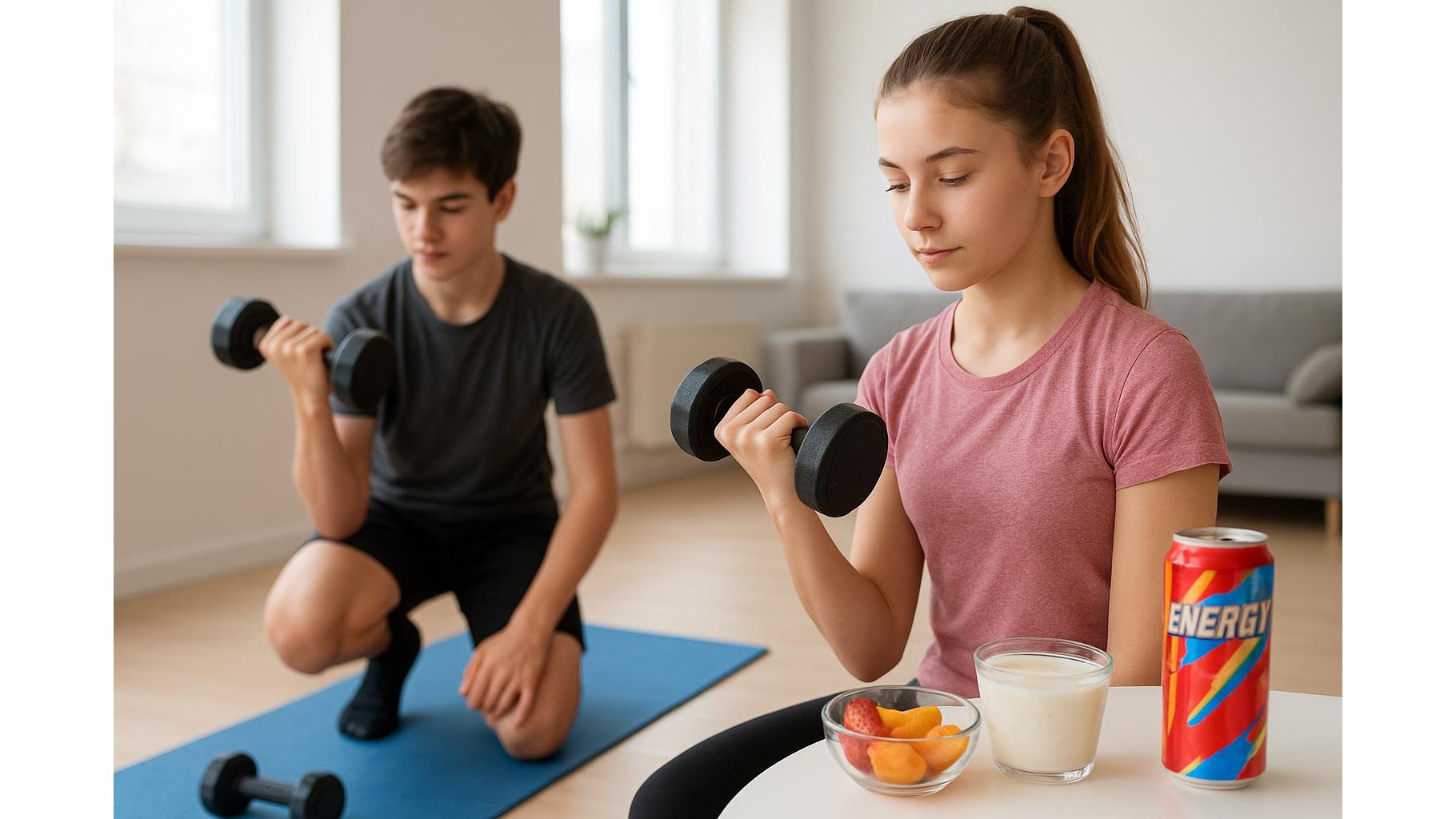
More teenagers are building a home gym routine, following online workouts and chasing performance gains. Alongside this, the market for pre-workouts, energy drinks and sports supplements is booming. Parents are often left wondering what is safe, what actually works, and when to say no. This article offers an evidence‑based look at common products for teens who train at home, plus practical guidelines and safer, food‑first alternatives.
Supplements vs real food: starting with the basics
For healthy teenagers, the foundation of performance is not a tub of powder but a balanced diet, sleep and smart training. Most young athletes can meet their needs through regular meals that provide carbohydrates for energy, protein for muscle repair and healthy fats for hormones and recovery. A plate that includes whole grains, lean meat or plant proteins, fruit, vegetables and water will support strength sessions in the home gym far better than a random mix of supplements. Parents should treat any product marketed as a shortcut with caution: in teens, excessive focus on pills and drinks can fuel body image issues, disordered eating and unrealistic expectations.
Energy drinks and pre-workouts: high risk, low reward
Many energy drinks and pre‑workout formulas are built around high doses of caffeine and stimulants, sometimes combined with sugar and other ingredients. For teenagers, this is a red flag: high caffeine intake is linked to sleep disruption, anxiety, rapid heart rate, elevated blood pressure and, in extreme cases, heart rhythm problems. Labels may hide caffeine content behind proprietary blends, so it is easy to exceed safe levels. At home, where there is no medical supervision, teens might mix multiple products or double-scoop before a workout. Parents should set clear rules: avoid stimulant-heavy pre‑workouts and strongly limit energy drinks, especially in combination with gaming, late‑night study or existing mental health challenges.
Protein powders: when they can be useful and how to stay safe
Unlike pre‑workouts, a basic protein powder can sometimes be a practical tool, for example when a teen struggles to eat enough protein from food due to appetite, time or dietary preferences. A simple whey, casein or plant‑based powder with minimal additives and no stimulants can help reach daily protein targets that support muscle growth and recovery from strength training at home. Parents should still prioritise real foods like milk, yogurt, eggs, beans, lentils, fish and poultry. If a powder is used, keep servings moderate (typically 15–25 g protein per shake), treat it as a snack rather than a meal replacement, and choose brands that are third‑party tested for purity, clearly labelled and free from claims that promise extreme or ultra‑rapid muscle gain.
Other popular supplements in teens: creatine, electrolytes and more
Beyond protein and energy drinks, teens often hear about creatine, BCAAs, fat burners and electrolyte drinks. Creatine monohydrate has good evidence in adults for strength and power, but research in adolescents is more limited and should be supervised by a healthcare professional or sports dietitian rather than self‑experimented at home. BCAAs and most “pump” products add little on top of a protein‑adequate diet. Electrolyte powders can help in hot conditions or very long sessions, but for typical teen home workouts, water plus a snack containing sodium (for example, a sandwich or lightly salted nuts) is usually enough. Parents should be especially wary of products that combine multiple ingredients, use phrases like “anabolic”, “hard‑core” or “extreme”, or hide doses behind proprietary blends.
Red flags for parents and safer, food‑first strategies
Parents should watch for several warning signs: a teen hiding purchases, obsessively following supplement influencers, skipping normal meals in favour of shakes, or showing mood swings tied to product use. Any supplement that claims to dramatically change body shape, promises fast fat loss or leans on sexualised or aggressive marketing is not appropriate for adolescents. A safer strategy is to build a simple routine: regular meals with protein at each one, planned snacks before and after training (fruit plus yogurt, a peanut butter sandwich, milk and cereal), hydration with water, and consistent sleep. If performance goals are ambitious, consider consulting a qualified dietitian or sports doctor before introducing any supplement. With this approach, the home gym becomes a place for sustainable progress, not risky experimentation.
In summary, most teenagers training at home do not need complex stacks of supplements or high‑caffeine energy drinks to get stronger or fitter. A focus on whole foods, good sleep, structured workouts and open parent‑teen communication delivers far better results and protects long‑term health. When a product is considered, check the label carefully, avoid stimulants, look for third‑party testing and remember that no powder replaces a balanced diet. Parents who stay informed and set clear boundaries can support their teen’s fitness journey while keeping safety front and centre.