Keeping your fitness supplements at home might seem straightforward, but their actual shelf life depends heavily on how you store them. Heat from radiators, sunlight through windows and bathroom humidity can all speed up degradation, changing taste, texture and sometimes even potency. Understanding how temperature, light and moisture interact with common products like whey protein, pre‑workout, creatine and vitamins helps you protect both your wallet and your results.
How expiry dates on supplements really work
On most tubs and bottles you will see either a “Best before” or an “Expiry” date. These are based on stability tests done under controlled conditions, usually cool, dry and protected from light. A best before date means the manufacturer guarantees full flavour, mixability and labelled potency up to that point if stored correctly. After that, the product is not automatically unsafe, but quality can slowly decline. An expiry date is stricter, especially for products like fat‑soluble vitamins or specialised formulations, where chemical breakdown and microbial growth are bigger concerns. If you store your supplements in a hot car, near a sunny window or in a steamy kitchen, you are essentially simulating “accelerated ageing”, so real‑world shelf life can be much shorter than the label suggests.
Heat: the silent enemy of potency and flavour
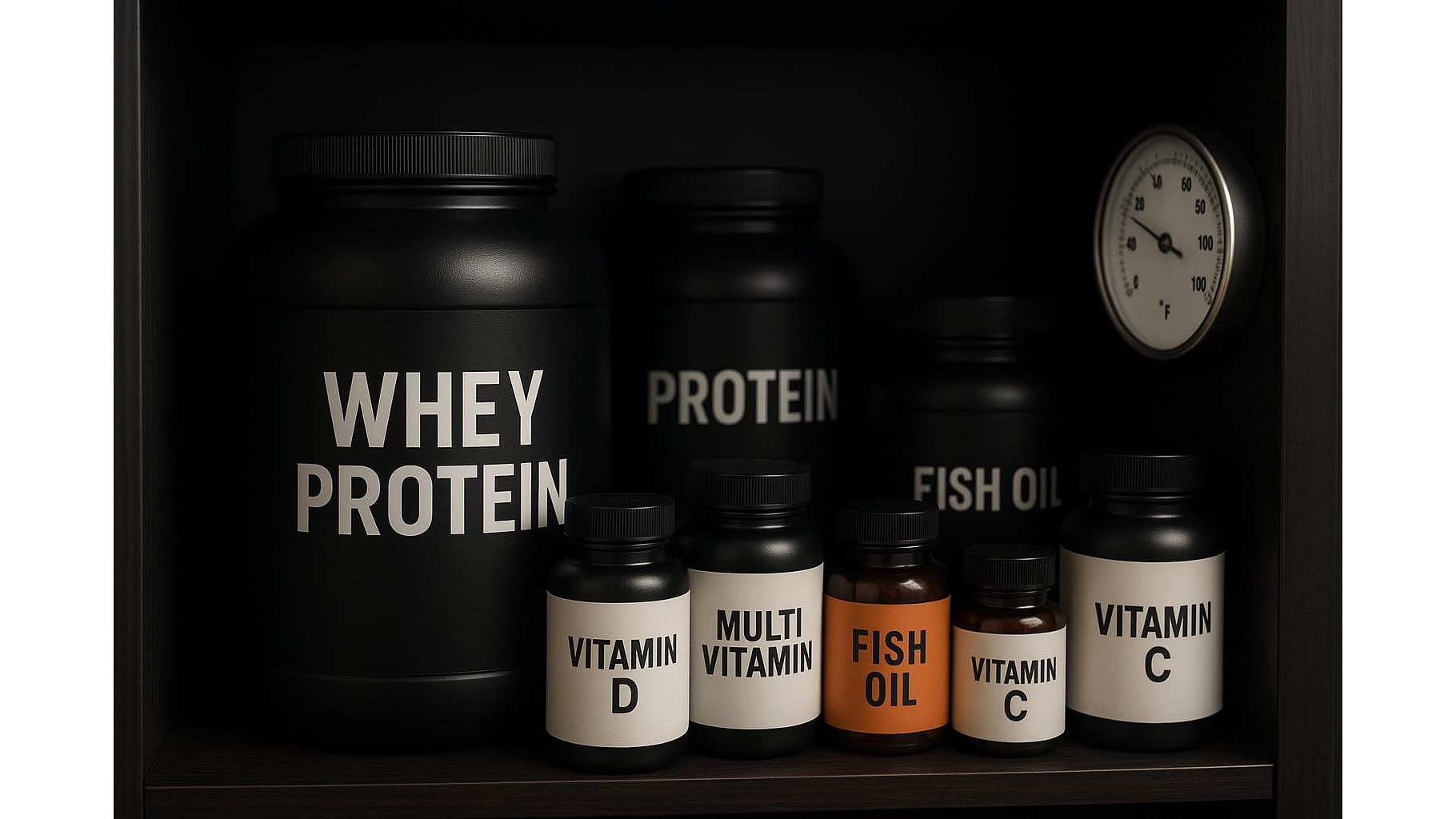
High temperature is one of the main reasons powders and pills deteriorate faster at home. Excess heat speeds up reactions like oxidation and, in protein products, the Maillard reaction, which can cause browning, clumping and off‑flavours. Storing your whey protein on top of a fridge, next to an oven or in a cupboard above a radiator exposes it to repeated temperature swings that damage delicate ingredients such as flavourings, sweeteners and vitamins. Capsules and softgels can become sticky, melt slightly or stick together when kept warm, making dosing inaccurate. To protect potency, keep containers in a cool, stable place: a bedroom wardrobe or interior cupboard is usually better than a hot kitchen. Never leave pre‑workout or creatine in a gym bag in the car – summertime interiors can exceed 40°C, aggressively reducing shelf life.
Light exposure and oxidation of sensitive ingredients
Light, especially UV and blue light, can trigger oxidation in sensitive nutrients. This is a particular problem for omega‑3 capsules, fish oil, certain vitamins and plant extracts, which can become rancid or lose activity when exposed to direct sunlight on a windowsill or glass shelf. Manufacturers often use dark or opaque bottles to reduce this risk, but that only works if you store them away from strong light sources. Clear tubs filled with brightly coloured pre‑workout powders may look appealing on open shelving, yet every hour of sun exposure increases oxidation and flavour breakdown. For maximum stability, keep light‑sensitive products in their original containers with the lid tightly closed, and place them inside a cupboard or drawer. If you decant into weekly pill organisers, choose opaque, not transparent, boxes and refill them more frequently rather than loading a full month at once.
Humidity, clumping and microbial risk in home environments
Humidity is the factor most people underestimate. Powders like whey, pre‑workout, greens powders and creatine are often hygroscopic, meaning they pull moisture from the air. In a humid bathroom, kitchen or laundry room, this can lead to clumping, hardening and caking, which not only affects scoop size but may also promote microbial growth if moisture becomes trapped. Tablets and capsules can absorb moisture too, causing them to swell, crumble or break apart in your pill organiser. Always close lids immediately after scooping, avoid storing tubs near kettles or dishwashers and consider adding fresh desiccant packs if the product did not include any. Signs that humidity has caused problems include a strong odour change, visible mould, unusually hard lumps and powders that no longer dissolve properly. When in doubt, err on the side of safety and discard suspicious products.
Practical storage rules for powders and pills at home
To extend the shelf life of supplements, think in terms of three rules: cool, dark and dry. First, choose a location away from ovens, radiators, direct sun and steamy showers; a bedroom or hallway cupboard often works best. Second, keep products in their original packaging with the seal intact until you open them, and always tighten the lid fully after each use to minimise air and moisture exposure. Third, if you like using pill organisers, fill them for just 7 days at a time and store the organiser away from sunlight and humidity. For powders, avoid using wet scoops, and do not breathe moisture into containers by hovering directly over them. Rotating your stock using a “first in, first out” approach helps you use older tubs before opening new ones, reducing the chances of long‑forgotten products degrading at the back of a shelf.
In summary, supplement shelf life at home is not fixed; it depends strongly on temperature, light and humidity in your environment. Expiry dates assume ideal conditions that many real homes do not provide, especially small flats with hot kitchens or bright, sun‑lit storage spots. By keeping your powders and pills cool, dark and dry, closing lids promptly and checking regularly for changes in smell, colour or texture, you can better preserve potency, flavour and safety. A bit of attention to storage habits protects your investment in home gym nutrition and helps ensure every scoop or capsule you take is as effective as the label promises.