
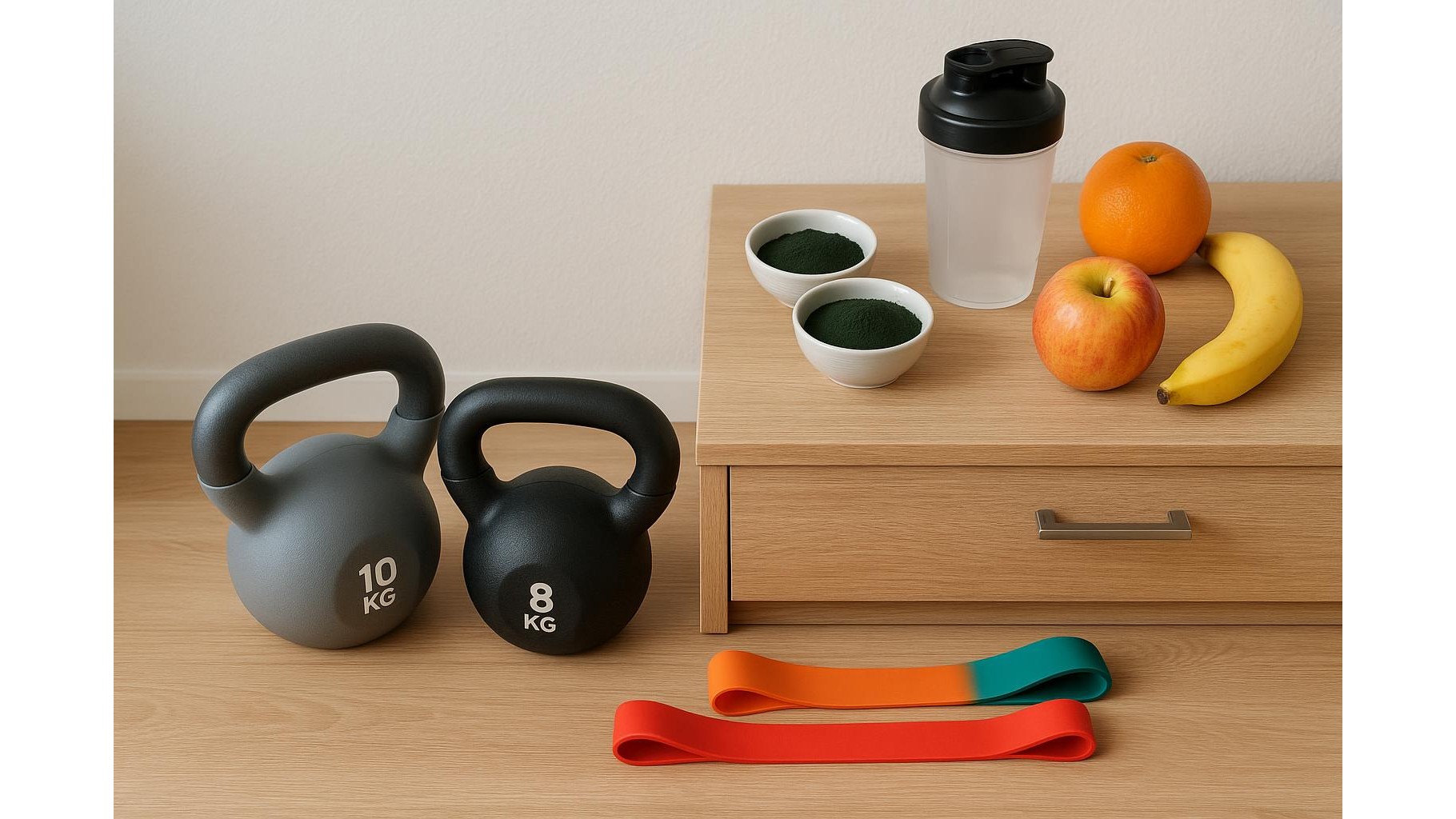
If you train at home and follow a plant‑forward diet, you have probably seen spirulina and chlorella green powders promoted as superfoods. These microalgae can provide concentrated plant protein, iron, and other nutrients, but they are not magic. Used correctly, they may support recovery and overall health, especially for vegans and vegetarians. Used carelessly, they can be expensive, unnecessary, or even contaminated. This guide explains what science actually says, how to dose and time them, and how to fit them into a realistic, food‑first strategy.
What spirulina and chlorella actually are
Spirulina is a blue‑green microalga often sold as a dried powder or tablets. It is naturally rich in protein (about 55–70%), some B vitamins, iron, and antioxidant pigments like phycocyanin. Chlorella is a single‑celled green alga with a tough cell wall; high‑quality products use “cracked” or “broken cell wall” chlorella to improve digestibility. Both are low‑calorie but nutrient dense, making them interesting as a small, concentrated top‑up to a largely plant‑based diet. They are not a replacement for balanced meals, but they can help fill small gaps when you train hard from your home gym.
Evidence‑based benefits for home athletes
For home athletes, the potential benefits of spirulina supplements include modest improvements in endurance performance, reduced oxidative stress, and better iron status in people who are low in iron. Some studies show small gains in VO2 max and time‑to‑fatigue when spirulina is taken consistently for several weeks. Chlorella has been studied for its possible roles in supporting immune function, helping manage
Dosing, timing and practical use
Most research on spirulina uses doses between 1–8 g per day. For most home athletes, 2–5 g daily is a reasonable, evidence‑based target. Chlorella is often dosed in the 2–5 g daily range as well. You can mix powders into a post‑workout smoothie, shake, or yoghurt bowl. Timing is flexible: daily consistency matters more than taking them exactly pre‑ or post‑training. Start low (e.g., 1 g spirulina plus 1 g chlorella) for a week to check tolerance, then gradually increase. Always drink enough water, as concentrated powders can cause mild digestive upset in some people when introduced too quickly.
Risks, contamination and quality control
Because spirulina and chlorella grow in water, poor‑quality products may contain heavy metals, microcystins (toxins from other algae), or bacterial contamination. This is why quality control is critical. Prefer brands that provide independent lab testing, organic certification, and clear information on origin. Avoid extremely cheap, unbranded bulk powders with no transparency. People with phenylketonuria (PKU), autoimmune conditions, or those taking immunosuppressant medications should talk to a healthcare professional before using these supplements. Possible side effects include digestive issues, headaches, or allergic reactions; stop use if they occur.
Fitting green powders into a food‑first strategy
Even for serious home athletes, a food‑first approach should come before any supplement. Prioritise total protein intake from beans, lentils, soy products, dairy or eggs (if tolerated), plus adequate calories, fruits, vegetables and whole grains. Use spirulina and chlorella as small, targeted additions: for example, adding 3 g spirulina to a fruit and soy‑yoghurt smoothie that already contains oats, seeds and a scoop of plant protein powder. This way, green powders can slightly boost protein, iron, and micronutrient density without distracting you from the basics. Remember that key nutrients for vegans, such as vitamin B12 and vitamin D, usually require separate, properly dosed supplements rather than relying on algae alone.
Who should consider spirulina and chlorella
Home athletes who are vegan or vegetarian, have low iron intake, or struggle to eat enough vegetables on busy days may benefit most from high‑quality green powders. They can also be useful for people with limited kitchen space who rely heavily on shakes and simple meals. However, those with good dietary variety, no nutrient deficiencies, and limited budget will often gain more from investing in whole foods than from any algae supplement. Before starting, review your current diet, training load and lab markers (such as iron and B12). If you decide to use spirulina or chlorella, choose reputable products, keep doses moderate, and monitor how you feel over 4–8 weeks.
In summary, spirulina and chlorella can be smart, targeted tools for home athletes, especially plant‑based trainees, when used as part of a solid nutrition foundation. They offer concentrated protein, iron and phytonutrients, along with modest performance and health benefits in some contexts. At the same time, they carry contamination risks and cannot fix poor diet, sleep or training habits. Focus on whole foods first, then use green powders in sensible doses, from trusted brands, to fine‑tune your nutrition rather than replace it.









