Protein powder labels can make a simple scoop seem more complicated than it is. The serving size, protein amount and preparation directions all matter, but none tells you what your body must consume. For home athletes, the goal is to understand what is in each serving and decide whether it usefully fits their meals, training and preferences. Supplements can make protein convenient; they are not a requirement for progress.
Serving size is not the same as protein content
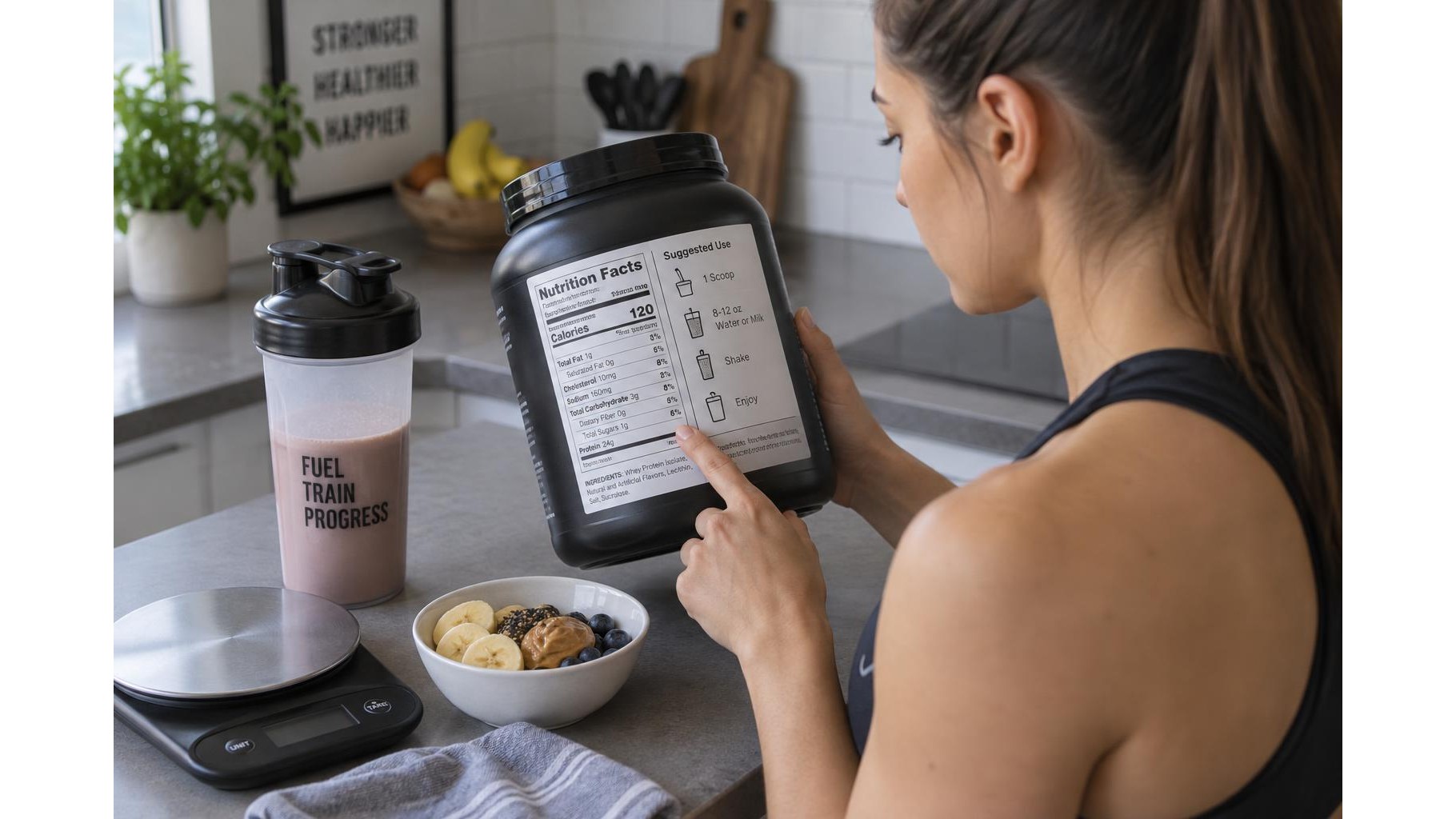
Start with the serving size, usually shown in grams and sometimes described as one scoop. It refers to the amount of powder used to calculate the nutrition information, not necessarily the amount of protein in that powder. For example, a 30 g serving might provide 22 g of protein, with the remaining weight coming from ingredients such as flavourings, carbohydrates, fats or sweeteners. Scoop sizes can vary, so use the label’s gram measurement rather than assuming every scoop is identical. If accuracy matters, a kitchen scale can help you measure a serving consistently.
Check protein per serving—and the full nutrition panel
Look for protein per serving and compare it with the serving weight. This gives a clearer picture than a prominent front-of-pack number, which may describe a serving rather than the whole container. Also check calories, carbohydrates, sugars, fats and salt, especially if you track these or have dietary considerations. Compare like with like: serving sizes differ between products, so you may need to compare the values per 100 g as well. A higher protein figure does not automatically make a product the best choice; taste, price, digestibility and how it fits your diet count too.
Read the ingredients and allergen information
The ingredient list shows what the powder contains, generally in descending order by weight. Protein sources can include whey, casein, soy, pea or blends. Check for ingredients you avoid, such as milk or soy, and read the separate allergen statement because allergens may be highlighted there. Flavourings, thickeners, sweeteners and added nutrients vary by product. If you have an allergy, intolerance or medical dietary restriction, do not rely on assumptions based on the product name: review the complete label and seek suitable professional advice where needed.
Follow preparation directions, then adjust to taste
Directions commonly suggest mixing one serving with a stated volume of water or milk. Treat this as a starting point for texture and flavour, not a rule about how much protein you need. More liquid usually makes a thinner drink; less makes it thicker. A shaker, blender or spoon may work depending on the powder. You can also mix it into foods such as oats or yoghurt, provided that suits the product and your diet. Remember that milk and other additions contribute their own calories and nutrients, so include them when relevant.
Match intake to your whole diet and training
Protein needs are individual and depend on factors such as body size, activity, training goals, overall diet and health. A powder serving should be considered alongside protein from everyday foods, not added automatically on top. Home athletes who already get enough from meals may have no need for a supplement. If you find it difficult to meet your needs through food, a serving can be a practical option after training or at another convenient time. There is no single serving schedule that suits everyone; a registered dietitian or other qualified professional can provide personalised guidance.
In short, read serving size and protein content separately, check ingredients and allergens, and follow preparation directions to suit your preferences. Then consider the powder in the context of your full diet and training—not as a shortcut or essential purchase. Choose it if the convenience is useful, and remember that ordinary foods can also support your protein intake.