Why the label matters
Choosing a protein powder can feel like comparing marketing slogans rather than food. Claims such as “lean,” “premium” or “high protein” do not tell you how much protein you get, what else is in the tub or what each useful serving costs. A quick, consistent label check helps home athletes compare products on practical facts. Look beyond the front of the pack and use the nutrition panel, ingredient list and pack weight to make an informed choice that fits your training, budget and dietary needs.
Start with serving size
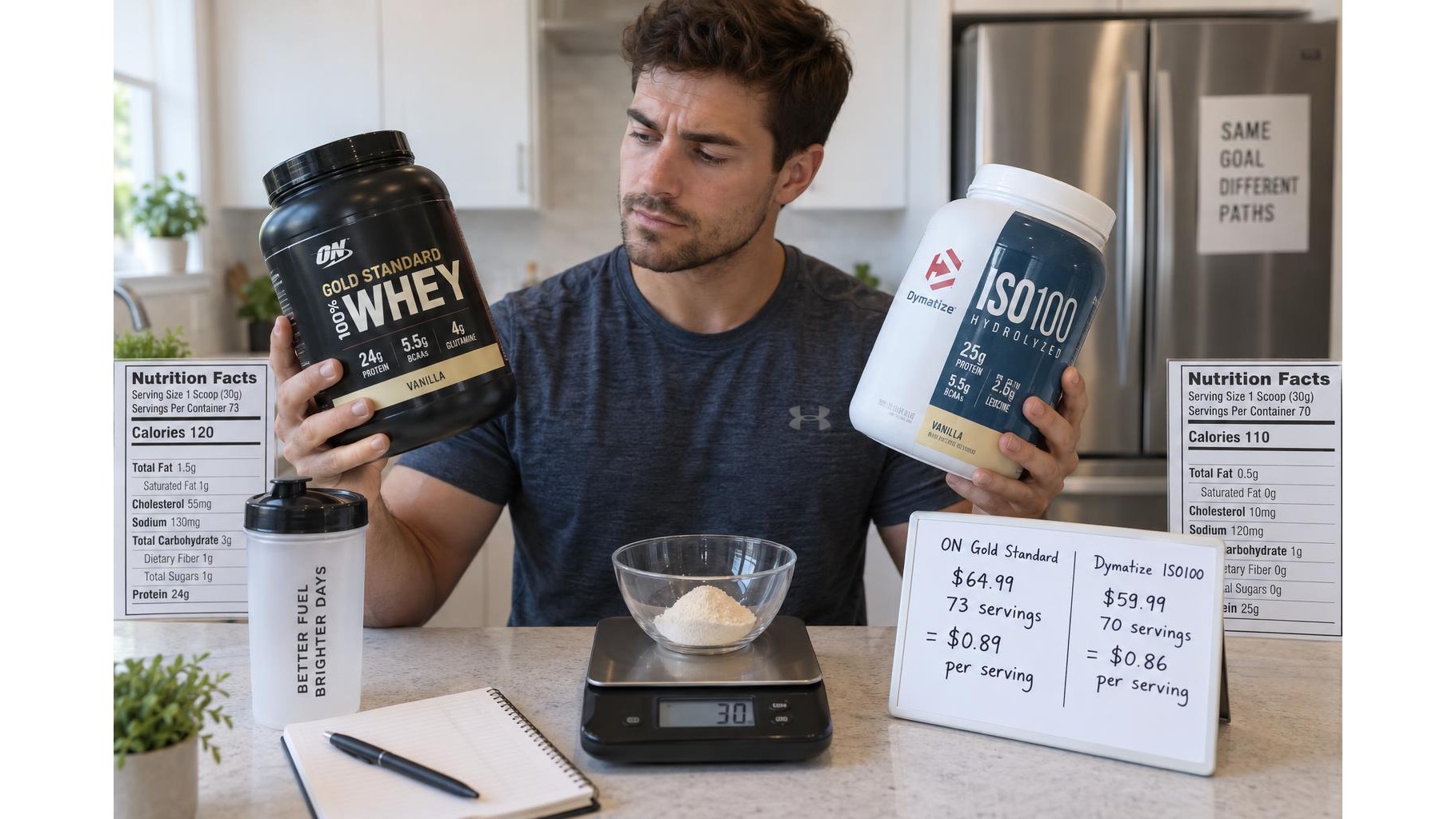
First check the stated serving size in grams, then find the protein amount per serving. A scoop is not a standard unit: one brand’s scoop may contain a different weight from another’s, and the scoop supplied may not match the label’s serving. Compare protein per 100 g as well as per serving to make differences in serving size easier to spot. For example, a larger scoop can appear to offer more protein simply because it contains more powder. Also check how many servings the container provides; the number of scoops in the tub matters when estimating how long it will last.
Read the full ingredient list
Ingredients are generally listed in descending order by weight, so the first entries show what makes up most of the product. Whey concentrate, whey isolate, casein, soy or pea protein indicate different protein sources; choose according to preference, dietary requirements and tolerance. A blend may combine several sources, but the word “blend” alone does not reveal their proportions. Check for allergens such as milk or soy, and review any added ingredients if you have specific sensitivities. The ingredient list complements the nutrition panel: neither one, on its own, tells the whole story.
Understand sweeteners and extras
Flavourings can bring along sweeteners, cocoa, thickeners, emulsifiers or other additions. These are not automatically a reason to reject a product, but they can affect taste, texture and suitability for your preferences. Look for named sweeteners in the ingredients and check the nutrition panel for sugars and energy per serving. If you prefer an unflavoured powder or want to control sweetness yourself, compare plain options with flavoured ones. Remember that the term “natural” is not a substitute for checking what is actually listed, and do not assume that a product is sugar-free unless its label supports that claim.
Calculate cost per usable portion
Compare price using cost per serving, not just the tub’s sticker price. Divide the price by the number of servings stated on the pack, then check that the serving supplies an amount of protein that works for you. For a fairer comparison, calculate the cost per 20 g or 25 g of protein: divide the price by the total grams of protein in the container, then multiply by your chosen protein target. This highlights products where a low price per scoop reflects a small serving or relatively little protein. Include delivery costs and check pack size before treating a promotion as a bargain.
Compare like with like
Make a short checklist: protein per 100 g, protein per serving, serving weight, protein source, sweeteners, allergens, servings per pack and cost per useful amount of protein. Use the same protein target when comparing tubs, and avoid treating a high protein percentage as proof of better quality or a better fit. Labels describe the product, while your needs depend on your overall diet, preferences and any relevant medical advice. If a claim is unclear, rely on the nutrition and ingredient information rather than guessing from the packaging.
A practical label-reading habit
Protein powder is easiest to assess when you compare the numbers and ingredients in a consistent way. Start with the serving and protein quantity, confirm the source and extras, then work out the cost of the amount you will actually use. This simple routine helps home athletes weigh convenience, taste and value without relying on promotional language. Choose a powder that suits your diet and budget, and remember that it is an optional food product—not a replacement for a varied diet.