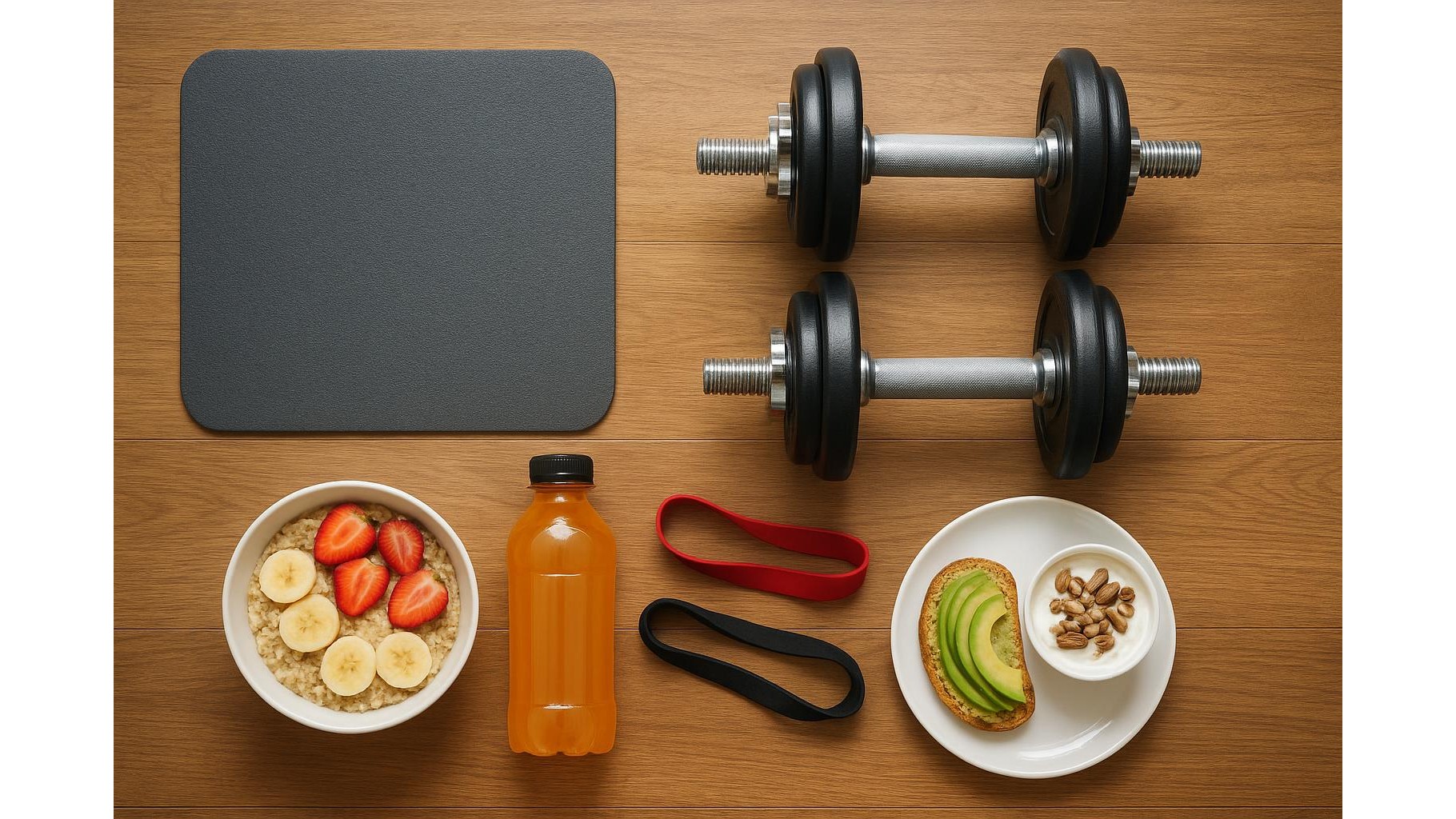
Choosing between pre-workout carbs and pre-workout fats can feel confusing when you train at home. Should you sip a carb drink before heavy squats, or take a spoon of nut butter before your long indoor bike ride? This guide breaks down how your body uses different fuel sources so you can match your snacks and small meals to heavy lifting, HIIT, or low-intensity cardio in your home gym.
How your body uses carbs and fats during exercise
Carbohydrates are your body’s primary source of quick energy. They are stored as muscle and liver glycogen and are ideal for short, intense efforts where you need power and speed. Fats, on the other hand, are a slower-burning fuel that support longer, easier sessions. At low to moderate intensity, your body can oxidise more fat, preserving glycogen. As intensity rises (for example in heavy sets or HIIT intervals), your body shifts towards burning more carbohydrate. The key takeaway: the harder and more explosive your session, the more you should bias your pre-workout fuel towards carbs; the longer and easier it is, the more you can lean on healthy fats and lighter carb intake.
Pre-workout carbs for heavy lifting and strength training
For heavy strength training at home (5–8 reps, big compound lifts), carbohydrates are your best ally. Adequate muscle glycogen helps you maintain bar speed, complete all your sets, and reduce perceived effort. A pre-workout snack 60–90 minutes before lifting, such as a bowl of oats with fruit or a slice of toast with honey, supplies easily accessible glucose. If you train early and can’t face solid food, a light carb-based drink or a small banana 30 minutes before can still support performance. Keep fats and fibre moderate before heavy lifting to avoid slowing digestion and causing stomach discomfort during bracing and core work. Aim for roughly 0.5–1 g of carbohydrate per kg of bodyweight in the hours before, adjusting based on your session length and how you feel.
Fueling HIIT and metabolic circuits at home
HIIT workouts, EMOMs and fast-paced circuits rely heavily on carb metabolism because they push you close to your maximum heart rate. Here, a carb-focused pre-workout strategy is crucial for maintaining intensity across intervals. Choose low-fibre, low-fat carbs that digest quickly: rice cakes with jam, a small fruit smoothie, or a sports drink if you have very little time before starting. If you eat 2–3 hours before HIIT, a balanced meal with lean protein, carbs and a small amount of fat works well; as you get closer to the session, shrink portion size and reduce fat. Excess fat pre-HIIT can cause sluggishness and GI distress because digestion competes with working muscles for blood flow. Think of fats as background fuel and carbs as the main driver for this type of training.
When higher-fat meals shine: low-intensity cardio
For low-intensity steady-state cardio (LISS) at home—like easy cycling on a turbo trainer, walking on a treadmill, or gentle step sessions—your body can comfortably use more fat as fuel. Here, a pre-workout meal higher in healthy fats and moderate in carbs can keep you satisfied without spikes and crashes in blood sugar. Examples include Greek yogurt with nuts, wholegrain toast with avocado, or a small bowl of granola with seeds. You do not need a big carb load because intensity is lower and glycogen demand is modest. This approach is especially useful if you train in a mild calorie deficit or prefer longer, easier sessions for fat loss. Just avoid very heavy, greasy meals before moving, as they slow gastric emptying and may make you feel heavy or nauseous while you exercise.
Putting it together: simple at-home pre-workout templates
To apply this at home, match your pre-workout meal to your session goal. For heavy lifting and HIIT, favour carb-rich, low-fat options: oats with banana, cereal with low-fat milk, or a rice cake with peanut butter (thin layer) and jam if you have more time to digest. For low-intensity cardio, choose balanced snacks with more healthy fats, like a small handful of nuts with fruit or yogurt with seeds. Keep protein moderate in all cases to support muscle repair. Test your timing: many people feel best with a fuller meal 2–3 hours pre-workout plus a small top-up snack 30–45 minutes before, while others prefer just one light snack. Track how different carb and fat combinations affect your energy, performance and digestion, and adjust until you find the most effective pre-workout fuel for your home workouts.
In summary, there is no single best pre-workout fuel—only the best match for your training type. Use more carbohydrates before heavy strength and HIIT, lean on healthy fats and moderate carbs for low-intensity cardio, and always factor in timing and personal tolerance. With a bit of experimentation, you can build a simple pre-workout routine that keeps your energy stable, your stomach comfortable and your performance high in any home gym session.