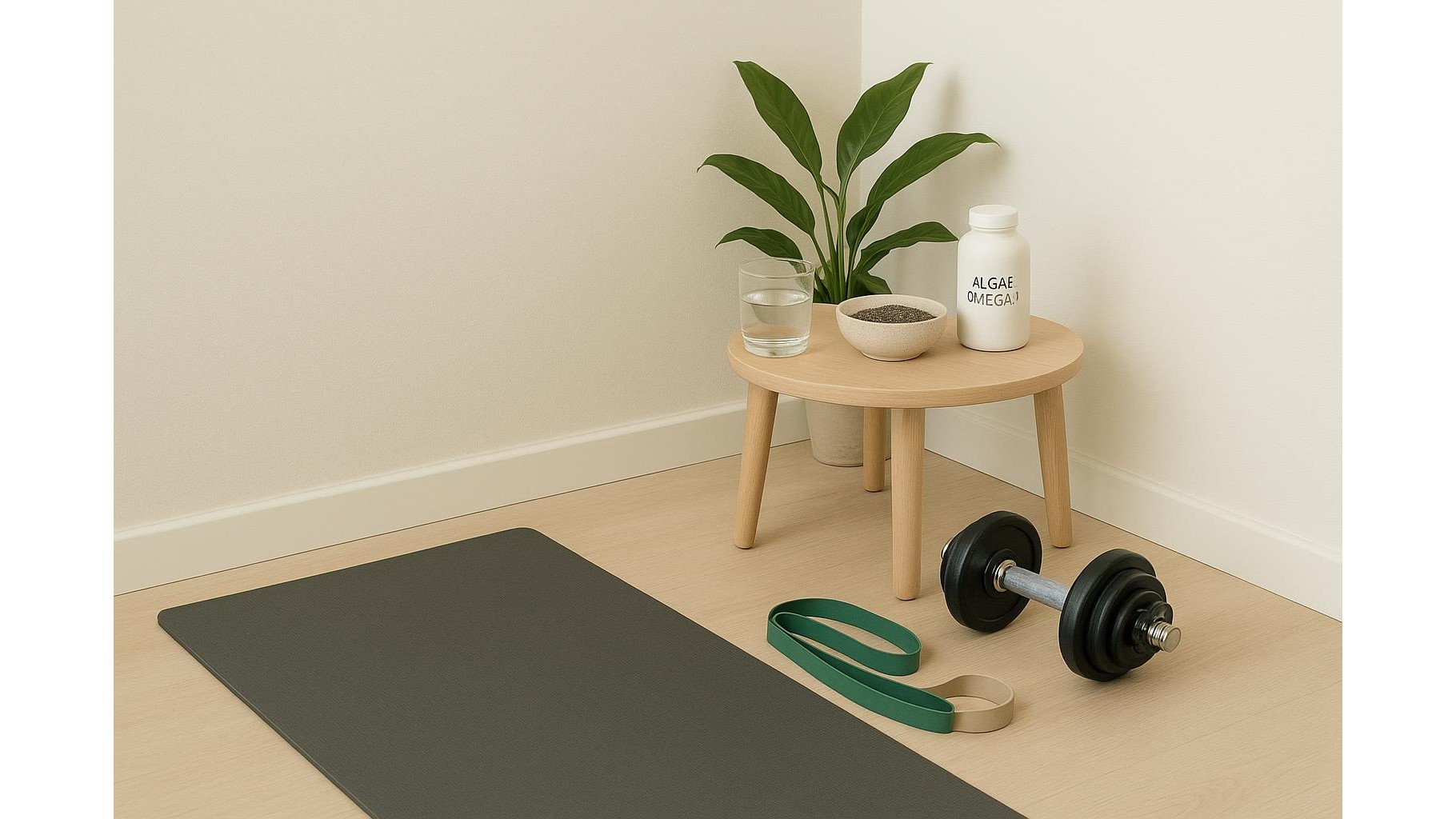
Training hard in your home gym on a plant-based diet raises an important question: are you getting enough omega-3 fatty acids, especially EPA and DHA? These long-chain omega-3s play key roles in inflammation control, recovery, joint comfort and possibly brain function – all crucial for consistent progress. While fish oil is the classic source, vegans and vegetarians can now rely on algae-based omega-3 supplements to cover their needs safely and effectively.
Why EPA and DHA matter for home athletes
For home-based athletes who regularly perform strength training, HIIT or endurance workouts, omega-3 status can influence how well the body adapts to training. EPA helps modulate inflammation after intense sessions, potentially supporting reduced muscle soreness and better joint comfort, while DHA is a structural component of cell membranes, especially in the brain and eyes. Research suggests adequate EPA and DHA may support reaction time, focus and overall cardiovascular health – important if you are pushing heart rate with rowing, skipping or circuit workouts. On purely plant-based diets, conversion of ALA (from flax or chia) to EPA and DHA is limited, so direct intake from algae oil is a practical evidence-based strategy.
How algae-based omega-3 works for vegans and vegetarians
Algae oil omega-3 supplements bypass the fish entirely and go straight to the original marine source of EPA and DHA: microalgae. The oil is extracted from cultivated algae in controlled conditions, then purified and standardised for DHA and often EPA content. For vegans and vegetarians, this removes concerns about animal-derived ingredients, fishy aftertaste and potential contaminants such as heavy metals often associated with poorly purified fish oil. Many high-quality products use algae-derived capsules and are explicitly labelled vegan and non-GMO. This makes them particularly suitable for plant-based home athletes who want to support training and recovery without compromising their ethical choices.
Evidence-based dosage ranges and timing for home training
Most research on omega-3s in physically active people uses combined EPA + DHA doses between 250 mg and 1000 mg per day, with some studies for joint support going higher under medical supervision. For generally healthy plant-based home athletes, a practical target is often 250–500 mg of combined EPA and DHA daily from an algae oil supplement, adjusted based on diet, body weight and healthcare advice. Taking the supplement with a main meal containing fat can enhance absorption. You do not need to time it precisely around workouts; consistency is more important than exact timing. Consider splitting higher doses into two smaller servings (for example breakfast and dinner) if you notice any digestive sensitivity.
Optimising the rest of your plant-based diet
Algae oil works best as part of a thoughtful plant-based performance diet. Ensure you are regularly eating ALA-rich foods such as ground flaxseeds, chia seeds, hemp seeds and walnuts to provide precursors for EPA and DHA and to support overall fat balance. At the same time, moderating very high intakes of omega-6-rich oils (like sunflower or corn oil) can help maintain a more favourable ratio between omega-6 and omega-3 fats, which may support inflammation control. Combine this with adequate protein from beans, lentils, tofu or seitan, plus plenty of colourful vegetables for antioxidants that help manage oxidative stress from intense home workouts. The goal is not just adding a capsule, but building a recovery-focused nutrition strategy.
Safety notes, interactions and who should be cautious
For most healthy vegans and vegetarians, algae-based omega-3 supplements taken at usual doses are considered safe and well tolerated. Mild side effects can include digestive discomfort or soft stools, often improved by taking the product with food or lowering the dose. Because EPA and DHA can have a mild blood-thinning effect, people using anticoagulant or antiplatelet medications, or those with bleeding disorders, should consult a healthcare professional before starting. The same applies to anyone with chronic medical conditions or who is pregnant or breastfeeding. Choosing products manufactured under good quality standards, with clear labelling of DHA and EPA content, helps ensure you obtain the intended dose consistently.
Practical tips to stay consistent with supplementation
Consistency is where many home athletes struggle. To integrate an algae omega-3 supplement into your routine, link it to a daily habit, such as your post-workout smoothie or your first main meal. Use a simple checklist on your training log or app to track intake alongside sessions and sleep. Store the bottle away from heat and light, and pay attention to the use-by date to maintain potency. Finally, remember that omega-3s are only one piece of the performance puzzle. Combine them with progressive training, adequate sleep, hydration and balanced nutrition to build a sustainable, high-performing plant-based home fitness lifestyle.
In summary, plant-based home athletes can absolutely meet their EPA and DHA needs without fish by using well-formulated algae-based omega-3 supplements and optimising the rest of their diet. By aiming for evidence-based daily intakes, taking capsules with meals, and respecting simple safety guidelines, you can support recovery, joint comfort and overall cardiovascular and cognitive health while staying true to vegan or vegetarian principles.