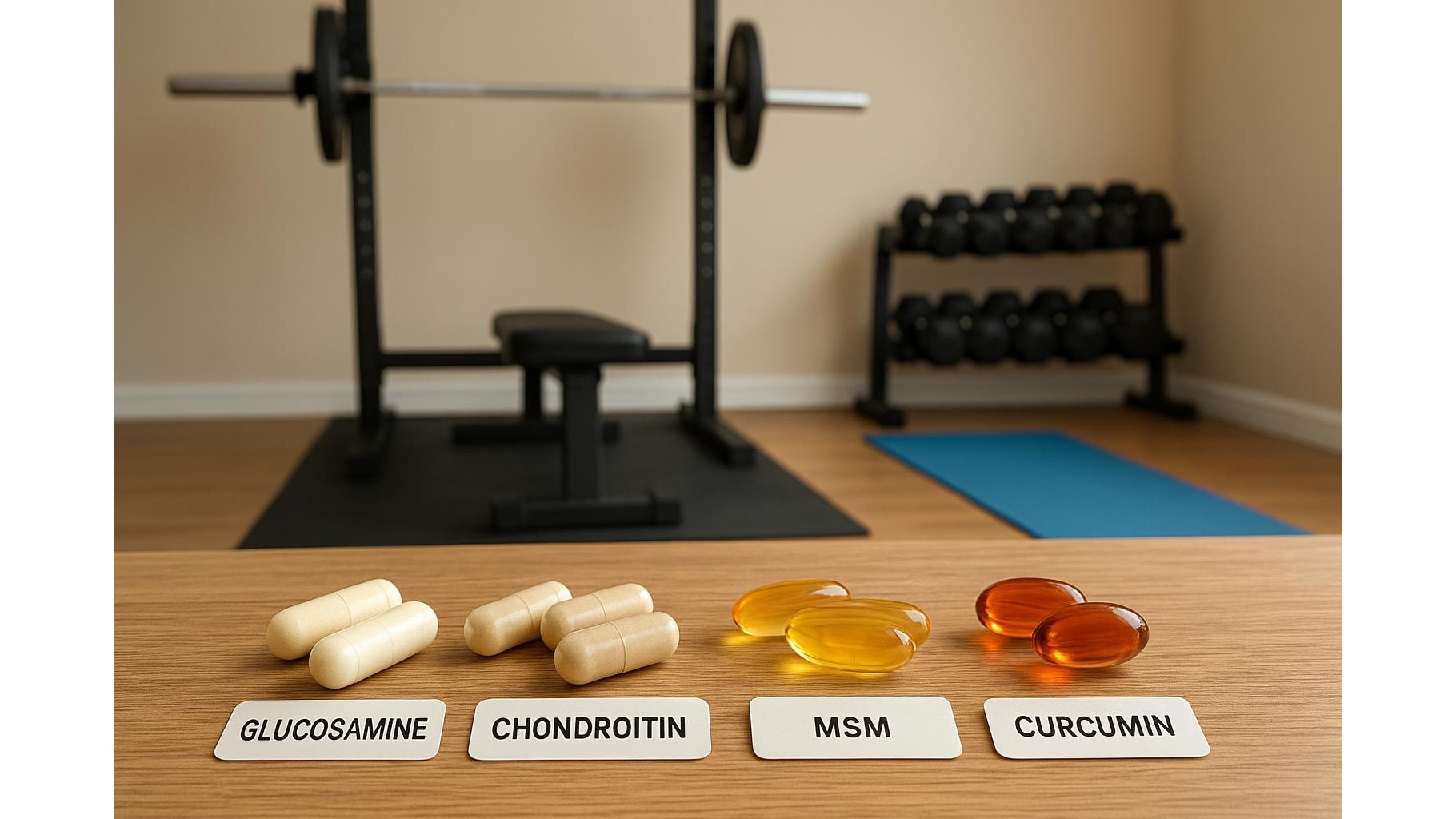
Home lifters put a surprising amount of cumulative stress on their joints, especially when working with barbells, kettlebells, and heavy dumbbells in a confined space. Alongside smart programming and good technique, many turn to joint-support supplements to stay pain‑free and consistent. Below is an evidence‑based overview of popular options like glucosamine, chondroitin, MSM and curcumin, including what they do, typical dosages and who might benefit.
Table of contents
Glucosamine: what it does and who it helps
Glucosamine is a compound naturally found in cartilage. Many home lifters use a glucosamine supplement in the hope of easing joint stiffness, especially in the knees after squats or lunges. Research suggests that glucosamine sulfate (often 1,500 mg per day) may modestly help with mild to moderate joint discomfort in some people over several months of consistent use. It is not a quick fix and works best as a long‑term strategy combined with load management and proper warm‑ups. Because results are mixed across studies, glucosamine is best thought of as a “try and assess” option rather than a guaranteed solution. Always check with your doctor if you have shellfish allergies or are on medication, as many glucosamine products are shellfish‑derived.
Chondroitin: supporting cartilage alongside glucosamine
Chondroitin is another structural component of cartilage and is frequently paired with glucosamine in joint formulas. Typical combined supplements offer around 1,200 mg of chondroitin sulfate per day alongside glucosamine. Evidence suggests that this pairing may help some users maintain joint mobility and reduce discomfort over time, especially in weight‑bearing joints like hips and knees that get hammered by at‑home leg sessions. Like glucosamine, the benefits tend to be modest and slow‑building, often taking several weeks before any difference is noticed. For lifters training on hard floors or doing high‑volume bodyweight work, a glucosamine‑chondroitin stack can be a reasonable, low‑risk experiment when combined with joint‑friendly training modifications.
MSM: sulfur-based support for stiffness and recovery
Methylsulfonylmethane (MSM) is a sulfur‑containing compound commonly bundled into joint support supplements. Typical daily doses range from 1,500 to 3,000 mg, usually split into two servings. Some research indicates MSM may help reduce joint stiffness and exercise‑related soreness, potentially supporting better range of motion for lifts like overhead presses and deep squats. For home gym athletes who feel generally “creaky” rather than having a specific diagnosed issue, MSM can be a useful adjunct to a stack with glucosamine and chondroitin. Because MSM can occasionally cause digestive upset in sensitive users, starting at a lower dose and building up gradually is a sensible strategy while monitoring how your body responds.
Curcumin: anti-inflammatory help from turmeric
Curcumin, the main active compound in turmeric, has well‑documented anti‑inflammatory properties. For lifters managing low‑grade joint aches or tendon irritation from repetitive movements, curcumin supplements (often 500–1,000 mg per day of a standardized extract, ideally with black pepper extract for better absorption) can be a helpful addition. Unlike traditional painkillers, curcumin is generally used as a daily support rather than an acute fix before a brutal session. Many home lifters report improved comfort in shoulders, elbows and knees when combining curcumin with mobility work and well‑structured deloads. Because curcumin can interact with some medications and affect blood clotting, it is important to discuss its use with a healthcare professional if you have underlying conditions.
Who should consider joint supplements – and how to use them
Joint‑support supplements are not a replacement for smart training, but they can be a useful tool for certain home lifters. You might consider them if you experience recurring joint discomfort, train several times per week on hard surfaces, or are an older lifter returning to regular exercise. A sensible approach is to introduce one product at a time, keep the rest of your routine consistent, and evaluate changes over at least 8–12 weeks. Combine supplements with good lifting technique, proper warm‑ups, progressive overload and adequate recovery, including sleep and nutrition that supports connective tissue health. Above all, any ongoing or sharp joint pain should be evaluated by a professional before relying on supplements alone.
For home gym enthusiasts, joint-friendly supplements like glucosamine, chondroitin, MSM and curcumin can play a supportive role in keeping training sustainable and enjoyable. While the evidence points to modest, not miraculous, benefits, many lifters find that the right product helps reduce stiffness and maintain comfort through high‑frequency sessions. Used alongside intelligent programming, sensible exercise selection and attention to overall lifestyle, these supplements can be one more tool that keeps you lifting consistently in your home gym for the long term.