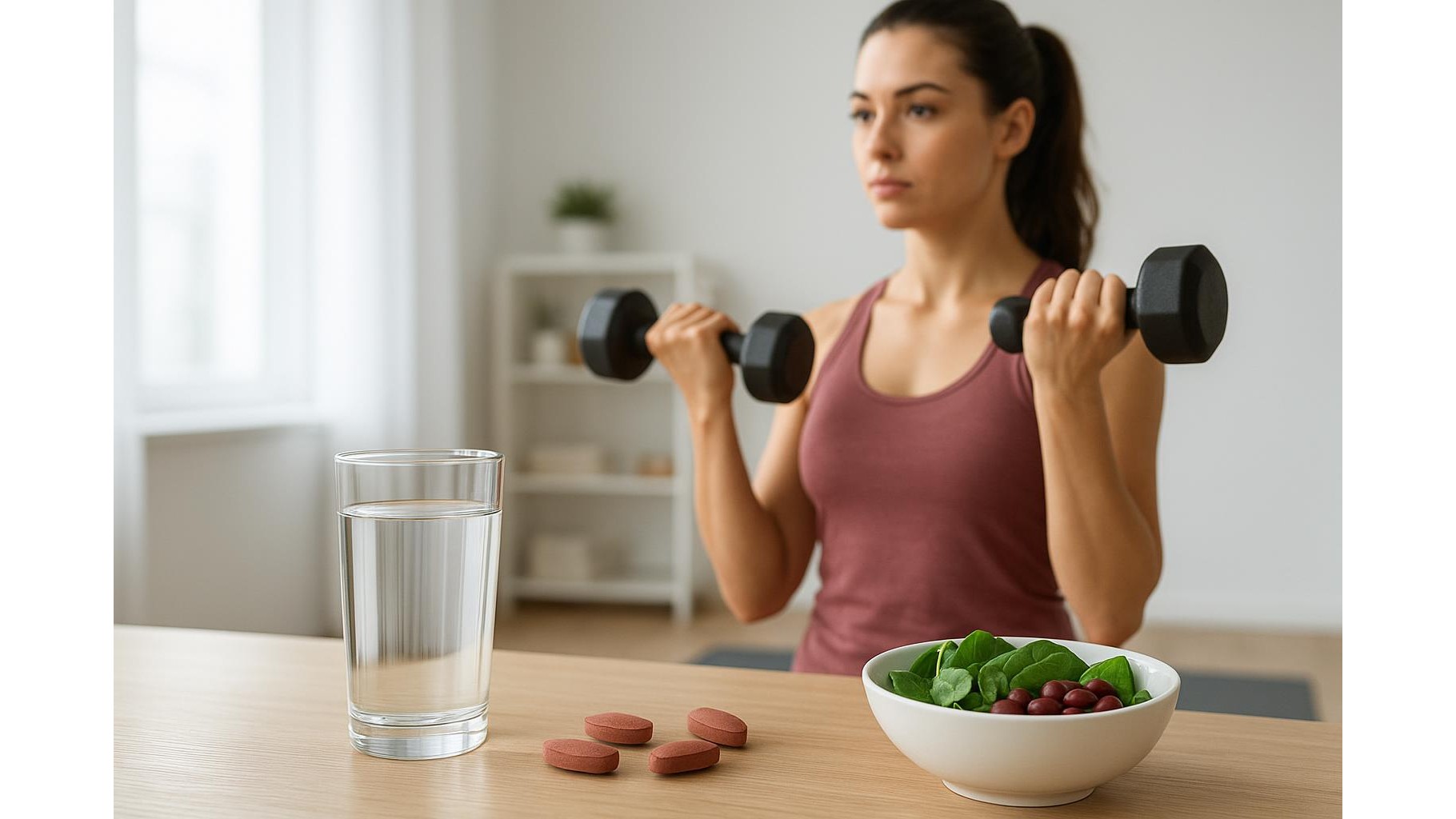
Training consistently at home can boost strength, mood and long‑term health, but if you also have a menstrual cycle you face a unique nutrition challenge: staying on top of your iron levels. Low iron is common in people who menstruate and is even more frequent in active women and AFAB athletes. Understanding when to get a blood test, when an iron supplement makes sense, and how to use it safely can help you protect both your performance and your overall wellbeing.
Why iron matters for menstruating home athletes
Iron is essential for making haemoglobin, the protein in red blood cells that carries oxygen to your muscles. If you are exercising in your home gym, doing cardio or strength training several times a week and also losing blood every month through menstruation, your iron needs are higher than those of non‑menstruating, less active people. Heavy or prolonged periods, a mostly plant‑based diet, and regular endurance work (like indoor cycling, treadmill running or skipping) further increase the risk of iron deficiency. Symptoms can creep up slowly: fatigue that doesn’t match your training load, dizziness, shortness of breath, headaches and restless legs at night are all red flags that deserve attention.
When to get tested instead of guessing
Before adding any supplement, it is crucial to check where you stand. Ask your doctor for a blood test that includes at least haemoglobin, ferritin (your iron stores) and ideally transferrin saturation. Athletes can feel performance drops even with ferritin in the “normal” range, so discuss your results in the context of your training and symptoms, not just lab reference numbers. Timing also matters: if possible, do the test when you are not acutely ill and note if it falls shortly after your period, when levels may be slightly lower. Avoid taking iron pills or high‑dose vitamin C the morning of the test, as they can transiently affect some values. Testing once a year is reasonable for most healthy home athletes; those with a history of low iron, very heavy periods or restrictive diets may need checks every 3–6 months, guided by a healthcare professional.
When an iron supplement is appropriate
If your blood work confirms iron deficiency or iron‑deficiency anaemia, your doctor may recommend an oral iron supplement alongside dietary changes. The goal is to correct the deficiency while monitoring for side effects. For many menstruating athletes, this is a temporary strategy lasting a few months, not a lifelong prescription. If your levels are borderline but you feel well, your doctor might suggest increasing iron‑rich foods first (such as red meat, lentils, beans and fortified cereals) and possibly a low‑dose supplement. It is important not to self‑prescribe high‑dose iron just because you feel tired: fatigue has many causes, and unnecessary supplementation can lead to constipation, stomach upset, or—over very long periods and very high intakes—iron overload, which is harmful. Always use lab results plus professional guidance to decide whether you truly need a supplement.
How to take iron: timing, food and training
To get the most from your iron while minimising discomfort, pay attention to dosing and timing. Most oral products suggest one tablet per day; taking it on an empty stomach with a source of vitamin C (like a small glass of orange juice) helps absorption. However, if this causes nausea or cramps, you can take it with a light snack and still benefit. Avoid taking iron together with coffee, tea, high‑calcium foods or antacids, as these can reduce absorption; leave at least 1–2 hours between them. Many home athletes like to take iron at a different time from their main workout, for example in the evening, to reduce any chance of stomach upset during training. Be consistent: it usually takes several weeks before blood levels improve and a few months to fully rebuild iron stores, so stick with the plan recommended by your doctor and re‑test rather than stopping as soon as you feel a bit better.
Side effects, safety tips and when to stop
The most common side effects of iron supplements are constipation, darker stools, mild nausea and occasional stomach pain. Increasing fibre and fluid intake, and staying active with your regular home workouts, can help manage constipation. If side effects are severe, speak to your doctor; switching to a different form of iron or reducing the dose may help. Never double up on tablets after a missed dose, and keep supplements out of reach of children, as accidental overdose can be dangerous. If you develop sudden severe abdominal pain, vomiting, blood in stool, or if you suspect you have taken far more than the recommended dose, seek urgent medical care. Once your blood tests show that haemoglobin and ferritin are back in a healthy range, your doctor may ask you to stop supplementation and rely on nutrition plus periodic monitoring to prevent recurrence.
For menstruating home athletes, paying attention to iron status is a powerful way to protect both health and performance. Regular, evidence‑based blood testing, a thoughtful discussion with your healthcare provider, and smart use of iron supplements only when truly needed can help you train harder, recover better and feel more energetic day‑to‑day. Focus on balanced meals rich in iron, listen to your body’s warning signs and use lab results—not guesswork—to guide your decisions.