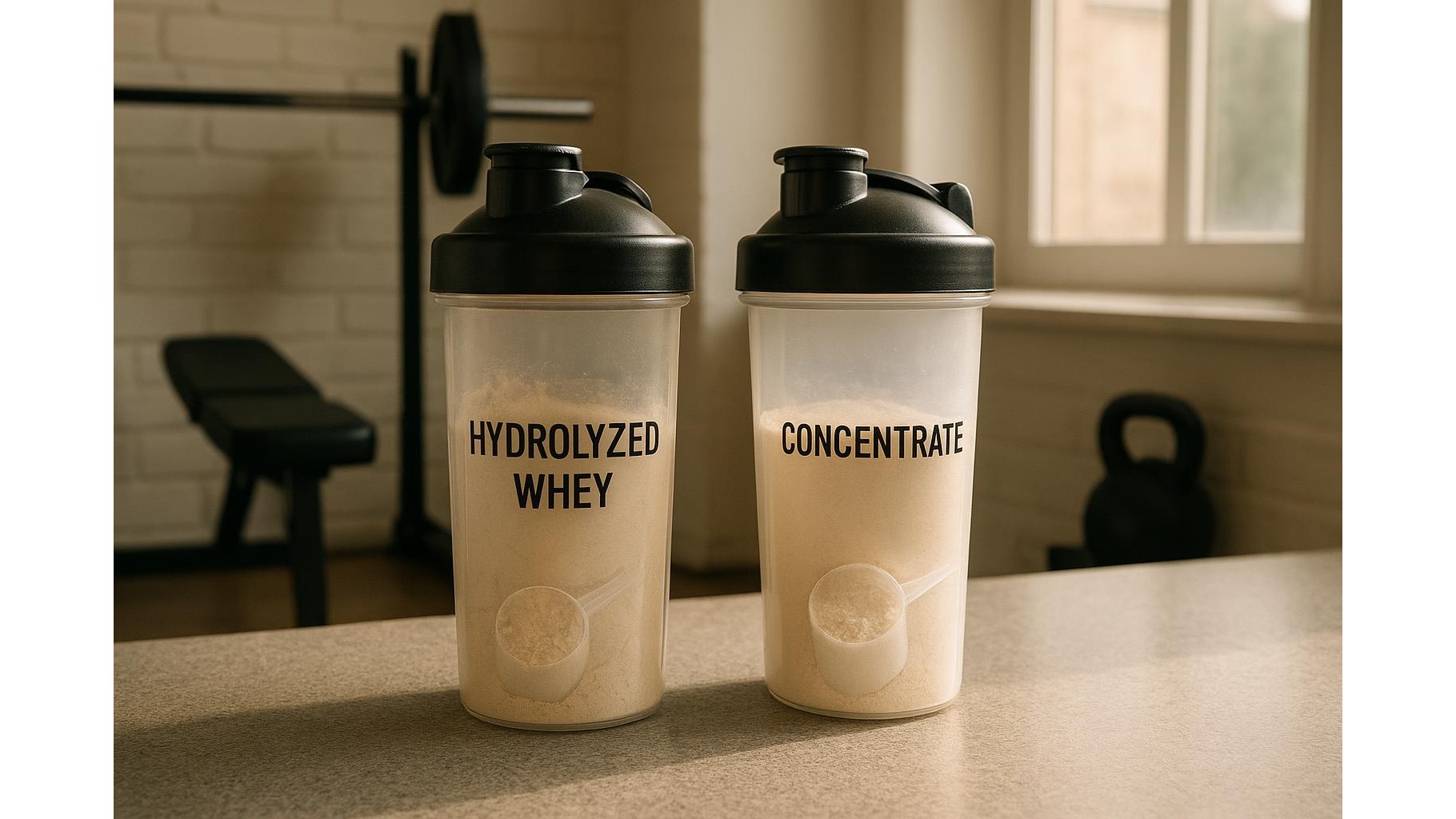
Training at home makes nutrition even more important: you have fewer machines, but more control over what you eat. Choosing between hydrolyzed whey and whey concentrate can dramatically change how you feel after a shake, especially if you have a sensitive stomach or mild lactose intolerance. This guide compares digestion, lactose content, mixability, ideal timing and when paying extra for hydrolyzed whey really makes sense for home athletes.
Understanding whey concentrate vs hydrolyzed whey
Whey concentrate is the classic, budget‑friendly protein powder. It typically contains around 70–80% protein, with the rest made up of carbs, fats and some lactose. For most home athletes with normal digestion, it offers great value and a complete profile of essential amino acids, including BCAAs that support recovery. Hydrolyzed whey, on the other hand, is whey that has been partially broken down into smaller peptides through enzymatic processing. This pre‑digestion is designed to make it faster absorbing and easier on the gut. In practice, hydrolyzed whey often has a cleaner nutrition label, lower lactose and fewer potential irritants, which can be a game changer if you regularly experience bloating or discomfort after standard whey shakes.
Digestion, lactose tolerance and sensitive stomachs
For home athletes with lactose sensitivity or a generally sensitive digestion, the choice of whey can decide whether a shake helps or ruins your session. Whey concentrate still carries a noticeable amount of lactose and residual milk components, which can trigger gas, bloating or cramps in susceptible people. Hydrolyzed whey is typically lower in lactose and its smaller peptide chains are absorbed more rapidly in the small intestine, which can reduce digestive stress. This can be especially useful when you train early in the morning or late at night and want a shake that sits light. If you know that dairy often makes you uncomfortable, hydrolyzed whey – despite its higher price – may allow you to keep the benefits of whey protein without the side‑effects, making it a better fit for consistent, at‑home training routines.
Mixability and convenience in a home gym setting
When you work out at home, you may not have access to blenders or plenty of time to prep shakes. Mixability becomes a practical factor. Many whey concentrate powders include thickeners and added ingredients that can make them creamier, but also more likely to clump if you only have a basic shaker and tap water. Hydrolyzed whey often has a finer texture and is formulated to dissolve quickly, which suits fast, no‑fuss preparation between meetings or after a late‑night session. Because hydrolyzed whey is usually lower in fats and fillers, the resulting shake is thinner and lighter, ideal if you want to drink it right before moving into your warm‑up without feeling heavy. For home athletes who value speed, low effort and easy clean‑up, this difference in texture and solubility can weigh in favour of hydrolyzed whey, even if concentrate remains the more economical option.
Ideal timing: when each type of whey works best
Both hydrolyzed whey and whey concentrate can help you hit your daily protein target, but timing can influence which one is optimal. Whey concentrate is perfectly adequate as a general purpose protein: in smoothies, oats, or as a snack between meals while you work from home. Its slightly slower digestion compared to hydrolyzed whey can even help keep you fuller longer. Hydrolyzed whey shines around your training window, typically in the 30–60 minutes before or after your home workout. Its fast absorption and lighter feel make it a strong choice when you want amino acids to reach your muscles quickly, yet do not want any stomach heaviness during squats, push‑ups or HIIT circuits in your living room. Many sensitive home athletes use a strategy where they keep concentrate for daytime shakes and reserve hydrolyzed whey specifically for pre‑ and post‑workout nutrition.
When is the higher price of hydrolyzed whey worth it?
Hydrolyzed whey almost always costs more than standard whey concentrate, so it is important to understand when the premium price really delivers extra value. If you digest concentrate without issues and mainly want to increase daily protein intake on a budget, a high‑quality whey concentrate will usually be enough. The extra money for hydrolyzed whey is most justified when you have clear signs of lactose intolerance, frequent post‑shake bloating, or you are an advanced home trainee seeking every possible edge in recovery speed. In those cases, paying more can mean better compliance, less discomfort and more consistent training performance. A smart approach for many home athletes is a mixed strategy: use cost‑effective concentrate for routine shakes and invest in a tub of hydrolyzed whey for your most demanding training blocks or for days when your stomach already feels delicate.
In summary, both whey concentrate and hydrolyzed whey can effectively support muscle growth and recovery in a home gym context. Concentrate offers the best value for money and works well for most people without digestive issues, especially as an everyday protein source in meals and snacks. Hydrolyzed whey brings advantages in digestive comfort, lactose tolerance and rapid absorption that matter most to sensitive athletes and around intense workouts. By matching the type of whey to your stomach, schedule and training goals, you can build a protein strategy that keeps you comfortable, consistent and progressing in your home gym.