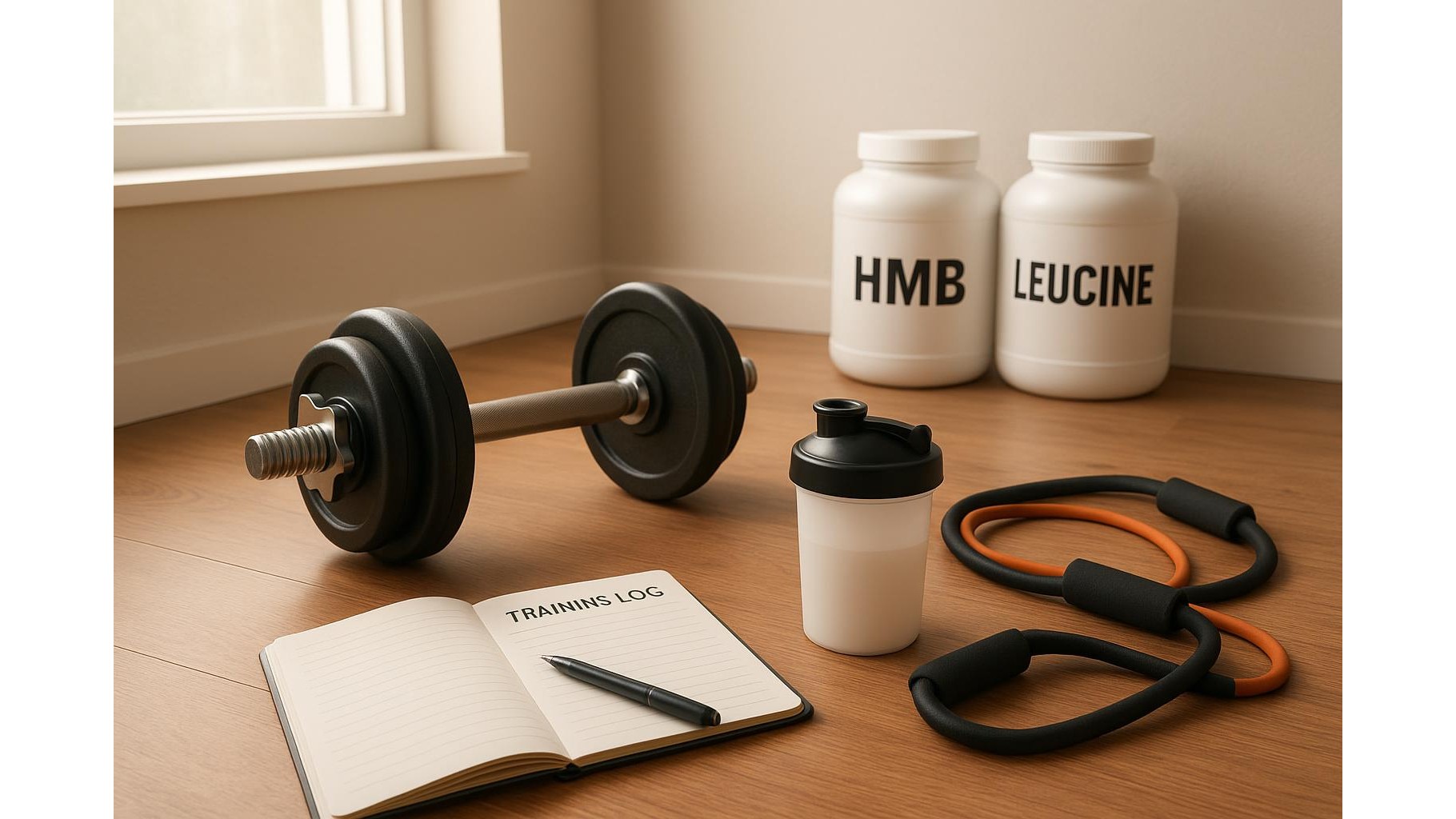
Training at home with only a few short sessions per week can make it harder to maintain muscle, especially if you are older, in a calorie deficit or just very busy. Two supplements often suggested for this situation are HMB (beta‑hydroxy‑beta‑methylbutyrate) and leucine, both linked to muscle protein metabolism. This article gives an evidence‑based overview of how they work, who may benefit, how to use them safely, and how to combine them with your regular protein intake when you train in a home gym.
What are HMB and leucine?
Leucine is one of the nine essential amino acids and a key trigger for muscle protein synthesis. When you eat high‑quality protein (for example whey, eggs or meat), leucine is one of the main signals telling your body to build and repair muscle tissue. HMB is a metabolite of leucine: your body naturally converts a small fraction of leucine into HMB, which appears to help reduce muscle protein breakdown and support recovery. While you can get leucine from food, the amount of HMB produced is relatively small, which is why some home trainees consider taking it as a direct supplement, especially when training volume is limited and protecting existing muscle becomes the priority.
Who may benefit most with short home workouts?
HMB and leucine are not magic, but certain groups seem more likely to benefit when training time is short. First, older trainees often experience “anabolic resistance”, meaning their muscles respond less strongly to normal doses of protein. Extra leucine or HMB may help boost that response. Second, people in a calorie deficit while trying to retain muscle (for example during fat loss phases) may use HMB to limit muscle breakdown when lifting only two or three times per week. Third, beginners or those returning after a lay‑off sometimes show greater responses to HMB in early studies, especially when they start a structured resistance program. However, for young, well‑fed lifters already consuming plenty of protein, the added benefit may be smaller, so expectations should remain realistic.
How to dose HMB safely at home
Research on HMB dosage in resistance training typically uses around 3 g per day, often split into two or three servings with meals. This amount appears to be safe for healthy adults over periods of weeks to months, with studies reporting minimal side effects. For home trainees, consistency matters more than precise timing: choose a dose schedule you can adhere to alongside your normal routine. Because evidence is strongest for populations such as older adults or those under heavy training or dieting stress, it is wise to view HMB as a potential insurance policy for muscle maintenance, not as a replacement for progressive resistance training, adequate sleep and a balanced diet. If you have medical conditions or take medication, always discuss new supplements, including HMB, with your healthcare professional.
Leucine and protein: building your base
Before adding standalone leucine supplements, it is essential to optimize total protein intake. Most evidence suggests that consuming roughly 1.6–2.2 g of protein per kg of body weight per day is effective for muscle maintenance and growth in active people. Each meal or post‑workout snack should contain around 2–3 g of leucine, which is usually achieved by 20–30 g of high‑quality animal protein or a slightly larger serving of plant protein. Supplemental leucine can be useful for meals that are otherwise low in leucine, such as small plant‑based snacks. In practical terms, adding 2–3 g of leucine to low‑protein meals may help trigger muscle protein synthesis more effectively, especially for older lifters whose muscles are less sensitive to smaller protein doses.
Combining HMB, leucine and short resistance workouts
The real power of HMB and leucine emerges when they are combined with intelligent, time‑efficient home workouts. With only two or three weekly sessions of 30–40 minutes, focus on compound exercises like squats, deadlifts, presses, rows and pull‑ups using your home gym equipment. Train each major muscle group at least twice per week, aiming close to muscular fatigue with safe technique. Around these sessions, ensure your daily protein target is met, with leucine‑rich meals placed before or after training. HMB at 3 g per day can be taken with any main meal, independent of exact workout timing. This integrated approach—progressive resistance training, sufficient protein, and strategic use of HMB and leucine—gives you the best chance to preserve or even gain muscle despite a busy lifestyle and short training windows.
Practical tips and expectations for home trainees
When using HMB and leucine at home, set clear expectations and monitor your progress. These supplements are most effective as part of a structured plan, not as stand‑alone solutions. Track your body weight, simple strength markers (like reps with a given dumbbell or kettlebell) and how you feel during and after workouts. If your strength is stable or improving and your body composition is holding up during busy or dieting periods, the combination of training, protein and supplements is likely working. If not, reassess your total calorie and protein intake, sleep and program design before blaming or increasing supplements. Remember that adherence to basic habits—regular home workouts, daily movement and balanced nutrition—will always matter far more than any product, even evidence‑based ones like HMB and leucine.
In summary, HMB and leucine can play a supportive role for home trainees who only manage short, infrequent workouts, especially older adults or those dieting while trying to keep muscle. By anchoring your routine around regular resistance training and sufficient protein, then layering in HMB at around 3 g per day and strategic leucine to bolster low‑protein meals, you can create a simple, sustainable plan to protect your hard‑earned muscle from the comfort of your home gym.