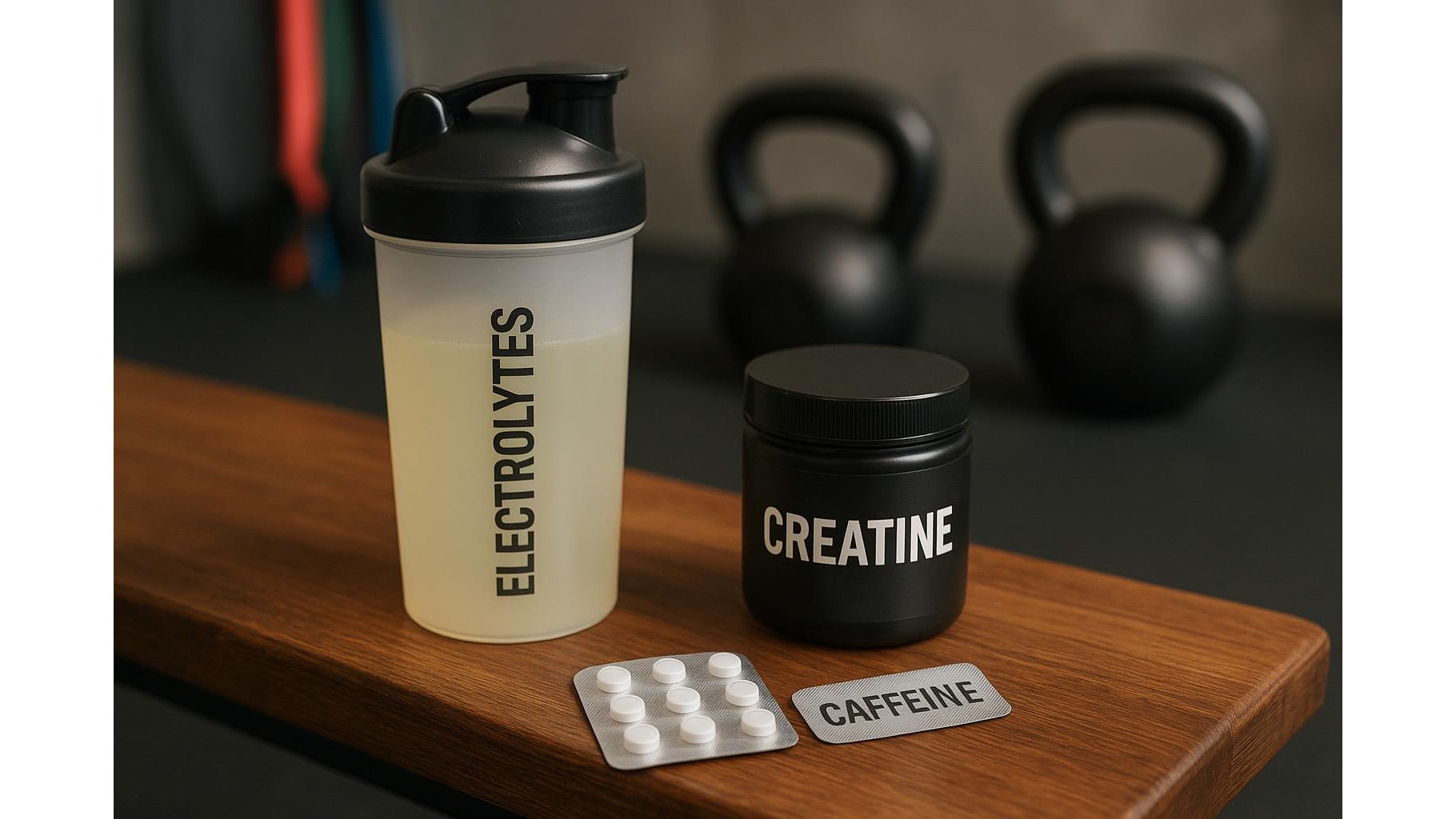
Training mostly at home makes your supplement stack even more important: you do not have a gym café or coach double‑checking what you take. Three of the most useful and affordable options are electrolytes, creatine and caffeine. Used together correctly, they can support hydration, strength, power and focus. Misused, they can overlap in ingredients, upset your stomach or disturb your sleep. Below you will find simple, evidence‑based guidelines on dosages, timing, who should be cautious and how to avoid common mistakes when you train at home.
Why combine electrolytes, creatine and caffeine?
Each of these supplements targets a different piece of your performance. Electrolytes (mainly sodium, potassium and magnesium) help maintain fluid balance, nerve conduction and muscle contraction, especially when you sweat or train in a warm room. Creatine monohydrate boosts the body’s ability to rapidly regenerate ATP, the primary fuel for short, intense efforts like heavy sets, sprints or kettlebell swings. Caffeine is a central nervous system stimulant that can sharpen focus, reduce perceived effort and slightly increase power output. When you stack them intelligently, you support hydration, muscle performance and alertness at the same time—three key factors for hard, efficient home workouts with limited equipment.
Basic daily dosages and timing at home
A practical home‑training protocol is straightforward. For creatine, most research supports a simple 3–5 g of creatine monohydrate once per day, every day, regardless of training time; skip loading phases unless you are in a rush. For caffeine, 3–6 mg per kg of bodyweight taken about 30–45 minutes before your main workout is a typical performance dose, but many people feel great at the low end of that range. For electrolytes, aim to add roughly 300–600 mg of sodium plus smaller amounts of potassium and magnesium to your pre‑ or intra‑workout drink, adjusting upward if you sweat heavily or train in a hot garage or loft. You can mix creatine into your electrolyte drink, then take caffeine separately in tablet or capsule form to keep dosing flexible.
How to avoid ingredient overlap and side effects
Pre‑workout powders, electrolyte mixes and energy drinks often combine caffeine, electrolytes, sweeteners and extra stimulants. At home, where you may sip on multiple products, it is easy to accidentally double or triple your caffeine intake. Always check labels for caffeine per serving and track your total: many people do best staying under 300–400 mg per day, less if they are sensitive. Likewise, watch for products that already contain creatine so you do not overshoot your target dose and irritate your gut. Choose a simple electrolyte powder without added stimulants and a plain creatine monohydrate; then add caffeine separately. If you feel jittery, get palpitations, can not sleep or have persistent stomach cramps, lower doses or reduce the number of products you combine.
Who should be cautious or avoid this stack?
Even though electrolytes, creatine and caffeine are well‑researched, they are not ideal for everyone. Anyone with kidney disease, significant cardiovascular issues, uncontrolled high blood pressure or a history of arrhythmia should speak to a healthcare professional before using creatine or moderate‑to‑high caffeine. If you are on medications that affect fluid balance or blood pressure (for example diuretics), be careful with high‑sodium electrolyte supplements. People who are pregnant, breastfeeding or very sensitive to stimulants should limit or avoid caffeine entirely. Teens should not copy high adult doses they see online. Remember that sleep, nutrition and a consistent training plan are more important than any supplement; if this stack interferes with your sleep or appetite, it stops being useful.
Putting it all together in a simple home‑workout routine
To build a safe, repeatable routine, start small and track how you feel. A sample protocol for an evening home strength session could be: 60 minutes pre‑workout, drink water with your daily 3–5 g of creatine monohydrate. Around 30 minutes before training, take a modest dose of caffeine (for many, 100–200 mg is enough), then sip a bottle of water containing an electrolyte mix as you warm up and train. On non‑training days, keep taking creatine with any meal and skip caffeine or limit it to a small morning dose. Adjust sodium and fluid intake based on your sweat rate and bodyweight changes. Keep a simple log of performance, sleep quality and any side effects for a couple of weeks so you can fine‑tune your stack for your specific home environment and schedule.
Used intelligently, a stack built around electrolytes, creatine and caffeine can make home training feel stronger, more focused and more sustainable. Focus on evidence‑based dosages, plan your timing around your main workout, and avoid overlapping products that hide extra caffeine or creatine. If you have health conditions or take medication, get personalised medical advice before you start. Combined with good sleep, protein‑rich meals and progressive training, this simple, low‑cost stack can turn a basic home gym into a highly effective training environment.