
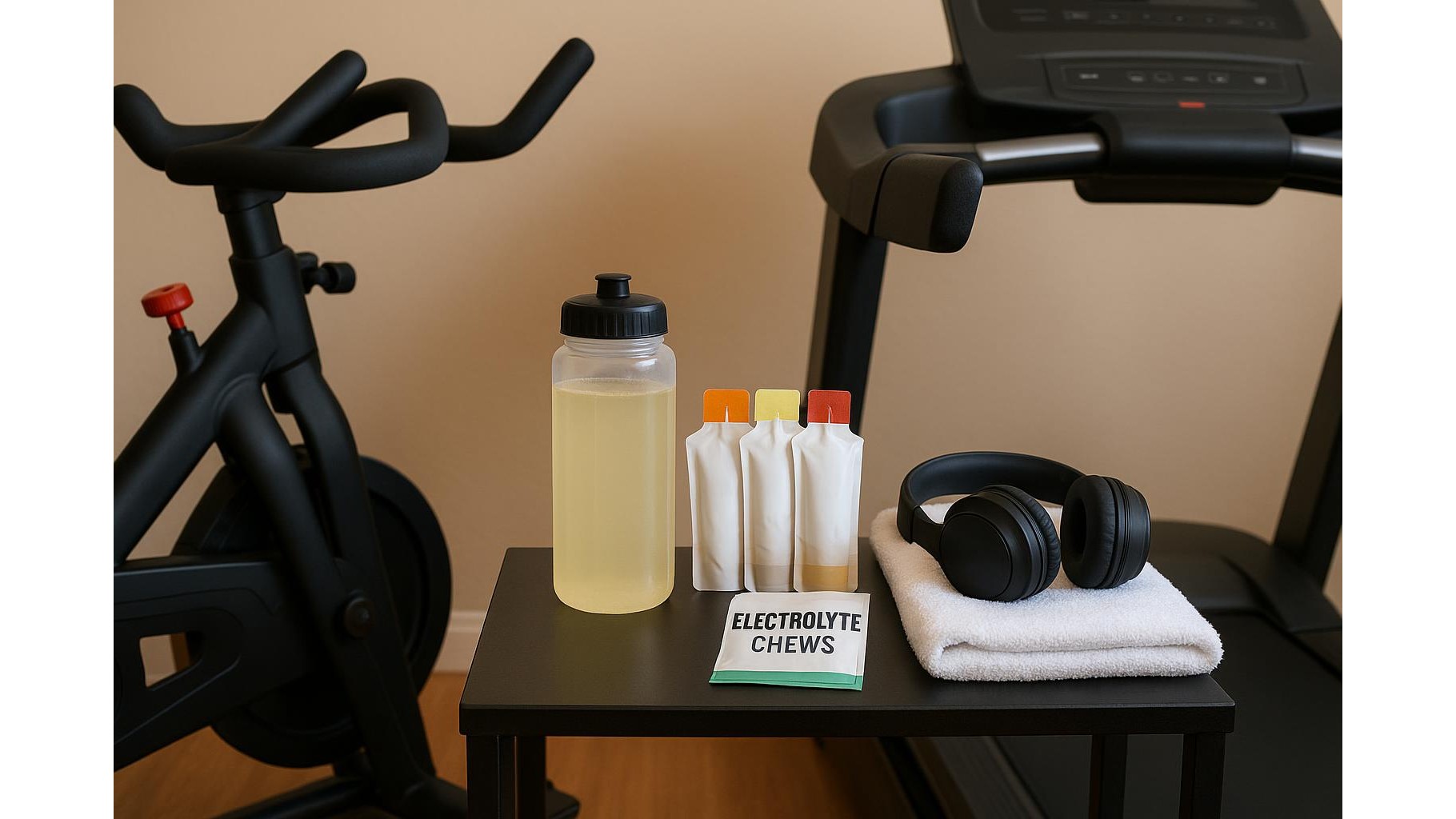
Long home cardio sessions on the indoor bike, treadmill or rowing machine can quietly drain your electrolytes and glycogen, even if you are training in your living room. Choosing between electrolyte gels, chews and drinks is less about brand loyalty and more about how long you train, how hard you go and how sensitive your stomach is. This guide breaks down when each format makes sense, how to avoid mid‑workout gut issues and simple targets for sodium, carbs and fluid during 60–90 minute indoor workouts.
Understanding your hydration and electrolyte needs at home
Even in a cool room, a 60–90 minute indoor cardio session can produce heavy sweat because there is limited air flow. Most people lose between 300–800 mg of sodium per litre of sweat, and some heavy sweaters lose more. For sessions around one hour at moderate intensity, water plus a modest amount of sodium (300–500 mg) is usually enough. As you approach 90 minutes, or if you ride or run at higher intensity, you will benefit from adding 30–60 g of carbs per hour and closer to 500–700 mg sodium per hour. The right product format is simply the most comfortable way for you to hit those numbers without bloating or cramps.
[h ol_placeholder type=”cta” id=”telegram”/]
Electrolyte drinks: best for steady indoor rides and runs
Electrolyte drinks are usually powders or tablets you mix with water. They are ideal if you prefer sipping continuously during a home session and want to control both fluid and electrolyte intake together. Many mixes provide around 200–500 mg sodium per 500 ml serving, sometimes with 15–30 g of carbs. For 60–90 minute rides or runs at home, a practical strategy is to drink 400–700 ml per hour, depending on your sweat rate, using a bottle with a clear scale so you see how much you drink. Look for formulas with a mix of sodium, potassium and magnesium and avoid very high sugar content if your stomach is sensitive. For easy sessions, a low‑calorie electrolyte tablet in water can cover minerals without overloading you with carbs.
Gels vs chews: compact carbs with targeted electrolytes
Electrolyte gels and chews are concentrated sources of carbs, often with added sodium. They shine when you want to keep your bottle filled with plain water but still hit 30–60 g carbs per hour. Gels are quick to swallow and easy to time, for example one 20–25 g carb gel every 25–30 minutes during a 90‑minute bike session. However, they draw water into the gut, so always chase gels with several mouthfuls of water to avoid sloshing and nausea. Chews (or gummies) work similarly but require more chewing; some athletes find this more satisfying, others find it tiring at higher intensities. For home cardio, where you can keep a towel and bottle close, gels and chews are useful add‑ons when you increase intensity or push past the one‑hour mark.
How to avoid stomach issues on the bike or treadmill
Most GI problems during indoor training come from too much sugar or fluid taken too quickly, or from trying new products at race‑like intensities. To keep your stomach calm, avoid stacking multiple concentrated products at once (for example a strong drink plus a high‑sugar gel) and instead spread your intake: a few sips of drink every 5–10 minutes, or one gel every 25–35 minutes with water. Aim to stay under about 60 g of carbs per hour until you know your tolerance. Keep your home gym cool, use a fan to reduce sweat rate and start your workout already hydrated. Finally, practise your fueling strategy in several sessions before any key event so your gut adapts to the exact combo of drink, gel or chews you prefer.
Simple guidelines to choose between gels, chews and drinks
For 60 minute easy to moderate sessions, most people do well with a basic electrolyte drink and perhaps a small carb top‑up (like a few chews) if they start low on energy. As intensity rises or duration extends toward 90 minutes, combine an electrolyte drink with either a gel or a portion of chews to reach the 30–60 g carbs per hour range. Choose gels if you want minimal chewing and precise dosing, or chews if you like a more snack‑like feel and slower intake. If you tend to cramp, prioritise products that clearly state their sodium content and plan your total per hour. Ultimately, the best format is the one you can take consistently, without discomfort, while staying focused on your home workout.
Balancing fluids, electrolytes and carbohydrates during long home cardio sessions does not require complex calculations: estimate your sweat rate, pick a drink, gel or chew strategy that helps you hit basic hourly targets and test it in training. With a bit of experimentation, you will find a simple routine that keeps you energised, cramp‑free and ready to get more out of every indoor ride or run.









