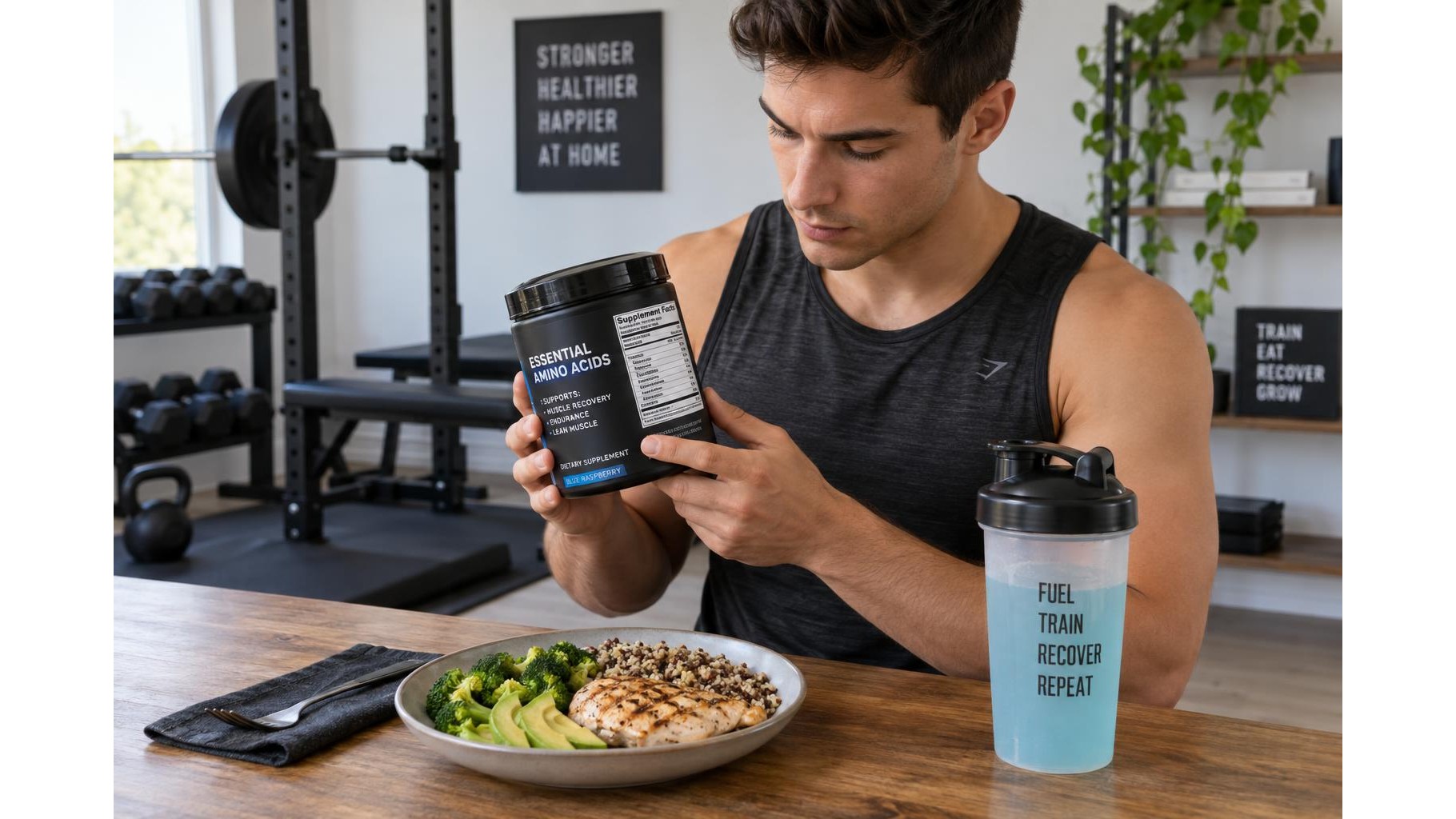
Essential amino acids (EAAs) are nutrients your body cannot make in sufficient amounts, so they must come from food or supplements. For home athletes, EAA products can look like a convenient shortcut to better recovery or muscle growth. The key is understanding what they provide, how they compare with protein-rich foods, and what they cannot replace.
What an EAA supplement contains
EAAs are the nine amino acids that must be obtained through the diet: histidine, isoleucine, leucine, lysine, methionine, phenylalanine, threonine, tryptophan and valine. Powders and drinks typically supply some or all of these in measured amounts, often with flavourings, sweeteners or other ingredients. Check the label to see whether all nine are included, how much of each serving provides, and whether the product lists the amounts clearly. Leucine is often highlighted because it contributes to the signals involved in muscle protein synthesis, but it cannot do the job alone.
How they compare with complete protein
Foods such as eggs, dairy, fish, meat, soy and other protein-rich options provide EAAs alongside the other amino acids your body uses to build and maintain tissue. A complete protein powder, such as whey or a suitable plant blend, also delivers a broader range of amino acids and usually more total protein per serving. EAAs can be useful when a full shake or meal is impractical, but they are not automatically more effective than meeting your protein needs with food or complete protein. Compare servings by their actual protein and amino-acid content, not by marketing claims.
What they may—and may not—do
EAAs provide building blocks for protein synthesis. They may be a convenient option for someone who struggles to eat around training, has limited appetite, or needs a portable supplement. However, they are not a guaranteed muscle-building, fat-loss or performance solution. Progress depends on a consistent training plan, sufficient energy and protein across the day, sleep and recovery. Taking EAAs cannot compensate for inadequate overall nutrition, missed workouts or poor sleep, and a supplement does not ensure faster recovery or greater gains.
When home athletes might consider them
First assess your usual meals and total daily protein. If you can comfortably meet your needs with food, an EAA supplement may add little practical value. If convenience is the issue, compare EAAs with a complete protein powder, yoghurt, milk or another portable protein source; the best choice is the one that fits your diet, budget and preferences. Consider timing as a matter of convenience rather than a narrow “anabolic window”: regular protein intake throughout the day and a suitable meal around training are generally more important than taking a specific product immediately before or after a session.
Label checks and reasons to seek advice
Read the full ingredient list, serving size and amounts of each amino acid. Check for allergens, sweeteners, caffeine or other added ingredients, and look for batch testing or credible quality assurance where available. Avoid assuming that “natural,” “advanced” or “recovery” claims prove effectiveness. Ask a doctor or registered dietitian before using supplements if you are pregnant or breastfeeding, have kidney or liver disease, take medication, are under 18, or have a medical condition or restrictive diet. Seek advice if you experience unexpected symptoms or are unsure whether a product is appropriate.
In summary, EAA supplements supply essential amino acids in a convenient form, but they are not a substitute for complete protein, balanced meals or progressive training. For most home athletes, the sensible starting point is to review food intake and training consistency, then use a supplement only if it solves a genuine practical need. Choose transparently labelled products, keep expectations realistic and seek professional guidance when health circumstances make supplementation less straightforward.