
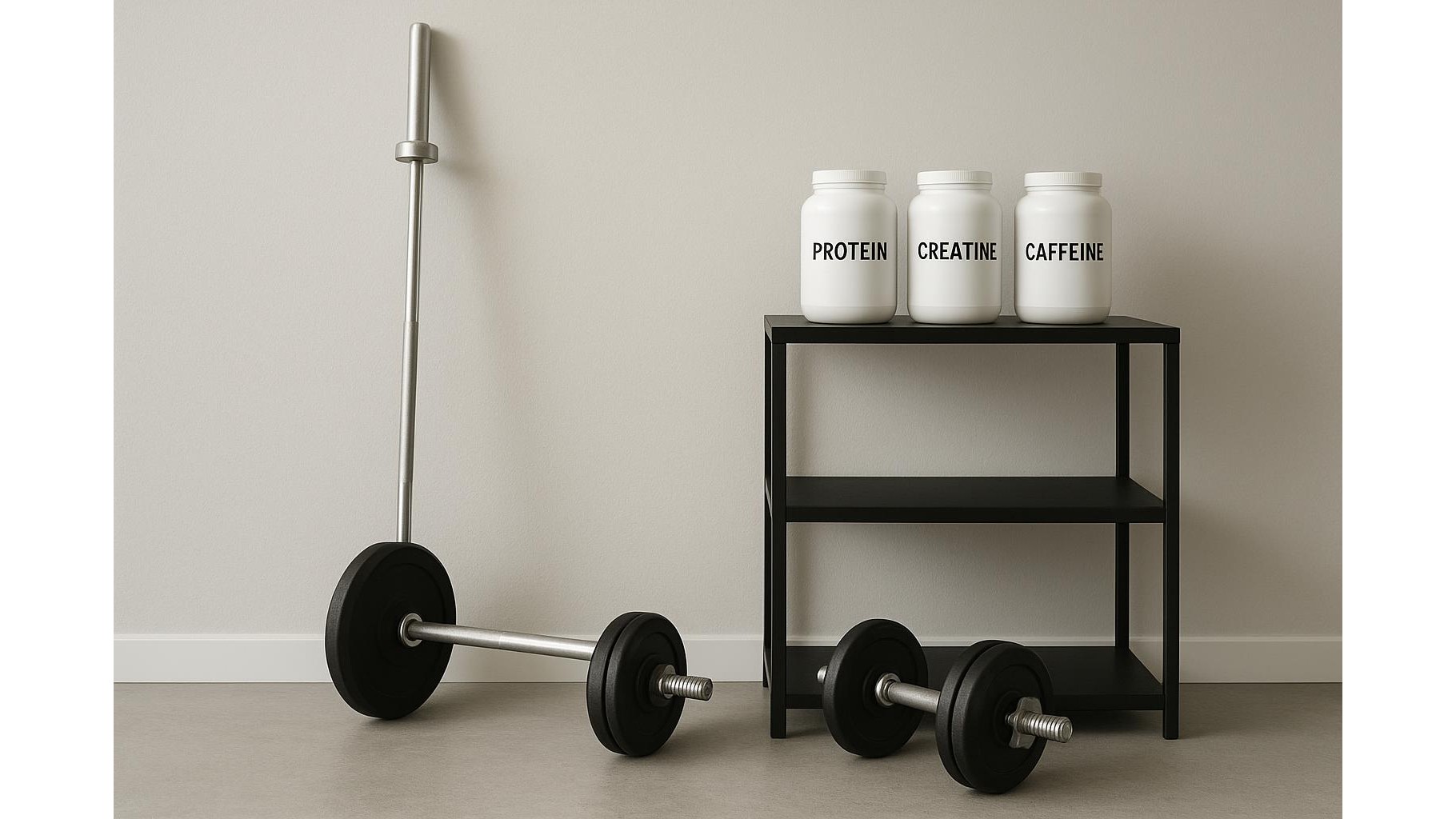
Training in a home gym makes your routine simpler – but your supplement shelf can quickly become overcrowded. Between colourful pre‑workout tubs and recovery‑branded post‑workout powders, it is hard to know what is genuinely useful and what is clever marketing. This article breaks down the evidence behind typical formulas and shows when one minimal, smart stack is enough for most home athletes.
What pre‑workout supplements actually do
Most commercial pre‑workout supplements are built around three goals: more energy, better focus and a stronger muscle pump. The key evidence‑based ingredients are usually caffeine for alertness and performance, beta‑alanine for buffering fatigue in high‑intensity efforts, and citrulline or other nitric‑oxide boosters for blood flow. These can help you push harder in heavy sets or intervals, even in a basic home gym with only dumbbells and a bench. However, many blends add overlapping stimulants, sugars and unnecessary plant extracts, which increase cost and side‑effects without clearly improving performance.
What post‑workout recovery formulas promise
Post‑workout supplements are marketed for muscle repair, glycogen replenishment and soreness reduction. Their backbone is almost always a fast‑digesting protein source, often whey, sometimes mixed with carbohydrates like maltodextrin. Evidence shows that hitting an adequate daily protein intake and total calories matters far more than a magical 30‑minute window. For most home lifters, a normal protein shake plus a balanced meal within a few hours is enough. Fancy recovery blends that add small doses of BCAAs, glutamine or proprietary herbal complexes rarely outperform simply getting sufficient protein, carbs and sleep.
One smart stack: protein, creatine and caffeine
If you want a minimalist approach that covers both pre‑workout and post‑workout needs at home, focus on three well‑researched basics: whey or plant protein, creatine monohydrate and caffeine. Protein supports muscle repair at any time of day; creatine improves strength, power and training volume when taken daily; caffeine, used strategically before tougher sessions, boosts performance and perceived energy. This simple stack can replace most specialised formulas. You can take creatine with any meal, have coffee or a small caffeine dose 30–45 minutes before training, and drink a protein shake after or whenever it best fits your total daily intake.
When separate pre and post products make sense
There are scenarios where distinct pre‑workout and post‑workout products may be helpful. If you train very early, a pre‑mixed pre‑workout can be a quick way to get caffeine and performance ingredients without brewing coffee or measuring powders in the dark. If you are an endurance or mixed‑sport athlete doing long, intense home sessions on a bike trainer or rower, a carb‑rich recovery drink after hard intervals can speed up glycogen restoration. Likewise, people who struggle with appetite might find a light, flavoured recovery shake easier to consume soon after training than a full meal, helping them consistently hit protein targets.
How to avoid redundant and overlapping ingredients
The main risk of buying multiple specialised products is overlap. You may end up double‑ or triple‑dosing ingredients like caffeine or beta‑alanine, leading to jitters, tingling, poor sleep or digestive upset. To avoid this, read labels and track how much of each active ingredient you get across the day. Prefer products that list exact dosages instead of “proprietary blends”. Aim for clinically supported ranges – for example, 3–6 mg/kg of caffeine pre‑workout and around 3–5 g of creatine per day – rather than random amounts repeated in several tubs. Often, you can get the same benefits by buying single‑ingredient powders and combining them sensibly around your training schedule.
For most home gym athletes, you do not need a cupboard full of different pre‑ and post‑workout supplements. A consistent training plan, sufficient sleep and overall nutrition matter far more than trendy formulas. Start with a solid diet, then consider a simple stack of protein, creatine and occasional caffeine before reaching for multiple specialised products. By understanding what each ingredient does and avoiding redundant overlap, you can support your performance and recovery while keeping your supplement routine – and budget – lean and effective.









