
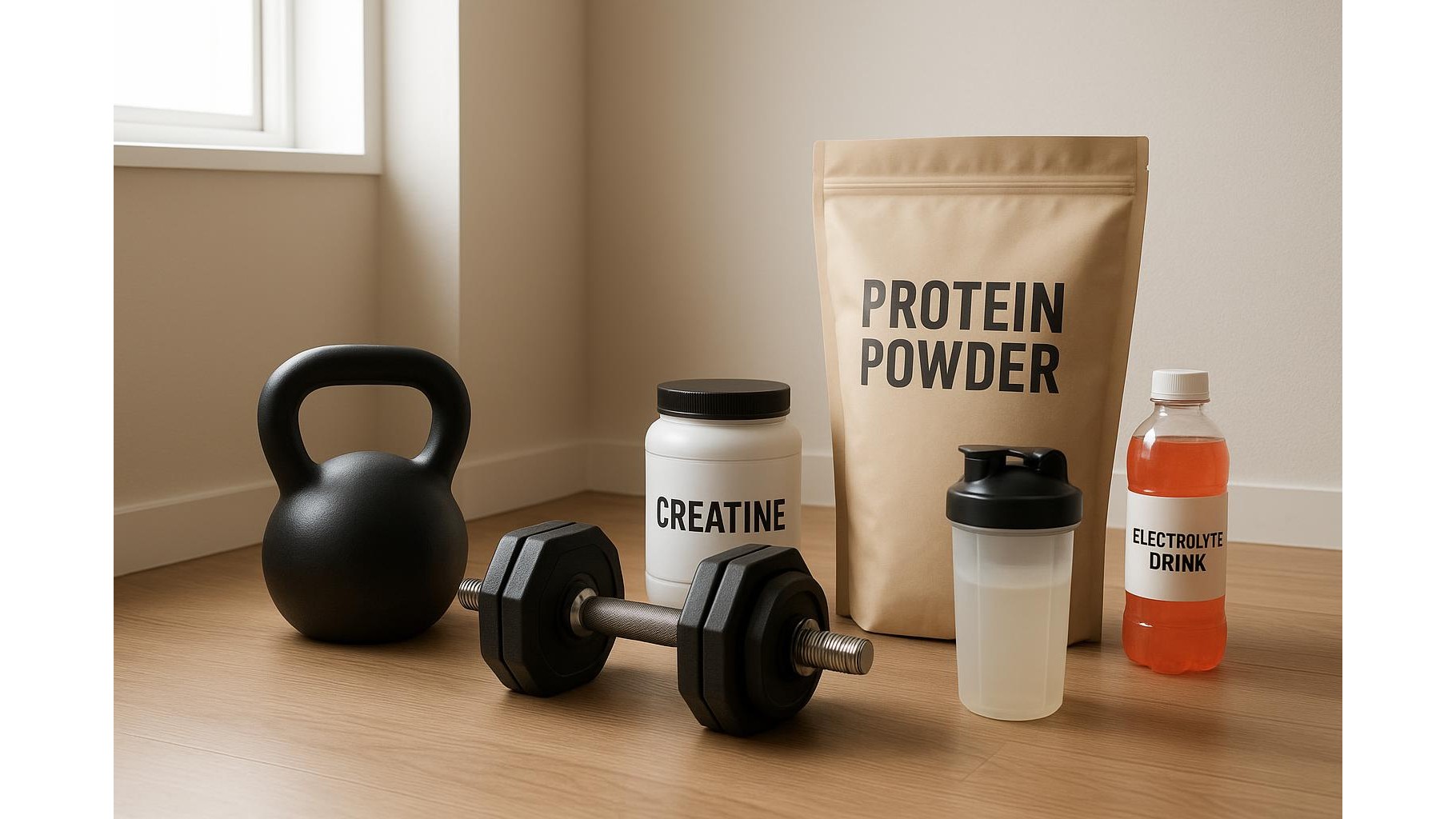
Building strength in a home gym doesn’t have to involve a complicated supplement shelf. A basic, research-backed stack built around creatine, protein and electrolytes can support muscle, performance and hydration without overwhelming your routine or your budget. By focusing on these three fundamentals and fitting them around consistent training, you create a simple framework that works whether you lift with dumbbells, a barbell or adjustable bands in your living room.
Why a minimalist supplement stack works
A minimalist supplement stack is ideal for home lifters because it targets the essentials: muscle building, strength output and basic hydration. Instead of chasing exotic formulas, you focus on nutrients with strong evidence, clear dosing and predictable effects. Creatine monohydrate improves high-intensity performance and long-term strength gains. Quality protein powder helps you reliably hit your daily protein target, especially if you train after work or in the early morning. Simple electrolyte mixes support fluid balance so you feel better during home workouts, particularly in warm rooms or garages.
Creatine: foundation for home strength gains
Creatine monohydrate is one of the most studied sports supplements and is especially useful for short, intense efforts like sets of squats, deadlifts or push-ups in your home gym. It increases the muscle stores of phosphocreatine, which helps regenerate ATP, your body’s immediate energy currency for explosive efforts. Most lifters do well with a simple dose of 3–5 g per day, taken at any time that suits your routine. Consistency matters more than timing. Over a few weeks, this supports increases in strength, training volume and, combined with adequate protein and calories, lean muscle mass. Because creatine draws water into muscle cells, staying well hydrated is important too.
Protein powder: supporting muscle repair and growth
For home athletes, a good protein powder is more about convenience than magic. Research suggests aiming for roughly 1.6–2.2 g of protein per kilogram of bodyweight per day to support muscle growth when you strength train. Hitting that purely from food can be tricky, especially with busy schedules. A scoop of whey, casein or a quality plant blend gives you around 20–25 g of protein in seconds. Taking 1–2 servings per day, spaced around meals or your workout, can help you reach your target. Look for options with minimal added sugars and clear labeling so you know how much protein, carbs and fats you are adding to your diet.
Electrolytes: small details that improve training comfort
When you train at home, particularly in a loft, spare room or garage, the environment is often warmer and less ventilated than a commercial gym. That can mean more sweat and greater losses of key electrolytes like sodium, potassium and magnesium. While you can cover plenty of your needs through food and a pinch of salt in meals, a low-calorie electrolyte powder or tablet mixed in water can make longer or more intense sessions feel easier. The goal is not a sugary sports drink for every short workout, but a simple way to support hydration, reduce cramping risk and maintain performance when you’re sweating more than usual.
Putting it all together: a simple daily routine
To build a practical, science-informed stack, start by anchoring everything to your training schedule. Take 3–5 g of creatine once per day, every day, with any meal or shake you consistently remember. Use protein powder strategically: one serving at breakfast if your morning meal is low in protein, or after your workout if that helps you reach your daily target. Add an electrolyte drink on days you train hard, sweat heavily or feel sluggish, especially in hot weather or long sessions. Keep the rest of your nutrition focused on whole foods, adequate calories and plenty of fluids, and resist the urge to add unnecessary pills and powders.
By keeping your supplement routine focused on creatine, protein and electrolytes, you support the key pillars of home training: strength, recovery and hydration. This simplified stack is easy to maintain, budget-friendly and strongly aligned with current sports nutrition research. Combined with progressive overload in your home workouts, good sleep and a balanced diet, it provides a solid platform for steady, sustainable strength gains without the confusion of an overloaded supplement cupboard.









