
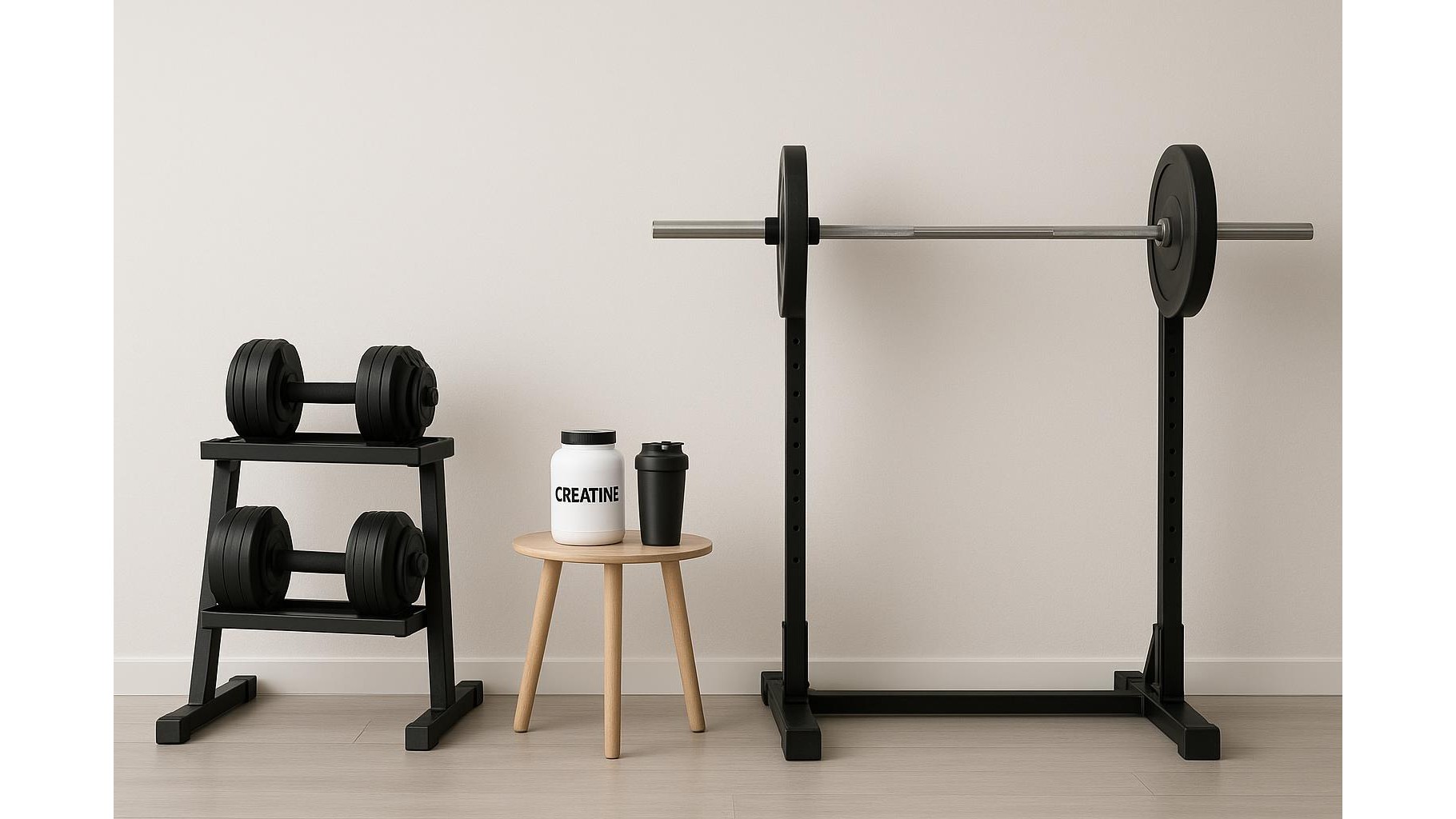
Training in a home gym makes it tempting to optimise everything with smart supplementation. Among the most popular options, creatine and beta-alanine often appear together in pre-workouts and “performance stacks”. But does combining them really make sense for your at‑home strength or conditioning plan, or are you better off keeping things simple?
How creatine and beta-alanine actually work
Creatine monohydrate increases the amount of phosphocreatine stored in your muscles, helping you rapidly regenerate ATP during short, intense efforts like heavy lifts, sprints and explosive sets. Over weeks, this supports greater training volume and strength gains. Beta-alanine, on the other hand, combines with histidine to form carnosine, a buffer against the burn of hydrogen ions in your muscles. This makes it particularly useful for efforts lasting around 60–240 seconds, like hard intervals, circuits and higher-rep sets. Because they target different limiting factors, stacking them can be complementary for some home trainees.
Who really benefits from the stack
The creatine plus beta-alanine stack makes the most sense if your home training includes both heavy lifting and demanding conditioning. Think powerbuilding plans, functional fitness WODs, kettlebell complexes or HIIT intervals on a bike or rower. In these cases, creatine supports peak power and strength, while beta-alanine helps you sustain tough efforts with less performance drop-off. Recreational lifters focused on pure strength, with long rest periods and minimal conditioning, will usually benefit more from just creatine. Conversely, if your goal is mainly low-intensity cardio, steps or yoga at home, neither supplement will transform your results compared with consistent training, sleep and nutrition.
Evidence-based dosages and timing at home
For creatine, the evidence-based sweet spot is 3–5 g per day of creatine monohydrate, taken at any time you remember consistently. A loading phase is optional; within a few weeks you reach saturation anyway. Beta-alanine works best at a total daily dose of 3.2–6.4 g, split into smaller servings to reduce tingling. Timing is less crucial than regular intake, as benefits come from building muscle carnosine over weeks. For home workouts targeting strength, creatine alone often covers your needs. For HIIT or hybrid sessions, using both daily (not just “on workout days”) is what the research supports.
Side effects, safety and when to skip
In healthy adults, creatine monohydrate is one of the most studied and safest sports supplements. Minor weight gain of 1–2 kg from increased muscle water is common and not harmful, but can matter if you are very weight-class focused. Beta-alanine can cause harmless tingling (paresthesia), especially in larger single doses; splitting your intake through the day usually fixes this. You should consider skipping or delaying the stack if you have kidney issues (creatine requires medical clearance), are pregnant or breastfeeding, or if your supplement budget is tight. In many cases, prioritising quality food, adequate protein and progressive home programming will give better returns than adding more powders.
When the stack is unnecessary for your goals
If your main home-gym objective is fat loss, general health or simply staying active, stacking creatine and beta-alanine is unlikely to be a game changer. Creatine alone can still help maintain strength and muscle while dieting, but beta-alanine adds less value unless you are doing a lot of performance-focused intervals. Beginners who are still learning basic movement patterns and consistency will get far more out of dialling in sleep, step count and progressive overload than chasing marginal gains from a stack. Even for intermediate lifters, you may find that creatine plus coffee before training delivers most of the benefit, with beta-alanine reserved for more serious performance phases.
Used intelligently, a creatine and beta-alanine stack can be a useful tool for home athletes pushing both strength and conditioning. Creatine offers reliable gains in power and training volume, while beta-alanine can extend high-intensity efforts when sessions get brutally hard. But supplements work best when layered on top of solid programming, recovery and nutrition. If your goals are general fitness or you are just getting started with home training, focus on the basics and consider adding creatine first. Only once your routine is consistent and your sessions demand it does stacking with beta-alanine truly make sense.









