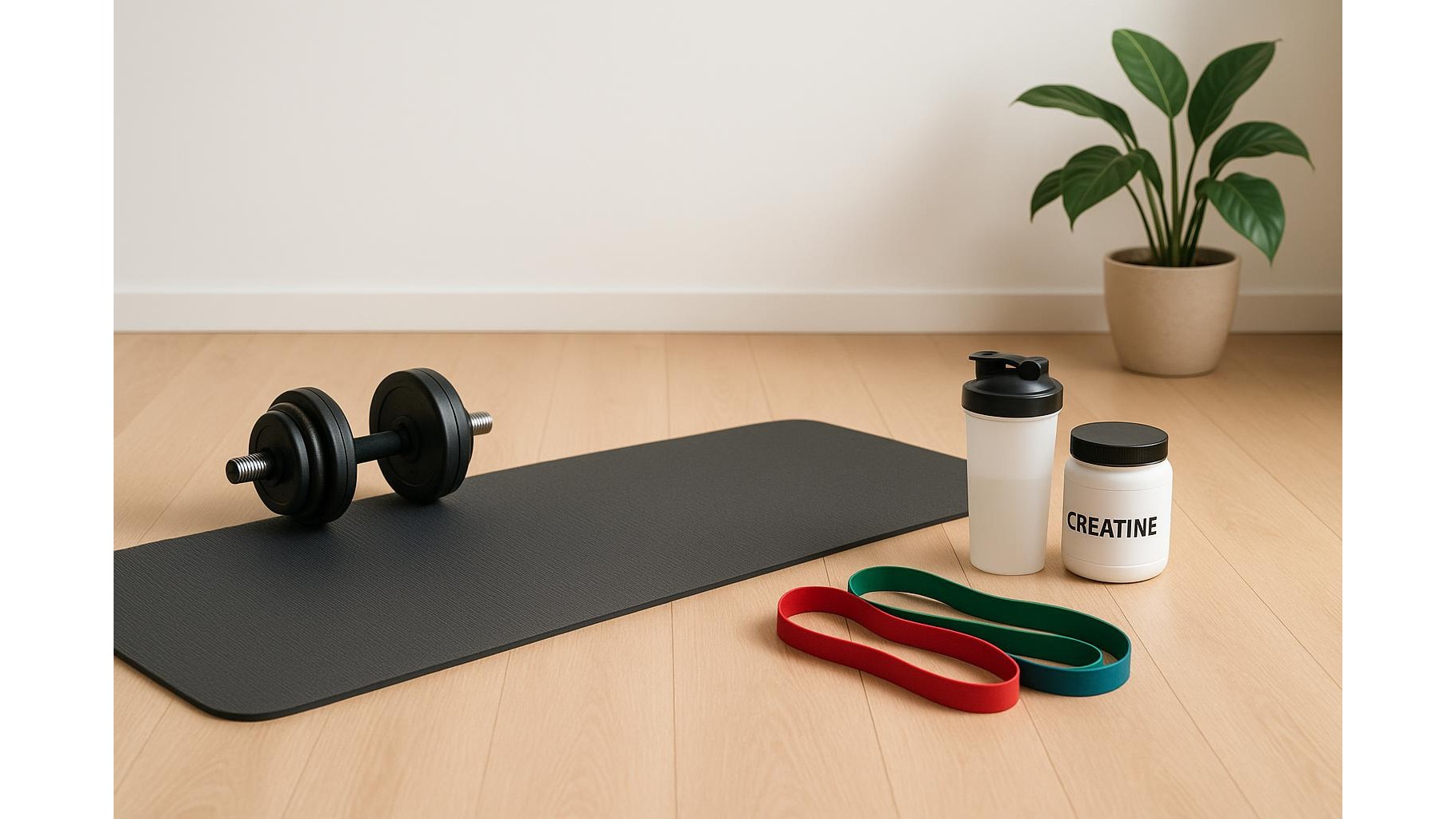
Vegetarian and vegan home athletes often do everything right with training and diet, yet still feel they lack top-end power, recovery, or muscle fullness. One reason is that plant-based diets naturally provide less creatine than omnivorous diets, because creatine is found mainly in meat and fish. For lifters, home HIIT fans, and endurance athletes training in the living room or garage, smart creatine use can safely close this gap and support better performance.
Why plant-based athletes benefit more from creatine
Creatine is stored in muscle as phosphocreatine, where it rapidly regenerates ATP, your body’s basic energy currency for short, intense efforts. Omnivores get extra creatine from animal products, but if you are vegetarian or vegan your baseline muscle creatine levels are typically lower. Studies show that when plant-based athletes supplement creatine, their relative gains in strength, lean mass, and power are often greater than in meat eaters because their muscles have more room to “top up”. For home training, that can translate into extra reps on push-ups, heavier dumbbell work, and better sprint intervals on your exercise bike or rower.
How to dose creatine: loading, maintenance, and timing
The most researched and cost-effective form is creatine monohydrate. The classic protocol uses a loading phase of about 20 g per day, split into 4 doses of 5 g for 5–7 days, followed by a maintenance dose of 3–5 g daily. For many home athletes, skipping the loading phase and just taking 3–5 g per day is simpler and easier on the stomach; you will still fully saturate your muscles within 3–4 weeks. Timing is flexible: you can take creatine any time of day, but many people prefer with a meal or around training to help consistency. What matters most is taking it every day, not when you take it.
Minimising digestive issues and staying safe
Most people tolerate creatine monohydrate very well, but some experience mild bloating or digestive discomfort, especially during high loading doses. To minimise this, start with 3 g per day for a week, then increase gradually if needed. Take it with food and a large glass of water, and avoid dumping huge scoops into a single drink. Vegans and vegetarians should also pay attention to overall hydration and electrolyte intake, as creatine draws water into the muscles. In healthy individuals with normal kidney function, long-term use of recommended doses of creatine monohydrate has been shown to be safe, but if you have kidney disease or other medical conditions, consult a healthcare professional before starting.
How creatine fits into a home workout routine
Creatine is not a magic powder; it amplifies the effects of consistent training and an adequate protein intake. As a vegetarian or vegan home athlete, aim to combine creatine with 1.6–2.2 g of protein per kilogram of body weight per day from sources like tofu, tempeh, seitan, legumes, and plant protein powders. Use creatine alongside a structured routine including resistance training (dumbbells, kettlebells, bands, bodyweight) at least 2–3 times per week and some form of high-intensity intervals or sprints. Over a few weeks you should notice improved session quality, better recovery between sets, and possibly a modest increase in body weight due to extra muscle mass and water stored in muscle cells, not fat.
Choosing a vegan-friendly creatine supplement
When shopping, look for a simple, unflavoured creatine monohydrate powder with no unnecessary fillers, ideally labelled as suitable for vegetarians and vegans. Most high-quality creatine is synthetically produced and inherently animal-free, but vegan labelling gives extra peace of mind. Opt for products that clearly state the dose per serving (usually 3–5 g), dissolve reasonably well, and come in a resealable pouch or tub that is easy to store in your home gym area or kitchen. Because creatine is tasteless, you can stir it into water, juice, or a post-workout plant protein shake, making it effortless to add to your daily routine.
Putting it all together for plant-based home performance
For vegetarian and vegan home athletes, adding a well-dosed, vegan-friendly creatine monohydrate is an evidence-based way to bridge the natural dietary gap, increase muscle creatine stores, and support strength and power in your living-room or garage workouts. By starting with a modest daily dose, taking it consistently with meals, and combining it with smart training and adequate plant protein, you can reap the performance and recovery benefits while keeping side effects to a minimum. Think of creatine as a simple, proven foundation supplement that helps you get more out of every rep, sprint, and set you perform at home.