Among all the supplements home lifters hear about, creatine is the one with the strongest evidence behind it and also the one that creates the most confusion. The good news: you do not need a sports science degree to use it effectively. With a few simple rules, you can decide if creatine fits your home routine, how much to take, when to take it, and what to expect—without chasing hype or worrying about exaggerated risks.
Table of contents
What creatine actually does in your muscles
Creatine monohydrate is a compound your body already produces and stores in muscle cells. During short, intense efforts—like heavy sets of squats, deadlifts or push‑ups to failure—your muscles use a system called the ATP‑PCr (phosphocreatine) system for fast energy. Supplementing creatine increases your muscle creatine stores, so you can usually squeeze out an extra rep or maintain higher power for a bit longer. Over weeks and months, those small performance gains can translate into more total training volume and, ultimately, more strength and muscle mass. It does not work like caffeine; you won’t “feel” it right away, but it quietly boosts your capacity in the background.
Who really benefits from creatine at home
Creatine is most useful if your home training includes strength training, bodybuilding‑style work, or explosive efforts such as kettlebell swings, sprints, or plyometrics. Beginners can benefit because it supports faster strength gains when they’re learning key lifts. Intermediate and advanced lifters often see the clearest benefit in terms of extra reps and sustained performance across sets. People following a plant‑based diet may gain even more, as they tend to have lower baseline creatine from food. On the other hand, if your routine is mostly low‑intensity cardio or light yoga, creatine will not move the needle much. It’s also less critical if you already struggle to train consistently; supplements cannot replace a solid, progressive home program built around big compound movements.
Simple dosing: loading vs daily low dose
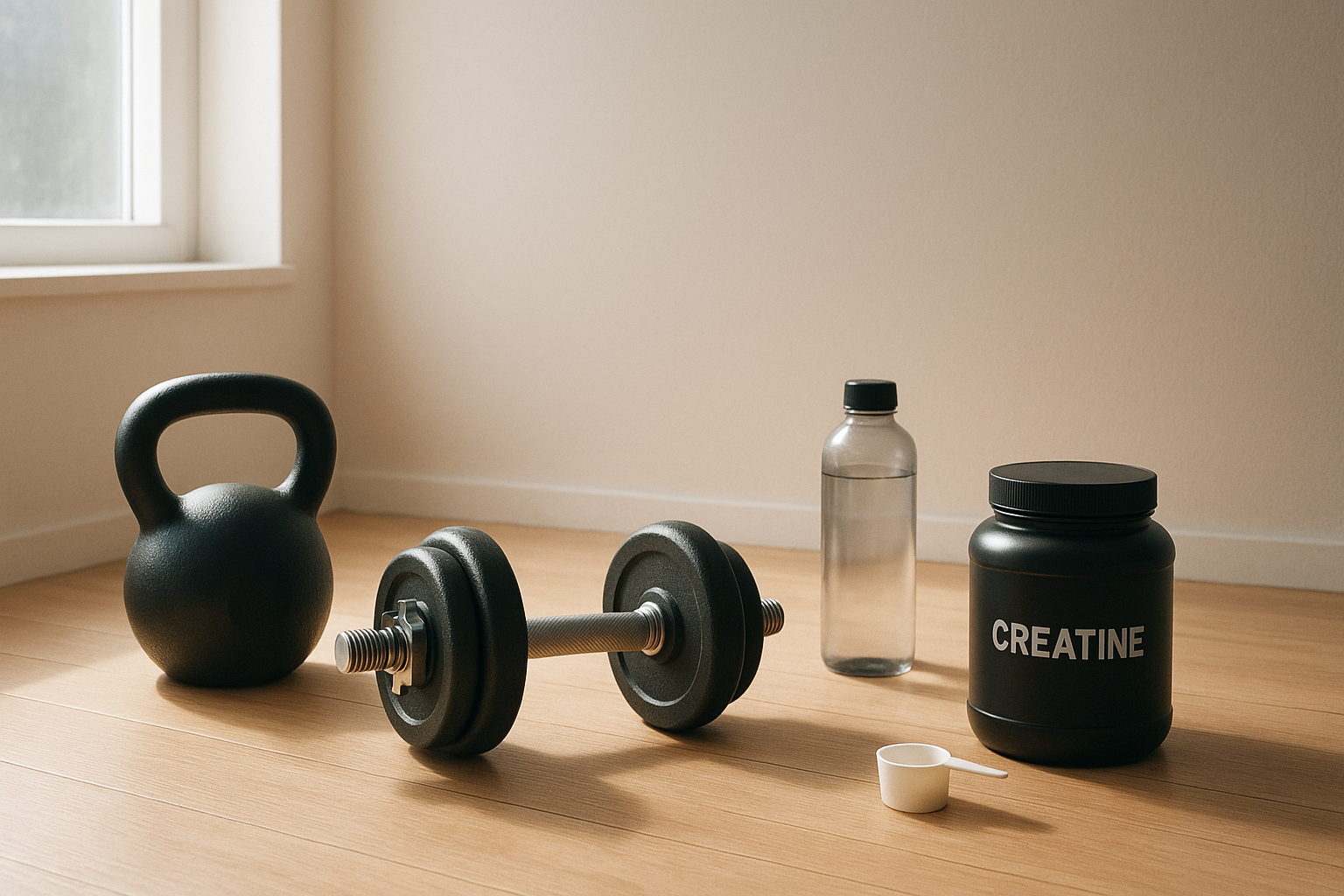
The simplest evidence‑based approach is to take 3–5 g of creatine monohydrate once per day. You do not have to load, but a loading phase (about 20 g per day, split into 4 doses, for 5–7 days) saturates muscles faster. After that, you return to 3–5 g per day. For most home lifters, skipping loading and going straight to a steady daily dose is easier and avoids mild stomach discomfort some people feel at higher intakes. Consistency matters far more than timing. Use kitchen scales or the product’s scoop to get close to your target dose, mix it in water or a shake, and take it every day, even on rest days, to maintain elevated muscle creatine stores.
Timing, carbs, and hydration: what really matters
Many myths claim you must take creatine pre‑workout or only post‑workout with high‑carb meals to make it work. Research shows that total daily intake is what really counts. You can take it at any time of day that you consistently remember—morning coffee, lunchtime, or with your post‑training protein shake are all fine. Pairing it with food may slightly improve comfort for those with sensitive stomachs. What is more important is hydration: creatine helps draw water into muscle cells, which is part of how it supports performance, so drink enough fluids throughout the day. Some people notice a small increase in body weight (often 1–2 kg) from extra water in the muscles; that’s normal and not the same as gaining fat.
Safety, side effects and who should be cautious
Creatine monohydrate is one of the most studied sports supplements, with research in athletes, older adults, and clinical settings. In healthy individuals with normal kidney function, doses around 3–5 g per day are considered safe over the long term. The most common side effects are mild: occasional stomach upset or bloating, often solved by splitting the dose or taking it with food. People with known kidney disease or other serious medical conditions should talk to a doctor before using creatine, and anyone taking prescription medication should do the same. Choose basic creatine monohydrate powder from a reputable brand; fancier forms rarely outperform standard monohydrate but usually cost more. If a supplement promises extreme fat‑burning or “instant muscle growth,” treat it with skepticism—creatine is powerful, but still only one piece of the puzzle.
For home lifters, creatine works best when your fundamentals are in place: a structured program, progressive overload, sufficient protein, and adequate sleep. If you are already training hard and eating reasonably well, adding 3–5 g of creatine monohydrate per day is a low‑effort way to support strength and muscle over the long term. If you are still building the habit of regular workouts, focus on consistency first and view creatine as an optional bonus later. Used with realistic expectations, creatine is a simple, well‑researched tool that can quietly help you get more from every session in your home gym.