Training hard in a home gym is great for strength and independence, but it also means you are fully responsible for your own joint health. Collagen powders, hyaluronic acid capsules and generic “joint support” blends are everywhere, promising bulletproof knees and pain‑free shoulders. This article offers an evidence‑based look at what these supplements can and cannot do, and how to integrate them intelligently into a home training routine.
Table of contents
How joints actually work under the bar
Your joints are where bones meet, cushioned by cartilage and lubricated by synovial fluid. When you squat, press or pull, forces travel through these structures repeatedly. Over time, factors like poor technique, rapid load jumps, low recovery and age‑related cartilage wear can lead to stiffness or pain. Supplements such as collagen and hyaluronic acid are marketed to “rebuild” or “lubricate” joints, but they work indirectly: they provide raw materials or influence the environment around cartilage, rather than magically regrowing it. For home lifters, understanding this basic biology sets realistic expectations before reaching for any powder or capsule.
Collagen supplements: what the science really says
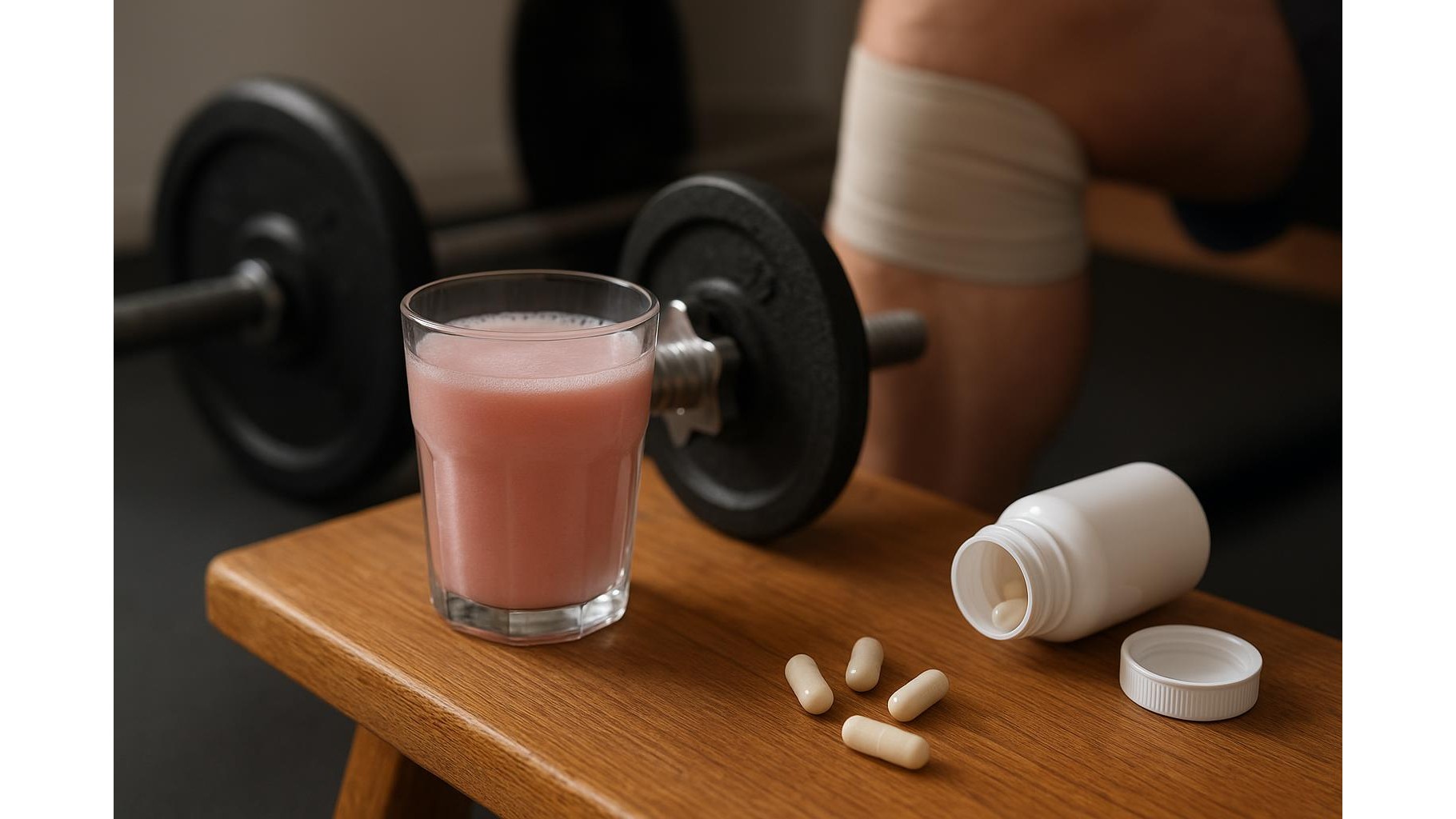
Collagen is the main structural protein in tendons, ligaments and cartilage. Oral hydrolysed collagen is broken down into amino acids and peptides that can be used throughout the body, including connective tissue. Several studies suggest that around 5–15 g per day, taken consistently for weeks, may modestly improve joint comfort and support tendon health, especially when combined with strength training and adequate vitamin C. For home lifters, collagen is not a painkiller and will not fix severe injuries, but it can be a useful adjunct alongside progressive loading and well‑designed programming. Look for products that clearly state “hydrolysed collagen peptides”, provide at least 5 g per serving and avoid unnecessary sugars or proprietary blends.
Hyaluronic acid and lubrication for creaky joints
Hyaluronic acid (HA) is a gel‑like molecule that helps retain water in tissues, contributing to the viscosity of synovial fluid. In medical settings, HA is sometimes injected directly into arthritic knees, but oral HA supplements are far milder. Early research suggests they may slightly improve joint comfort in some people with mild osteoarthritis, likely by supporting the overall environment in and around the joint. For home lifters, this means any benefit will be subtle and slow, not dramatic. HA capsules are generally well tolerated, but they should be seen as one small part of a joint‑care strategy that prioritises technique, load management, sleep and bodyweight control.
Glucosamine, chondroitin and other “joint support” blends
Many joint support products combine glucosamine, chondroitin, MSM and plant extracts into one capsule. Evidence for glucosamine and chondroitin is mixed: some trials show mild reductions in joint pain over months, others show little difference from placebo. They seem to work best in people with mild to moderate osteoarthritis rather than healthy, younger lifters. If you choose to experiment, give any product at least 8–12 weeks before judging results and track your symptoms alongside your training log. Prioritise transparent labels that list exact doses over flashy marketing. Remember that no capsule can compensate for poor exercise selection, excessive volume or skipping warm‑ups.
Integrating supplements safely into a home training routine
Before adding collagen, hyaluronic acid or joint blends, home lifters should first fix the foundations: solid technique, gradual load progression, movement variety and adequate recovery. If pain persists, consultation with a qualified healthcare professional is essential to rule out serious issues. When you do introduce supplements, change one variable at a time so you can actually assess its effect. Take collagen consistently, often with a small source of vitamin C about an hour before training, and consider HA or glucosamine if you have mild degenerative symptoms and no contraindications. Always check for interactions with existing medication, and be wary of products that promise instant, dramatic results.
For home lifters, the most powerful “joint support stack” is still smart programming, good form and lifestyle habits. Collagen and hyaluronic acid may offer modest benefits, particularly for older or higher‑volume trainees, but they are supporting actors, not the main solution. Start with evidence‑based expectations, choose simple, clearly dosed products, and track your pain, mobility and performance over time. Used this way, supplements can complement your training plan rather than distract you from the fundamentals that truly keep your joints lifting for the long term.