
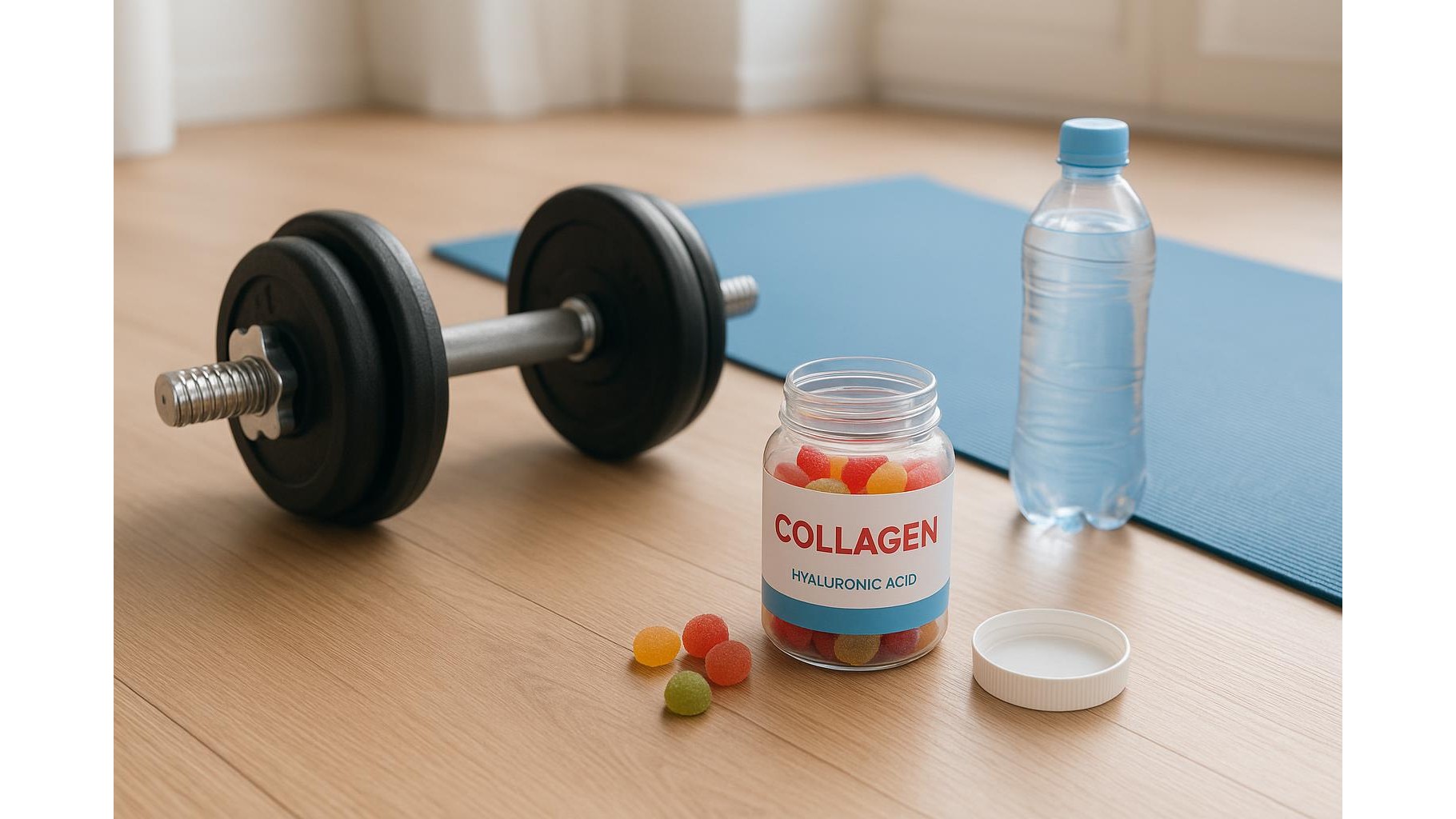
Training in a home gym puts steady load on your joints while sweat, heating and air conditioning can stress your skin. This has made collagen and hyaluronic acid gummies a trendy “beauty plus joints” solution for home athletes. They promise easier recovery, smoother skin and convenient dosing in a candy-like format. But how much of this is backed by evidence, how should you time them around workouts, and when are they simply not worth the money?
What collagen and hyaluronic acid actually do
Collagen is the main structural protein in cartilage, tendons and ligaments, while hyaluronic acid helps retain water in your joints and skin, acting like a natural lubricant and moisturizer. Supplementing collagen can provide amino acids (glycine, proline, hydroxyproline) that your body uses to support connective tissue, while hyaluronic acid may help maintain joint lubrication and skin hydration. For home athletes who squat, jump or do high‑rep circuits on hard flooring, this combo conceptually targets both joint comfort and skin appearance. However, results are subtle and slow: you typically need weeks of daily use before judging any benefit.
Realistic benefits for home athletes
For most people training at home, gummy collagen and hyaluronic acid supplements are not magic joint fixes, but they can be one piece of a broader recovery strategy. Studies on collagen peptides (usually 5–15 g per day) show modest improvements in joint discomfort and function in active adults, particularly in knees. Hyaluronic acid, typically 60–200 mg daily, may support joint lubrication and help dry or stressed skin from frequent showers and indoor heating. Expect potential small improvements in joint stiffness, comfort during bodyweight or kettlebell work, and slightly more plump, hydrated skin—not dramatic pain relief or wrinkle removal. They work best when combined with smart loading, strength work for joint stability, adequate protein intake and good sleep.
Dosing and timing with your workouts
Most collagen gummies provide far less collagen than powdered supplements, so dosing matters. To approximate research-backed intakes, you want to look for products that reach at least a few grams of collagen daily, even if this requires multiple gummies, and 60–120 mg of hyaluronic acid. Consistency is more important than precise timing, but taking your gummies 30–60 minutes before a session with a small source of vitamin C (like fruit or juice) may help collagen utilization for connective tissues. For home athletes, the simplest strategy is: take your gummies at roughly the same time every day, link them to a habit (pre‑workout warm‑up or first meal), and keep your total daily protein high enough so collagen supplements complement, not replace, full-spectrum protein sources.
When these “beauty plus joints” gummies are not worth it
There are situations where collagen and hyaluronic acid gummies add cost without meaningful benefit. If your overall diet is low in protein, you sleep poorly, and your training program is unbalanced or too aggressive for your level, gummies will not fix sore knees or tight shoulders. Their collagen dose is often low for the price, and sugar or sweeteners may be unnecessary if you already meet your protein needs with food or unflavoured powders. They also are not a treatment for significant joint injuries or arthritis—these conditions require medical guidance and structured rehab. If your budget is tight, investing first in quality protein powder, a good mat, supportive shoes and possibly some coaching will typically give more noticeable returns than premium gummies.
How to choose and use them smartly at home
If you decide to experiment with collagen and hyaluronic acid gummies, treat them like a small upgrade, not your foundation. Prioritize products that clearly state per‑serving amounts of collagen (in grams) and hyaluronic acid (in milligrams), have transparent ingredient lists and avoid unnecessary fillers. Aim for a trial period of at least 6–8 weeks of consistent use while tracking how your joints feel in key home exercises like squats, lunges, push‑ups and skipping. Combine them with basic skin care habits—hydration, sunscreen, and gentle cleansing after workouts—so any “beauty” benefit has a supportive context. Most importantly, keep perspective: if you are already covering sleep, nutrition and programming, gummies may add a small edge; if not, they are a distraction.
In summary, collagen and hyaluronic acid gummies can make sense for home athletes as a convenient, pleasant way to top up connective‑tissue nutrients and support skin hydration, but only as a secondary tool. Their effects are modest, depend on adequate dosing and consistency, and work best on top of solid basics: structured training, strong muscles around the joints, sufficient dietary protein and good recovery habits. Used with realistic expectations, they may slightly improve joint comfort and skin feel; used as a shortcut, they mostly lighten your wallet.









