For many home lifters chasing better performance from short, intense sessions, carnosine and its precursor beta-alanine have become go-to supplements. Marketed as muscle “buffering” aids, they promise to delay burning fatigue and squeeze out extra reps. But how well do they really work when your training consists of 30–45 minute garage or living-room workouts instead of lengthy gym marathons? This article looks at the evidence, who might benefit, how to dose beta-alanine, and the side effects to watch for.
What are carnosine and beta-alanine?
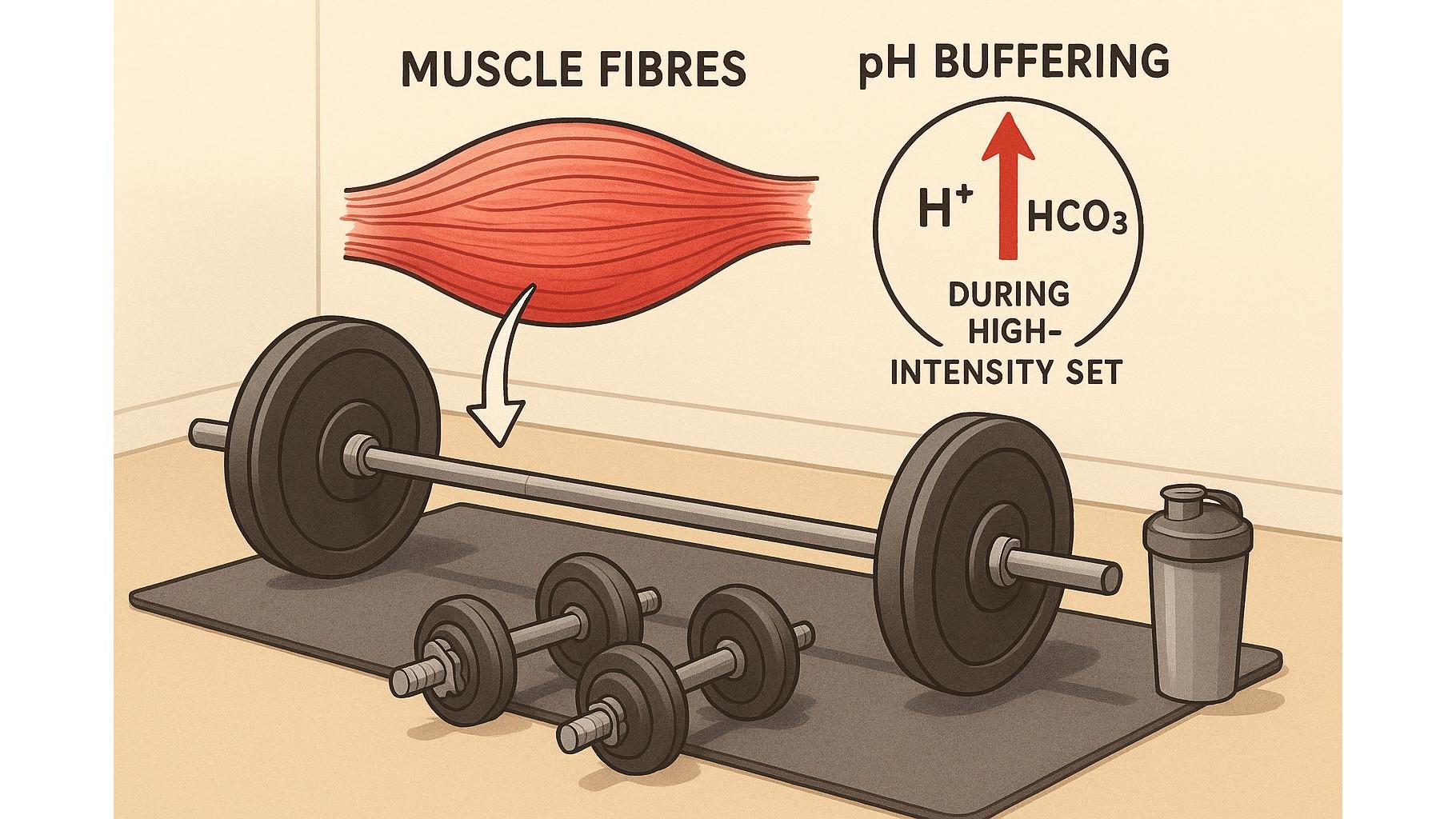
Carnosine is a dipeptide made from beta-alanine and histidine, stored in skeletal muscle. Its main role for lifters is to act as a pH buffer, helping neutralise the hydrogen ions that accumulate during high-intensity efforts and contribute to that familiar burning sensation. Direct carnosine supplements are poorly absorbed, so most products use beta-alanine, which your body converts into carnosine over time. By increasing muscle carnosine stores, beta-alanine can theoretically help you maintain power output longer during hard sets, especially in the 1–4 minute effort range.
Does buffering really help short home workouts?
Most studies on beta-alanine supplementation involve repeated bouts of high-intensity exercise lasting between roughly 30 seconds and 4 minutes: think hard intervals, conditioning circuits or higher-rep strength work. This makes the data quite relevant to home workouts where you perform AMRAP sets, supersets or short conditioning pieces with limited rest. Research consistently shows small but meaningful improvements in total work done, number of reps, or time to exhaustion in this time domain. However, beta-alanine will not turn a beginner into a powerhouse overnight; its effects are subtle, adding a few extra reps or slightly delaying fatigue when you are already pushing close to failure.
Who is most likely to benefit in a home gym setting?
Home trainees who focus on high-intensity intervals, metcon-style sessions, or moderate-to-high rep sets (8–20+ reps) are the most likely to notice benefits from elevated muscle carnosine. If your program is mainly low-rep, long-rest strength work, buffering fatigue is less of a limiting factor, so beta-alanine may provide less value. Athletes training in very small spaces—using dumbbells, resistance bands, kettlebells or bodyweight circuits—often rely on density and intensity instead of heavy loads; in these scenarios, carnosine’s buffering capacity can help sustain performance from set to set. Well-trained lifters who are already near their recovery limits may also appreciate even modest gains in rep quality and volume.
Dosage basics and timing for beta-alanine
Most research-supported protocols use a total daily intake of around 3.2–6.4 g of beta-alanine, usually split into smaller doses throughout the day to reduce side effects. Carnosine levels build up gradually in the muscle, so timing around your workout is not critical; what matters is consistent daily intake for several weeks. Many lifters run a loading phase of at least 4 weeks and may keep using beta-alanine for 8–12 weeks before considering a break. Because carnosine levels decline slowly once you stop, the benefits can persist for some time, which is useful if your supplement budget is limited and you prefer to cycle products rather than using them continuously.
Common side effects and safety considerations
The most common side effect of beta-alanine is paresthesia, a harmless tingling or flushing sensation on the skin, particularly the face and hands. This tends to appear with larger single doses (e.g., over 1.6–2 g at once) and can be minimised by taking smaller servings multiple times per day or using sustained-release formulations. Healthy adults generally tolerate beta-alanine well when used at researched doses, but anyone with pre-existing medical conditions, pregnant or breastfeeding individuals, or those taking medication should consult a healthcare professional before adding buffering supplements. As always, prioritise protein intake, overall diet, sleep and structured training before relying on any pill or powder.
In summary, carnosine and beta-alanine can offer a modest but real performance boost for home lifters whose sessions include intense, short-duration efforts and higher-rep work. They are not essential for progress, and gains will be incremental rather than dramatic, but for trainees who already have their fundamentals in order, buffering supplements may help squeeze more quality out of each short workout. By understanding who benefits most, respecting evidence-based dosage ranges, and managing side effects, you can make an informed decision about whether beta-alanine belongs in your home gym supplement stack.