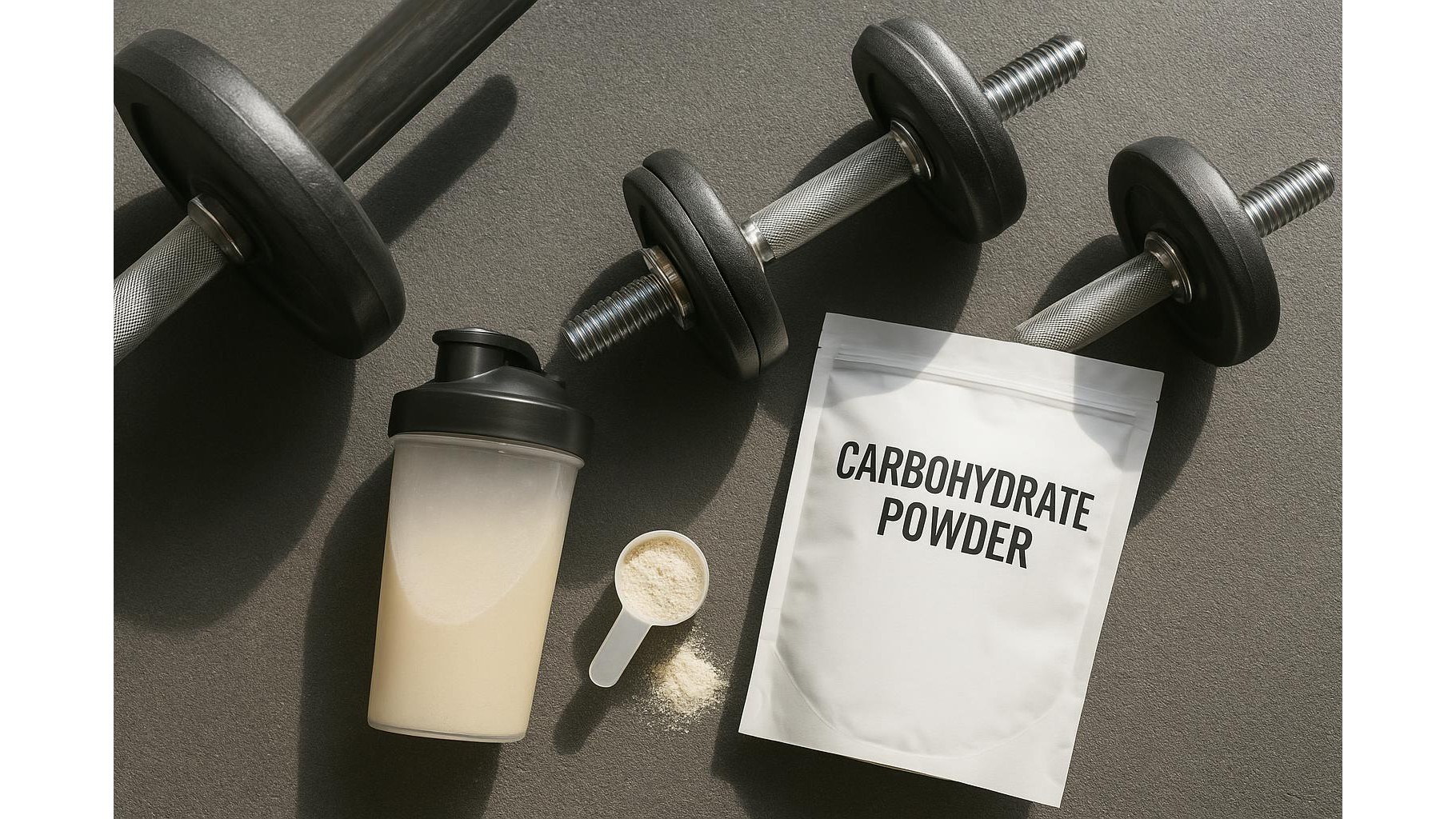
When you train at home, it is tempting to copy the supplementation habits of competitive athletes, including brightly coloured carbohydrate powders and intra-workout drink mixes. But do you really need extra carbs in your shaker for a living-room workout? This article takes an evidence-based look at carb drinks for home training: when they are actually useful, how much to take, and how to avoid turning them into nothing more than expensive, flavoured sugar.
What carbohydrate powders actually do
Carbohydrate drink mixes are simply concentrated, fast-digesting carbs (often maltodextrin, dextrose or highly branched cyclic dextrin) that you mix with water. Their main role is to provide a quick source of energy when you are training hard for a long time. Research shows that during prolonged or high-intensity exercise, adding 30–60 g of carbs per hour can help maintain blood glucose, delay fatigue and support performance. For shorter, moderate home sessions, however, your normal meals and stored glycogen are usually enough, meaning a carb powder often adds calories and cost without performance benefits.
[prompt_placeholder type=”cta” id=”telegram”/]
Who really benefits from carb powders at home
Carb powders make sense in specific home-gym scenarios. If you do high-volume strength training, back-to-back sessions, or long HIIT circuits lasting over 60–75 minutes, extra carbs can help you maintain intensity and reduce perceived exertion. They are also useful if you train early in the morning before breakfast or between two closely spaced workouts, when you have not eaten much. Endurance athletes using a turbo trainer or rowing machine at home for 90+ minutes are classic candidates. On the other hand, if you mostly perform 30–45 minute strength or cardio sessions and eat balanced meals, your need for a carb drink is low.
How to use carbohydrate powders smartly
To use carb powders intelligently, match the dose to your training duration and intensity. For home sessions of 45–60 minutes, most people do not need more than water, or at most 10–20 g of carbs if training fasted. For 60–90 minutes of hard work, 20–40 g of carbs sipped during the session is usually enough. Reserve higher intakes (40–60 g per hour) for very long or demanding workouts. Start on the low end to avoid stomach discomfort and experiment in training, not on important performance days. Remember that total daily energy balance and overall diet still matter far more than any intra-workout drink.
How to avoid unnecessary sugar and cost
Not all intra-workout carb powders are created equal. Many products add unnecessary flavourings, colouring and premium marketing, which raise the price without improving performance. Check the ingredient list: the core should simply be a carbohydrate source plus optional electrolytes like sodium and potassium. Avoid relying on these drinks during every short home workout, or you will add a surprising amount of liquid sugar and calories. For some people, a piece of fruit or a slice of toast eaten before training can be just as effective and far cheaper than a branded carb powder.
Practical tips for home-gym athletes
Before buying a carb powder, evaluate your typical week of training: session length, intensity and frequency. Prioritise regular meals rich in complex carbohydrates (oats, rice, potatoes, wholegrain bread) and adequate protein. Use carb drinks as a tool, not a habit: bring them in when your sessions become longer or when you notice a real performance drop late in the workout. If you are trying to lose fat, be particularly cautious with extra liquid carbs, as they can easily erase your calorie deficit. Track how you feel and perform with and without the drink to see whether it truly adds value to your home routine.
In summary, carbohydrate powders for home workouts are neither magic nor useless: they are simply a convenient way to add fast energy when training demands are high. For most short, moderate home sessions, a solid diet and water will do the job perfectly. Reserve carb drinks for long, intense or closely spaced workouts, dose them conservatively, and choose simple formulas to avoid paying extra for coloured sugar. Used this way, they can be a smart addition to your home-gym toolkit rather than an unnecessary expense.