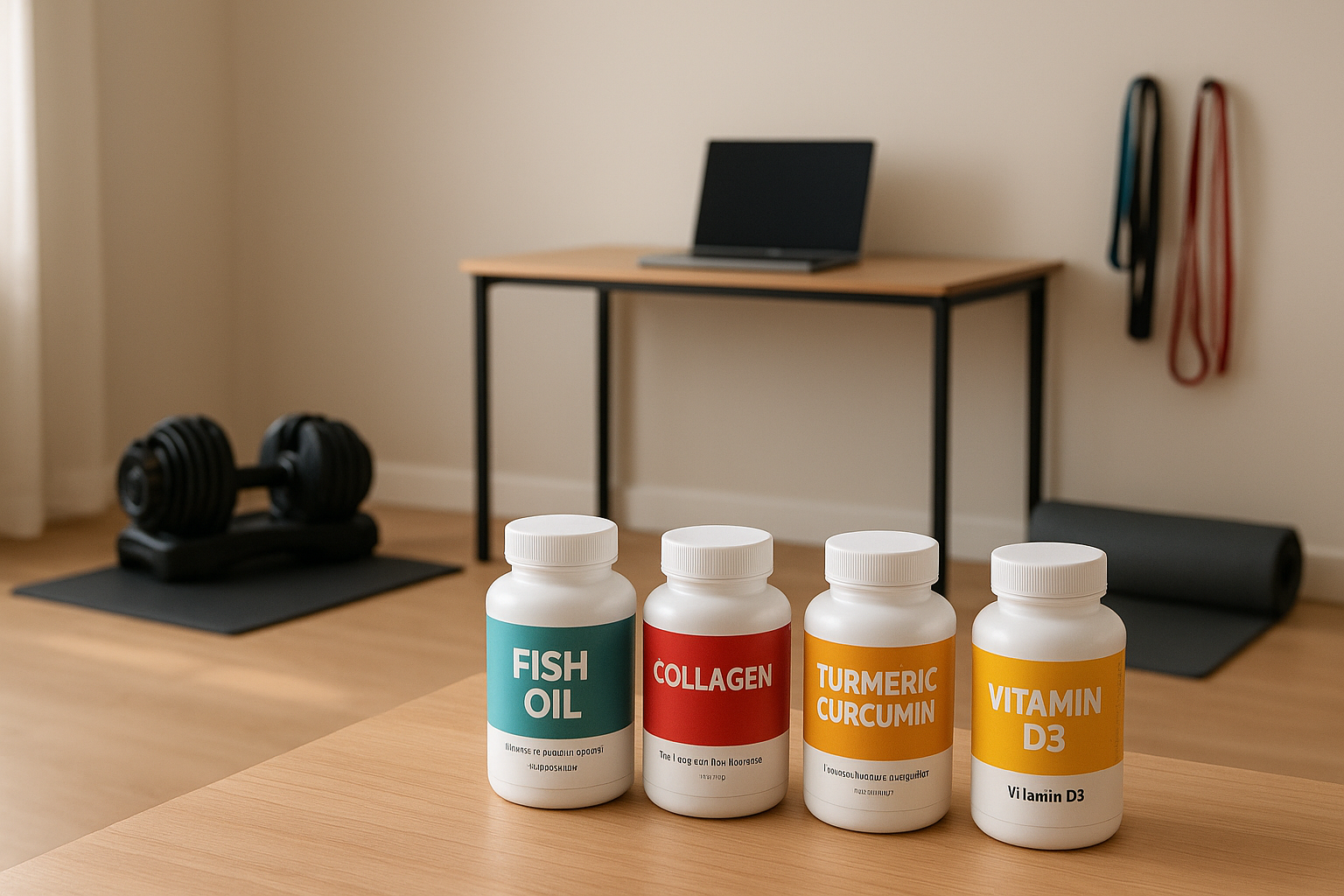
Spending your week between a home gym and a home office means your joints get stress from two sides: loaded squats, presses and pulls on one hand, and long hours of static sitting on the other. While no pill can fix bad form or poor ergonomics, some joint health supplements do have evidence behind them for easing discomfort and supporting cartilage, tendons and bones. Combined with smart training and movement habits, they can help keep your knees, hips and shoulders ready for the next session.
Table of contents
Glucosamine, chondroitin and MSM for everyday joint comfort
For lifters who grind through high-rep squats and desk workers with stiff knees after sitting, the classic combo of glucosamine and chondroitin is still one of the most researched options. These compounds are natural building blocks of joint cartilage and synovial fluid, and long-term supplementation may help reduce mild to moderate knee discomfort and improve function in some people. Adding MSM (methylsulfonylmethane) can provide a small additional benefit for soreness and mobility. Look for a product that clearly states its dosage per serving and splits the daily amount into two or three doses with meals for better tolerance. Consistency is key: joint tissues change slowly, so give it 8–12 weeks before judging results, and always pair supplements with strength work for the quads, hamstrings and glutes to support the knee from all angles.
Omega‑3 fish oil to calm joint inflammation
Heavy pressing and pulling sessions, combined with hunched laptop posture, can leave shoulders and upper back feeling inflamed and achy. High‑strength omega‑3 fish oil supplements, rich in EPA and DHA, have strong evidence for reducing markers of inflammation and supporting overall joint comfort. For active home lifters and sedentary desk workers, a daily dose that provides around 500–1000 mg of combined EPA/DHA can be a useful target, especially if your diet is low in oily fish. Choose a reputable, purified oil that minimises the fishy aftertaste and always take capsules with food. While omega‑3s will not fix technique flaws, they can take the edge off joint irritation so you can move more freely and maintain the consistency needed for progressive training and mobility work.
Collagen and vitamin C to support tendons and ligaments
For home athletes dealing with cranky elbows from pressing, or stubborn patellar and Achilles niggles from squats and skipping, collagen supplements have become a popular evidence‑based option. Collagen provides key amino acids used in the repair and maintenance of tendons, ligaments and cartilage. Research suggests that taking collagen alongside a small dose of vitamin C about 30–60 minutes before targeted loading (such as slow calf raises or isometric knee extensions) may enhance collagen synthesis in those tissues. A typical protocol uses 10–15 g of collagen powder mixed in water or coffee. Over several months, this can support resilience in the connective tissues that often limit progress much more than muscle does. Used consistently, collagen can complement a structured rehab plan for tendon issues triggered by both lifting and long hours in static positions.
Curcumin and turmeric for flare‑ups and deload weeks
If your home training cycles include periods where certain joints flare up after volume spikes, a well‑formulated turmeric or curcumin supplement can be useful during those higher‑stress weeks. Curcumin, the active component of turmeric, has anti‑inflammatory and antioxidant properties and may help reduce joint discomfort in some individuals, particularly when taken in bioavailable forms combined with piperine (black pepper extract) or specialised delivery systems. For lifters and desk workers alike, curcumin is best viewed as a short‑ to medium‑term tool to calm irritated tissues while you adjust load, refine technique and improve posture. Taking it with meals that contain some fat improves absorption. Remember that it should sit alongside, not replace, essential habits like regular movement breaks, shoulder‑blade stability work and refining overhead pressing patterns.
Vitamin D, K2 and movement habits for long‑term joint resilience
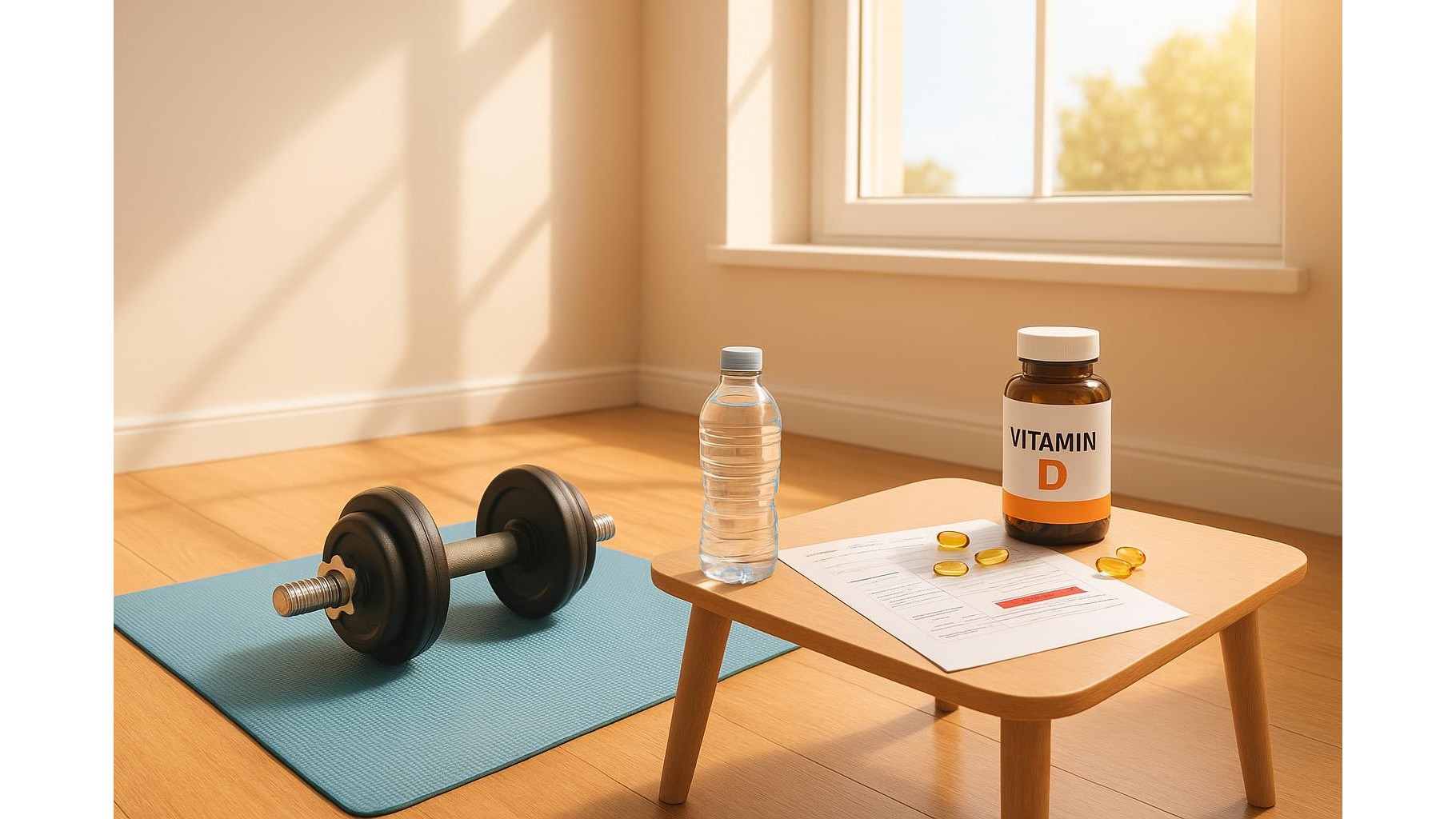
Supplements that support bone health are also crucial for joint resilience, particularly for anyone who spends most of the day indoors. Vitamin D3, often paired with vitamin K2, helps maintain healthy bones and supports muscle function, which in turn stabilises joints under load. Many adults in northern climates are low in vitamin D, especially through winter, which can negatively affect strength, mood and recovery. A moderate daily dose can be considered, ideally checked against blood tests and discussed with a healthcare professional. To make the most of these supplements, pair them with lifestyle fundamentals: standing up every 30–45 minutes, walking phone calls, using a more neutral seated posture, and programming joint‑friendly lifts such as goblet squats, hip hinges and landmine presses. Together, smart supplement choices and movement hygiene create a stronger foundation for pain‑free lifting.
In the end, joint supplements work best as part of a bigger system: progressive strength training, daily mobility, solid technique and a workstation that does not fight your body. Glucosamine–chondroitin formulas, omega‑3 fish oil, collagen, curcumin and vitamin D3 with K2 each target a different aspect of joint health, from cartilage and connective tissue to inflammation and bone strength. For home lifters and desk workers who lift, sit and repeat, using these tools thoughtfully—alongside load management, deload weeks and frequent movement breaks—can help keep your knees, hips and shoulders moving well for the long term.