When you train in your home gym, it is tempting to think that more supplements equal more gains. Among the most confusing choices are BCAAs, EAAs and regular protein powders. All three provide amino acids, but they are not interchangeable. Understanding how they differ, what the evidence actually says, and how they fit into a simple home-training routine will help you avoid wasting money and focus on what really supports muscle growth and recovery.
Table of contents
What are BCAAs, EAAs and complete proteins?
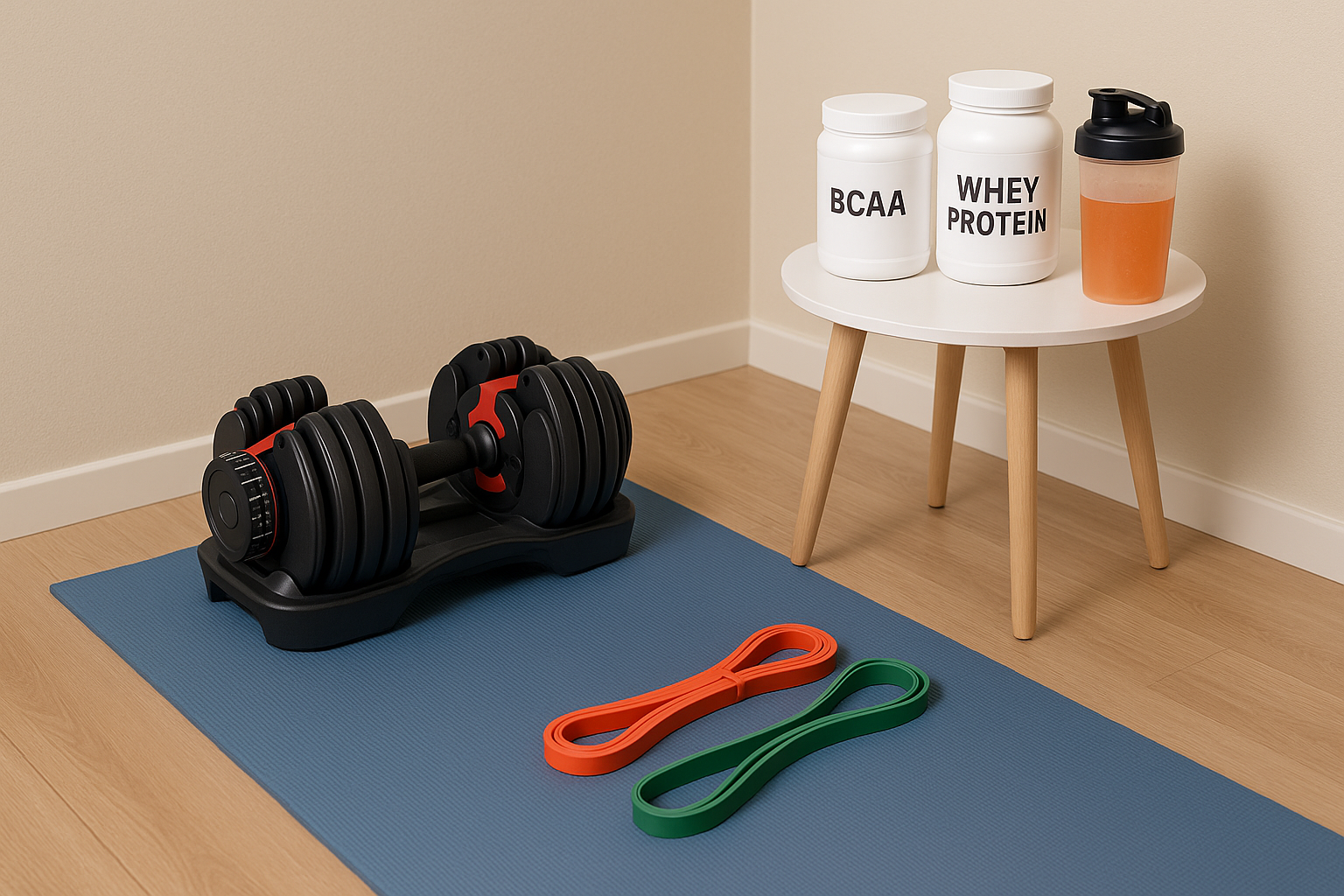
BCAAs (branched-chain amino acids) are three amino acids: leucine, isoleucine and valine. They are involved in muscle protein synthesis and can reduce perceived fatigue. A typical example is XTEND Original BCAA Powder Mango Madness, which provides 7 g of BCAAs per serving plus electrolytes for hydration. EAAs (essential amino acids) include all nine amino acids the body cannot make, including the three BCAAs. Products like Reflex Nutrition EAA deliver a full spectrum of EAAs with added vitamin B6 and magnesium. Whey protein powders, such as Optimum Nutrition Gold Standard 100% Whey, provide complete protein from dairy, naturally rich in EAAs and BCAAs.
When do home trainees actually need BCAAs?
For most people with a normal diet, dedicated BCAA supplements are rarely essential. If your daily protein intake is adequate (around 1.6–2.2 g per kg of bodyweight for those training seriously), whole foods and a good whey protein already supply plenty of BCAAs. However, intra-workout BCAAs can be useful if you train fasted, have long or high-volume sessions, or struggle with appetite. A product like XTEND Original BCAA combines 7 g BCAAs with magnesium, sodium and potassium to support hydration and may help reduce fatigue. Typical evidence-based doses are 5–10 g BCAAs taken before or during training, especially if you have not eaten protein in the previous 3–4 hours.
EAAs vs BCAAs: which is smarter for muscle building?
While BCAAs stimulate muscle protein synthesis, without the other essential amino acids the response is limited. That is why current research often favours EAA supplements or, better yet, complete proteins. An EAA powder like Reflex Nutrition EAA provides around 16 g of EAAs, including BCAAs, plus electrolytes and vitamin B6 to support energy metabolism and reduce tiredness. This makes EAAs more complete than standalone BCAAs, especially if you are dieting or have low protein intake from food. A practical approach for home trainees is to use EAAs as an intra-workout boost when you prefer a light drink instead of a heavier shake, keeping total daily protein intake in mind.
Why whey protein is still the foundation
For most people training at home, the priority is hitting daily protein targets, not micro-optimising individual amino acids. High-quality whey, like Optimum Nutrition Gold Standard 100% Whey, gives about 24 g of fast-digesting protein per scoop, with naturally occurring BCAAs and glutamine. Taken 1–2 times per day, it makes it easy to reach your protein goal without complicated stacks. Evidence suggests that distributing 20–40 g of quality protein every 3–4 hours maximises muscle protein synthesis. For home trainees, that typically means 2–4 protein-rich meals plus a whey shake around workouts. In this context, BCAAs and EAAs become optional add-ons, not the main tool.
Practical dosing and timing for home workouts
For a simple, evidence-based routine at home, start by setting your daily protein target (1.6–2.2 g/kg of bodyweight). Use a whey like Gold Standard 100% Whey to fill any gaps, aiming for 20–30 g pre- or post-workout. If you like sipping something during training, mix an EAA like Reflex EAA at 10–16 g EAAs in 500 ml of water. Reserve BCAA drinks such as XTEND Original BCAA (5–10 g BCAAs) for long or fasted sessions, or when you deliberately keep calories low but still want some support for recovery and hydration.
Common myths and how to spend your money wisely
Several myths surround amino acid supplements. One is that BCAAs alone are superior to protein for muscle gain; in reality, without all EAAs, muscle building is limited. Another myth is that you must sip BCAAs all day to avoid muscle loss; if your total protein intake and training are well structured, this is unnecessary. Finally, more grams are not always better: target doses based on bodyweight and overall diet. For most home trainees with a reasonable budget, investing first in a quality whey protein, then considering an EAA or BCAA drink for specific cases, delivers better returns than stacking multiple overlapping products.
For effective home training, build your supplement strategy from the ground up: prioritise total daily protein with a complete source like Gold Standard 100% Whey, add an EAA drink such as Reflex Nutrition EAA if you want extra support during workouts, and keep BCAAs like XTEND Original BCAA for niche situations like fasted or extended sessions. Focus on consistent training, sufficient sleep and structured nutrition first; supplements should fine-tune, not replace, the fundamentals of your home gym progress.