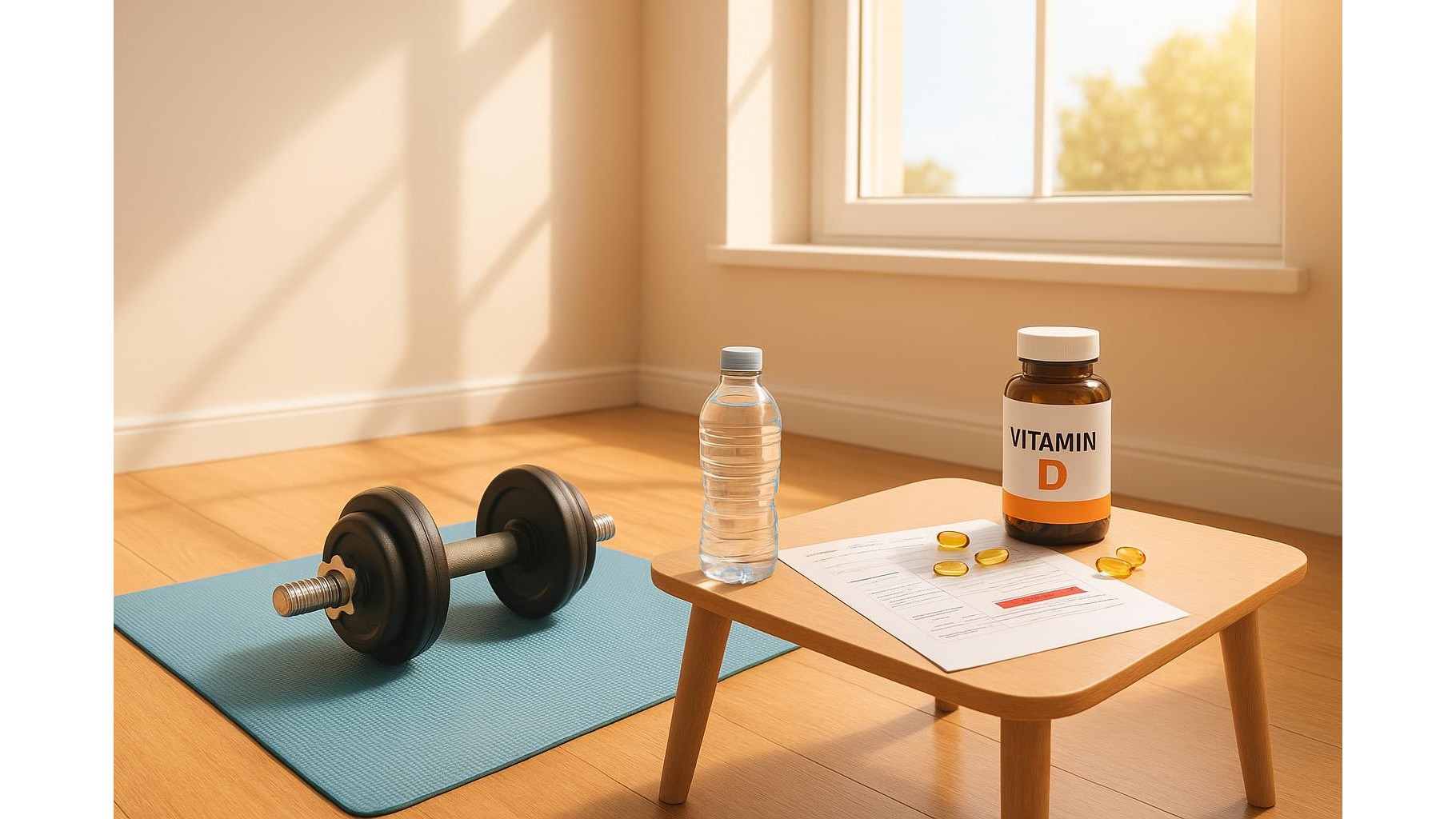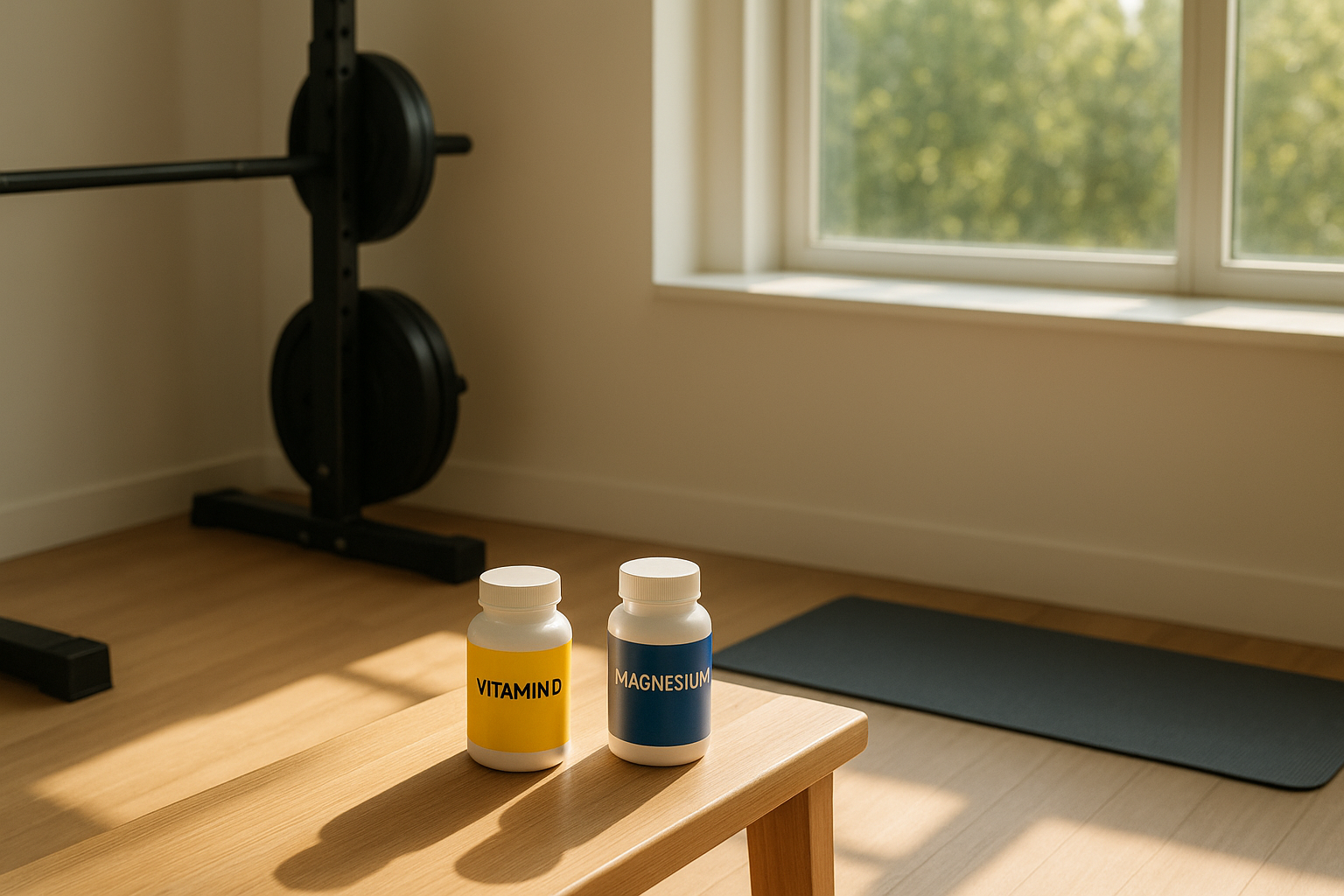
Spending most of your training time in a home gym or indoors can be great for consistency, but it may reduce your natural exposure to sunlight and affect key nutrients like vitamin D. Another often-discussed supplement for people who train regularly is magnesium, which supports muscle and nerve function. This article offers evidence-based guidance on when these supplements make sense for home athletes, how to use them safely and when to speak to a doctor first.
Table of contents
Why vitamin D matters for indoor athletes
Vitamin D plays important roles in bone health, muscle function, immune support and possibly recovery. It helps you absorb calcium, reduces the risk of stress fractures and may support power output in deficient people. If you train mostly indoors, live in northern latitudes like the UK, have darker skin, wear covering clothes outdoors or use strong sunscreen, your natural vitamin D production from sunlight can be low. Symptoms of deficiency can be subtle: fatigue, muscle weakness and frequent minor injuries. Because these signs overlap with normal training fatigue, many indoor athletes benefit from checking their vitamin D status rather than guessing.
Testing vitamin D: when it makes sense
For most home athletes, an occasional blood test (25(OH)D) is the most reliable way to know if you truly need higher vitamin D supplementation. It is especially useful if you train hard all year, rarely see the sun, or have risk factors such as higher body weight, darker skin or digestive issues that affect fat absorption. In the UK, you can sometimes access testing via your GP, or through private labs. Test results help you avoid both under- and over-supplementation. Levels that are too low are linked to bone and muscle problems, but levels that are too high can cause vitamin D toxicity, leading to high calcium, kidney issues and nausea. Knowing your starting point allows for an individual plan instead of copying someone else’s dose.
Safe vitamin D dosing for home gym users
For adults in the UK, public health advice commonly recommends around 400 IU (10 µg) of vitamin D daily in autumn and winter, especially if sun exposure is limited. Athletes sometimes use higher doses, but any regimen above 1000–2000 IU per day should ideally be guided by blood tests and medical advice. The benefits of correcting a deficiency can include stronger bones, fewer stress injuries and better overall wellbeing, but taking more is not always better. Stick to reputable brands, take vitamin D with a meal that contains some fat and avoid combining high-dose vitamin D with other supplements that also contain it, such as some multivitamins. People with kidney disease, parathyroid problems or those on certain medications must speak to their doctor before starting vitamin D supplements of any kind.
Magnesium: realistic benefits for training and recovery
Magnesium is involved in hundreds of reactions in the body, including muscle contraction, nerve transmission and energy metabolism. Many adults do not reach the recommended intake from food, particularly if their diet is low in whole grains, nuts and leafy greens. For home athletes, correcting a shortfall may modestly improve sleep quality, muscle relaxation and perceived recovery, especially during heavy training phases. However, magnesium is not a magic cure for cramps or soreness, and evidence for big performance gains in non-deficient people is limited. It makes most sense as a support for overall health and sleep, not as a standalone performance booster. Prioritise dietary sources first, then consider a supplement if your intake is clearly low or if a professional recommends it.
Choosing magnesium and when to talk to a doctor
When adding magnesium supplements, forms like magnesium citrate, glycinate or bisglycinate are often better tolerated than oxide, which can cause digestive upset. Start with a moderate dose in the evening to see how your body reacts, and avoid going above typical daily intakes recommended on the label without guidance. People with kidney problems or on medications such as certain blood pressure drugs should consult a doctor before taking magnesium, as excess can build up and cause side effects. In general, if you are pregnant, have a chronic illness, take regular prescription medicines or have a history of kidney or endocrine disorders, speak with a healthcare professional before changing your supplement routine. Used wisely, magnesium can support sleep, relaxation and overall training resilience for home gym athletes.
For home athletes, smart use of vitamin D and magnesium can support bones, muscles, sleep and recovery, but only when matched to real needs. Focus first on a balanced diet, consistent training and sleep, then consider blood testing for vitamin D if you spend most of your life indoors. Use conservative doses, reputable products and avoid combining multiple high-dose supplements without oversight. When in doubt – especially if you have medical conditions or take medication – discuss your plan with a healthcare professional. That way, your supplement routine will genuinely complement your home gym work, rather than complicate it.