Building a versatile home gym in a small space is easier than most people think. A simple weighted exercise ball set from 1–5 kg can unlock full-body strength training, mobility work and core stability with minimal equipment. In this guide we explain how to choose the right ball sizes for your goals, how to use them safely and how to store them neatly in a compact home set-up.
Why weighted exercise balls belong in every home gym
Unlike bulky machines, a compact weighted exercise ball set fits easily under a bed or in a wardrobe yet supports a surprising range of full-body workouts. Light balls are ideal for rehab, shoulder mobility and core activation, while heavier balls add resistance for leg, glute and upper-body strength. Because the load is small and easy to grip, beginners can learn correct movement patterns without feeling intimidated. Weighted balls also challenge coordination and stability in a way that fixed machines cannot, making them perfect for functional training at home.
How to choose the right weight range (1–5 kg)
When you pick a weighted ball set for home training, think in terms of movement patterns and not just how strong you are. A typical three-ball stack might include 1 kg for mobility drills and rehab, 3 kg for core work and light upper-body exercises, and 5 kg for squats, lunges and power movements. If you are new to resistance training, stay towards the lower end and focus on smooth, controlled reps rather than max effort. More experienced lifters can use heavier balls to complement dumbbells, especially for rotational core training and conditioning circuits. Aim for a set that lets you perform 10–15 controlled reps per exercise while still feeling challenged by the final few repetitions.
Programming full-body strength and core sessions
A well-chosen exercise ball set makes it easy to design efficient full-body workouts in tight spaces. For a balanced session, combine lower-body, upper-body and core moves. For example, perform 3 rounds of:
- Goblet squats holding a 4–5 kg ball
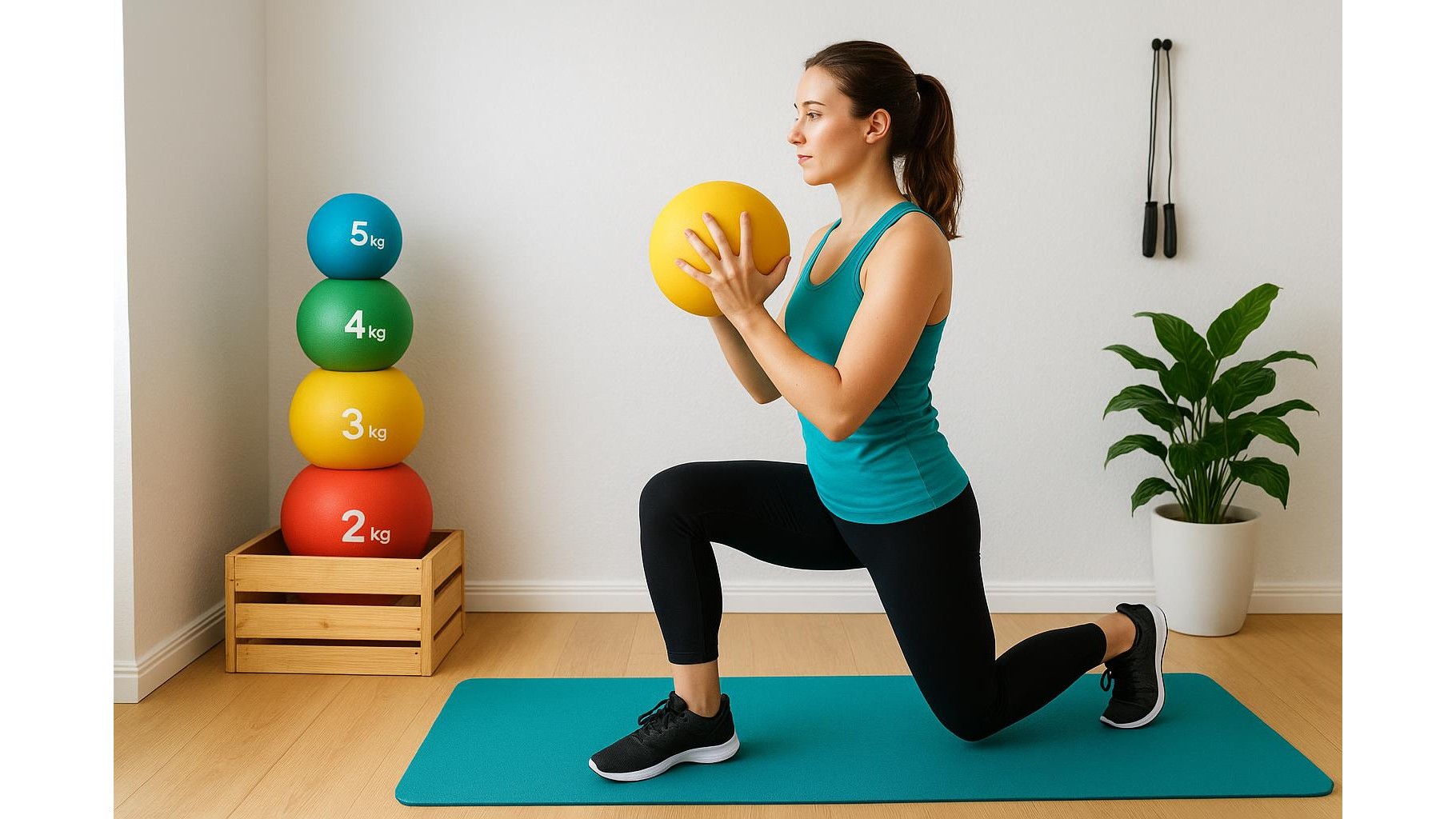
- Reverse lunges with a 3–5 kg ball held at the chest
- Standing overhead press with a 2–3 kg ball
- Russian twists or seated rotations with a 2–4 kg ball
- Dead bugs or hollow holds squeezing a 1–2 kg ball between hands or knees
Keep rests short to build muscular endurance and light cardio. For mobility days, swap strength moves for controlled shoulder circles, thoracic spine rotations and hamstring stretches using the lightest ball, focusing on range of motion rather than load.
Using weighted balls for mobility, stability and rehab
Weighted exercise balls are not just about strength; they shine for mobility and joint-friendly conditioning. A 1–2 kg ball can guide you through controlled articular rotations for shoulders and hips, helping you maintain movement quality if you sit often or work at a desk. Light resistance encourages muscles to stabilise the joint throughout the full range, which can be helpful after minor setbacks when cleared by a professional. Simple drills such as
- Shoulder halos around the head
- Slow torso rotations from a half-kneeling position
- Single-leg balance holds while passing a ball hand to hand
can significantly improve balance and core control without overloading your body.
Storage tips for small home gyms
Because they are round and can roll away, weighted exercise balls benefit from a dedicated storage spot. In very small spaces, place your 1–5 kg set inside a narrow crate or low box that slides under a bed or sofa. If you have a bit more room, a simple vertical rack or a corner basket keeps balls visible and encourages regular use. Group balls by weight, with lighter ones on top for quick access to warm-up and mobility work, and heavier ones at the bottom for strength training. Keeping your equipment tidy not only makes your home look better but also removes friction—when everything is easy to find, you are more likely to stick to consistent home workouts.
Safety and progression when training at home
To stay safe with weighted ball workouts, always prioritise control over load. Start each session with light dynamic mobility using your smallest ball, then build up to heavier sets. Avoid throwing balls against walls or floors unless they are specifically designed as slam balls and your environment can handle the impact. Progress gradually by increasing either weight, reps or time under tension, not all three at once. Filming a few sets on your phone can help you check posture and alignment. Over time, this simple, space-saving equipment can deliver impressive gains in strength, stability and overall fitness without the need for a crowded, expensive home gym.
A thoughtfully chosen weighted exercise ball set from 1–5 kg gives you a compact, joint-friendly way to train strength, mobility and core control at home. By matching ball sizes to your current level, planning simple full-body sessions and keeping your equipment easy to access, you can turn even the smallest corner of your living space into a highly effective home gym that supports long-term, sustainable training habits.