A wall-mounted folding workout bench promises to turn almost any corner of your home into a functional training area, then disappear flat against the wall when you are done. For small apartments, garages already crowded with storage, or multipurpose rooms, this can look like the perfect space-saving upgrade. But how does a fold-down bench really perform compared with a traditional flat or adjustable bench, and what should you know before drilling into your walls?
What is a wall-mounted folding workout bench?
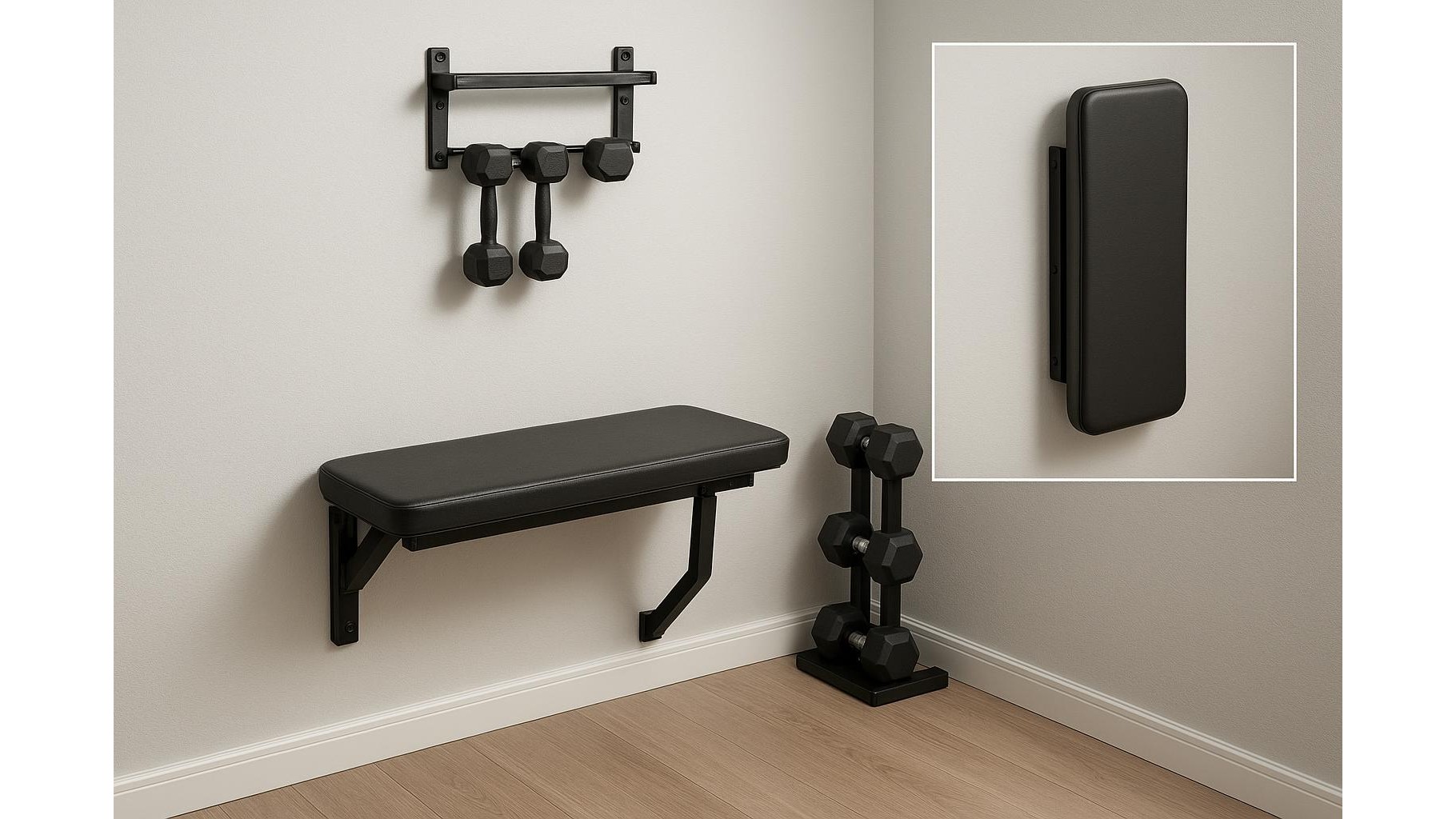
A wall-mounted folding workout bench is a bench that fixes directly to a solid wall, usually with a heavy-duty steel bracket and hinge system. The bench pad folds up vertically when not in use, drastically reducing its footprint compared with a free-standing bench that must be moved or stored elsewhere. Many designs use thick steel arms and a locking mechanism to keep the bench secure while training, then release for folding. In practice, this type of bench is aimed at home gym owners who value space optimisation and a tidy, uncluttered training area, often pairing the bench with a wall-mounted rack or compact dumbbell storage for a highly efficient setup.
Pros: space saving, stability and cleaner floor space
The strongest argument for a folding wall bench is how much space it saves. Because it lives on the wall, your floor remains clear for other activities such as mobility work, kettlebell swings or simply parking a bike or car. Unlike lightweight portable benches that wobble, most wall-mounted models rely on secure fixings into solid masonry or structural studs, which can provide excellent stability for presses and rows. This design also tends to look cleaner and more minimalist than a bulky commercial bench, which matters if your home gym shares space with a living room or office. For many users, the convenience of flipping the bench down in seconds, training, then folding it back up is what finally makes consistent home workouts realistic.
Cons and limitations you must consider
Despite the advantages, a wall-mounted foldable bench is not a perfect fit for everyone. First, installation is far more demanding than unboxing a standard bench: you must drill into solid brick, concrete or properly located timber studs, and use appropriate wall anchors rated for significant load capacity. Ten minutes with a cheap drill and random wall plugs will not be enough. Second, many folding benches are flat-only, so if you rely heavily on incline press, seated overhead work or decline variations, you may feel restricted. Some designs also have specific weight limits that include both bodyweight and lifted load, so heavy lifters pushing close to powerlifting numbers should check specifications carefully. Finally, because the bench is fixed to one wall, your training layout is less flexible than with a wheeled bench you can roll anywhere.
Who should choose a wall-mounted folding bench?
A fold away wall bench makes the most sense for lifters training in tight spaces who prioritise organisation and a permanent training zone over constant rearranging of equipment. If you mostly perform flat bench press, dumbbell work, step-ups, hip thrusts and core exercises, and you do not need multiple incline angles, this solution can cover nearly all your pressing and support needs. It is particularly appealing for garage gyms that must still function as storage, for spare rooms that double as offices, and for renters allowed to make substantial but reversible modifications. On the other hand, if you move frequently, cannot drill into walls, or want a competition-style adjustable bench you can slide under different racks and stations, a traditional freestanding bench remains the safer choice.
Installation, safety and mounting tips
To get the most from a wall-mounted folding workout bench, take installation seriously. Fix the bracket to structural elements: brick, block, concrete or robust timber studs, never to hollow plasterboard alone. Use the hardware supplied by the manufacturer or equivalent high-grade bolts and anchors, and follow the recommended mounting height so the bench sits at a comfortable position for your leg length. Before loading heavy weights, test the bench with bodyweight movements, then gradually increase the load while checking for movement, noise or flex in the wall. Keep the folding mechanism clean and periodically inspect all bolts and hinges for wear. Planning clearance is also essential: make sure there is enough space behind and in front of the bench for your bar path, and that doors, cars or furniture will not clash when it is folded down.
Is a wall-mounted folding bench the right upgrade for your home gym?
If your main challenge is limited square footage and you are willing to invest in solid installation, a wall-mounted folding workout bench can transform a cramped room into a functional home gym without permanently sacrificing floor space. It rewards lifters who train mostly with flat pressing and accessory work, and who want a clean, uncluttered environment that encourages regular use. However, if you crave full adjustability, move often, or cannot anchor into solid walls, a conventional bench might remain the more practical option. Weigh how you train today – and how you want to train in the next few years – and choose the bench style that keeps your workouts both safe and sustainable over the long term.