Setting up a small home gym forces you to be strategic with every piece of equipment. Two of the smartest space‑saving tools are suspension trainers and gymnastic rings. Both hang from an anchor point and allow full‑body training with minimal footprint, but they feel very different in use. This guide compares them for ceiling height requirements, installation, exercise variety, joint friendliness and safety for different levels, so you can choose the best hanging system for your own space.
Installation and space: what works in a real home
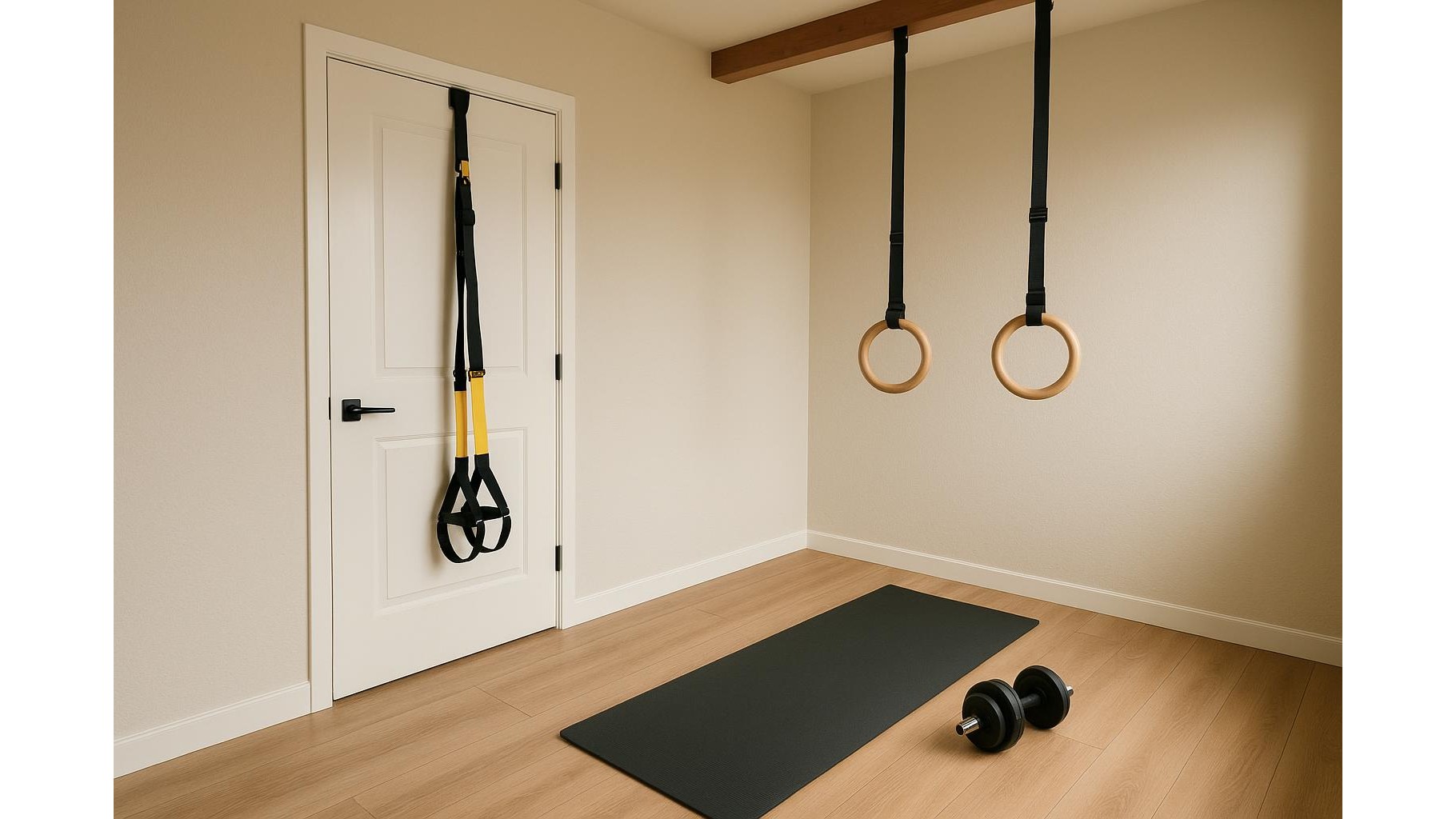
Both systems need a solid anchor: a ceiling joist, a wall mount or a sturdy beam. Suspension trainers typically come as a single strap with two handles and a door anchor, making them easier to set up in rentals or shared spaces. You can close the door on the anchor and train without drilling, then pack everything away in a drawer. Gymnastic rings use two independent straps that must hang from overhead, so a beam, pull‑up bar or ceiling brackets are almost mandatory. This makes rings slightly less convenient if you cannot modify the room. In tight areas and multipurpose rooms, a suspension trainer is usually simpler to hang quickly, adjust and remove.
Ceiling height and footprint in a small home gym
In a low‑ceiling flat, height matters. Suspension trainers are more forgiving because you can adjust strap length in seconds and use the door as a stable reference point; exercises like rows, chest presses and lunges work well even when you cannot fully hang. Gymnastic rings shine when you have adequate vertical space, letting you perform deep ring dips, support holds and muscle‑up progressions. But with low ceilings you may constantly fight strap length, and your feet can hit the floor. Both options store compactly, yet suspension trainers tend to integrate better into awkward layouts where you only have one good doorway or a short wall section to work with.
Exercise variety and progression options
Both tools unlock a huge range of bodyweight exercises using simple angle changes to progress or regress movements. Suspension trainers usually come with foot cradles and clear markings, so it is easier to set consistent strap lengths for core work, planks and single‑leg exercises. Handles are fixed and stable relative to each other, which makes learning new patterns smoother. Gymnastic rings introduce instability in every direction, demanding more strength and coordination. This can be a huge advantage for upper‑body development, false‑grip pull‑ups and straight‑arm strength, but the learning curve is steeper. In a small home gym used by the whole family, suspension trainers offer more immediately accessible variety, while rings reward the patient trainee focused on long‑term skill work.
Joint friendliness and comfort for regular training
One of the biggest benefits of both systems is how joint‑friendly they can be compared to fixed bars and machines. Suspension trainers tend to feel more comfortable for beginners because the handles are padded, spacing is fixed, and movements feel intuitive. You can easily step closer or further to manage intensity, reducing stress on shoulders and lower back. Gymnastic rings allow your wrists and shoulders to rotate freely, which can actually be healthier than forcing a fixed bar path, but the added instability increases demand on smaller stabiliser muscles. Wooden rings feel great in the hands and reduce slipping when your palms sweat, yet they do require a base level of control. For users with sensitive joints or those returning from layoffs, a suspension trainer is usually the smoother entry point.
Safety for beginners, intermediates and families
Safety in a home gym is about anchor reliability and user control. With both systems, you must mount them to something that can handle dynamic loads; always follow manufacturer guidance and check straps and buckles regularly. For beginners and casual users, suspension trainers offer safer defaults: door anchors reduce setup errors, and the body position is simple to adjust on the fly. Gymnastic rings are fantastic for intermediate and advanced athletes who understand body tension and how to bail from a failed rep, but they can be intimidating and potentially risky for unsupervised kids. In a family space where multiple people share the same corner of the living room, a suspension trainer typically balances challenge, safety and ease of use better than rings.
In a small home gym, both suspension trainers and gymnastic rings deliver serious strength and mobility benefits with very little equipment. If you prioritise quick installation, low ceilings, shared spaces and beginner‑friendly sessions, a suspension trainer is generally the more practical choice. If you have a strong anchor point, enough height and a focus on upper‑body strength and skill work, wooden rings can offer unmatched progression and satisfaction. Consider your ceiling, who will train, and how often you need to set up and take down the gear, then choose the hanging system that best supports consistent, safe training in your home.