Building a smarter home gym often starts with a single, versatile tool. Two of the most popular options are the classic suspension trainer and the wall-mounted resistance band system. Both can transform a small corner of your living room or garage into a functional training space, but they shine in different ways. Understanding how they compare in terms of versatility, space, goals and budget will help you decide which upgrade deserves your money first.
What is a suspension trainer and what is a wall-mounted band system?
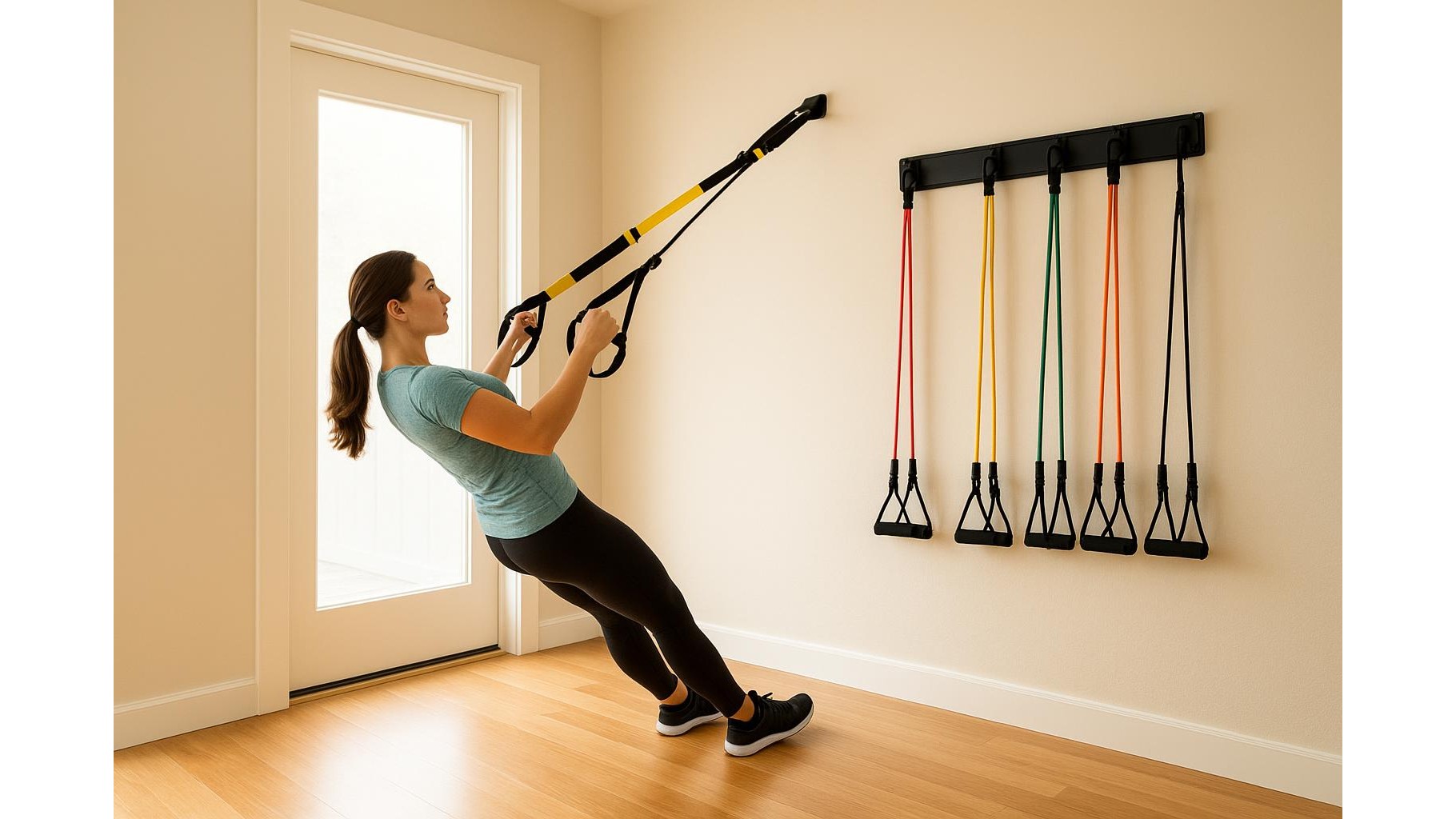
A suspension trainer is a pair of adjustable straps with handles that anchor to a door, beam or ceiling. You use your bodyweight and gravity to perform rows, presses, squats and core moves at different angles. It packs down small, travels easily and sets up in seconds. A wall-mounted band system, by contrast, is a fixed frame or rail attached to a wall, combined with resistance bands that clip into different positions. It behaves more like a compact cable machine, letting you train in multiple planes with smooth, adjustable resistance. While it’s less portable, it provides a very stable and repeatable setup that feels close to commercial gym equipment.
Space, installation and portability at home
If you are limited on space, a suspension trainer is usually the easier first buy. It can hang from a door or ceiling hook and then be packed away in a drawer when you are done. There is no need to drill into walls or dedicate a permanent training area, which makes it ideal for renters and small flats. A wall-mounted band system needs proper installation into solid brick or stud walls and a clear training zone in front of it. Once installed, though, it keeps your setup tidy and always ready to use. For anyone who travels often, the suspension trainer is the clear winner; you can take it on holidays or business trips and maintain a consistent routine in hotel rooms or relatives’ homes.
Training goals: strength, mobility and performance
Your primary fitness goals should strongly influence the choice. Suspension trainers are fantastic for improving relative strength, core stability, balance and joint-friendly calisthenics. Changing your foot position or angle instantly scales an exercise from beginner to advanced, making it perfect for full-body functional sessions. Wall-mounted band systems, on the other hand, excel in progressive resistance, hypertrophy and rehab work. You can isolate muscles more easily, mimic cable machine movements, and perform precise pushing and pulling patterns at different heights. If you want general athleticism and body control, start with a suspension trainer. If your focus is targeted strength, bodybuilding-style assistance work or shoulder health, a wall-mounted band system may be the smarter first step.
Versatility, exercise library and progression
Both tools are incredibly versatile, but in different ways. Suspension trainers let you move easily between upper body, lower body and core without changing hardware, which is ideal for circuit training and HIIT. You can progress by changing body angle, tempo, single-leg variations or adding pauses. Wall-mounted band systems allow micro-adjustments in resistance by swapping bands or changing attachment points, which is great for linear progression and structured strength blocks. They are also excellent for multi-planar movements, like diagonal chops and lifts, that are harder to load with a suspension trainer. In practice, beginners will find it easier to learn basic patterns with bands, while intermediate athletes might extract more challenge from suspension-based instability and bodyweight leverage.
Budget, value and long-term upgrade path
When it comes to budget, a quality suspension trainer is usually the more affordable entry point and includes everything you need to start training. You get a travel-friendly tool that grows with you from novice to advanced without any additional purchases. A wall-mounted band system often costs more once you factor in the frame, mounts and a robust set of bands in different strengths. However, it can replace several machines in a commercial gym and offers long-term value if you have a dedicated space. Over time, many home athletes choose to own both: beginning with the lower-cost, portable suspension trainer, then adding a fixed band system when they are ready to expand their home gym into a more complete training environment.
In summary, both a suspension trainer and a wall-mounted resistance band system can deliver serious results in a compact home setup. If you are short on space, move frequently or prioritise full-body, bodyweight-focused workouts, the suspension trainer is usually the smartest first purchase. If you already have a stable training area and want cable-like resistance for strength, rehab and isolation work, a fixed band system is a powerful upgrade. Whichever route you choose, committing to consistent, well-planned sessions will matter far more than the specific tool you buy.