Creating a compact home gym often means dealing with a mess of bands, handles, lifting belts and small tools scattered on the floor. Choosing the right mix of steel bins and plastic bins is one of the simplest ways to keep everything tidy, safe and easy to reach. In this guide we compare the two materials and suggest how to combine them to get the most from a small home gym corner.
Steel bins: durability and load capacity
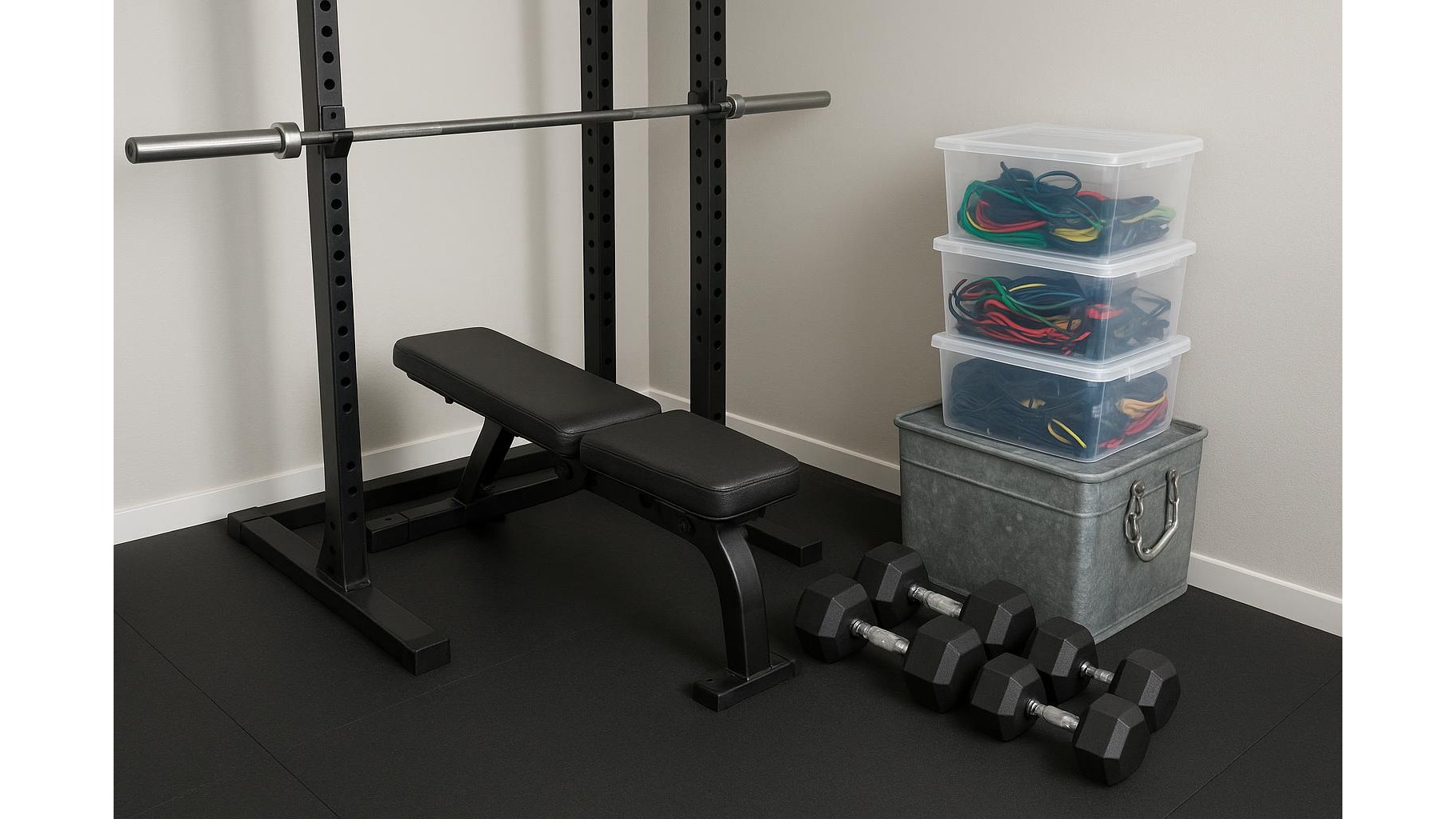
Steel storage bins are ideal when you need maximum durability and high load capacity. Metal containers resist impacts, heavy loads and wear from rough accessories such as chains, carabiners, metal handles and heavy-duty lifting gear. Their rigid structure helps them keep shape even when stacked or wall-mounted. In a home gym corner, steel bins work especially well under a squat rack or next to a cable station, where you repeatedly grab and drop attachments. They also handle temperature changes and humidity better than cheap plastics, making them a smart option in garages or basements. The main trade‑off is weight and cost: steel bins are heavier to move and usually more expensive, so they are best reserved for your most demanding storage needs.
Plastic bins: flexibility and visibility
Plastic bins shine when you want lightweight, flexible organisation and quick visual access. Clear or semi‑transparent plastic boxes let you see what is inside at a glance, which is perfect for small accessories like minibands, cotton straps, wrist wraps and mobility tools. They are easy to slide on and off shelves and can be stacked to use vertical space in a tight home gym corner. Quality plastic bins with clip‑on lids protect against dust and chalk, while softer edges are kinder to your flooring and to your body if you bump into them during a workout. However, plastic can crack under very heavy or sharp objects, so it is better suited to lighter accessories rather than dense metal items.
What to store in steel and what to store in plastic
To get a clean and efficient home gym storage system, assign each material a clear role. Use steel bins for dense and potentially abrasive items: heavy cable handles, chains, dip belts with chains, weighted balls with rough surfaces and metal collars. Their robustness and stability keep these tools safely contained and reduce the risk of damage to nearby equipment. Reserve plastic bins for softer and more delicate accessories: resistance bands, hip circles, jump ropes, yoga straps, small massage balls, glute bands and even chalk blocks in a sealed box. This separation not only protects your gear, it also speeds up your routine: you immediately know where to look for metal attachments versus elastic or fabric tools.
Safety, noise and space‑saving considerations
Organisation in a compact home gym corner is also about safety and noise control. Steel bins are excellent against tipping and can often be attached to walls, racks or shelving, keeping heavy tools off the floor and reducing tripping hazards. On the other hand, dropping metal against metal can be noisy; lining the bottom of a steel bin with a rubber mat or old yoga mat reduces clanging and protects accessories. Plastic bins are quieter when you move or open them and can be stored under benches, on top of cupboards or inside wardrobes. Mixing smaller bins inside a larger plastic crate creates subdivisions for bands, cables and spare parts, keeping your training area minimal and clutter‑free even when space is extremely limited.
How to build a simple, mixed‑material storage system
Start by listing every small accessory you own and grouping them by type and weight. Dedicate one robust steel bin to heavy or sharp items and label it clearly. Then choose a set of plastic bins in different sizes for lighter accessories and colour‑code or label them by category, such as “Bands”, “Handles & Grips”, “Belts & Supports”. Place the steel bin close to the equipment that uses those heavy attachments, and position plastic bins at shoulder or hip height on shelves for quick access. Review the setup every few months: remove gear you no longer use, consolidate duplicates and adjust bin sizes as your home gym evolves. With a compact mix of steel and plastic storage, your home gym corner stays organised, safer and far more enjoyable to train in.
In summary, steel bins offer superior strength, stability and load capacity, making them ideal for heavy, metal and abrasive accessories, while plastic bins deliver lightness, flexibility and visual clarity for bands, straps and smaller tools. By combining the two and assigning each category of accessory to the most suitable material, you create an efficient, safe and tidy home gym corner that supports your training instead of getting in the way.