When you are starting a home kettlebell workout, one of the first choices you face is between soft‑sided kettlebells and traditional cast‑iron kettlebells. Both tools can build strength, improve conditioning and fit into a compact home gym, but they behave very differently in terms of safety, noise, and how they feel in your hands. Understanding these differences is essential, especially for absolute beginners and more cautious lifters training in small flats or shared spaces.
Safety and confidence for absolute beginners
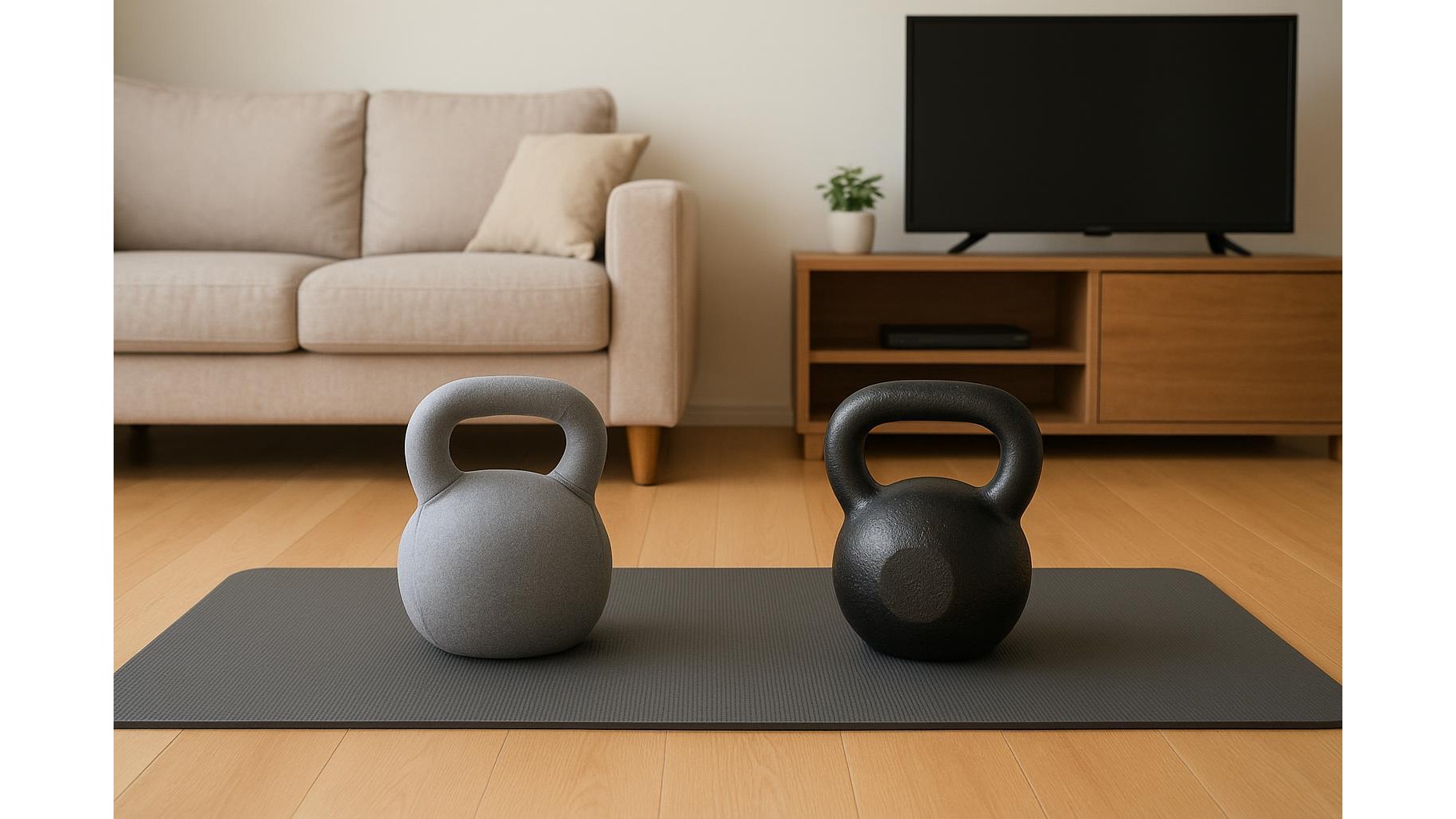
Soft‑sided kettlebells are designed with a padded or fabric outer shell and a weighted core, so accidental contact with your legs, forearms or floor is far more forgiving than with iron. This can be a big psychological advantage for nervous beginners learning swings, goblet squats and rows. In contrast, a classic iron bell is unforgiving: a bad swing or a failed clean hurts more and can chip tiles or mark wooden floors. For someone who is anxious about injury or lives in a rental property, the extra margin of safety with a soft bell can help them relax and focus on technique instead of worrying about bumps and dings.
Noise, neighbours and home-friendly training
Training at home often means dealing with thin walls, downstairs neighbours and sleeping children. Soft‑sided kettlebells naturally dampen impact and reduce clatter when they touch the ground or your other equipment. They are also less likely to ring or echo on hard floors. Traditional iron kettlebells are much noisier if dropped or set down without control, making them less ideal for late‑night or early‑morning workouts. If you plan to train in a flat, using a soft bell on a basic exercise mat can keep your sessions almost silent while you learn proper hip hinge and swing mechanics.
Grip, technique and long-term progression
One downside of many soft‑sided kettlebells is that their handles can be thicker, softer or less precisely shaped, which slightly changes how they sit in the hand and in the rack position. This can be fine for basic two‑hand swings and deadlifts, but less ideal when you move on to snatches or strict pressing technique. Classic iron kettlebells have a rigid, consistent handle and a predictable shape, which makes it easier to learn the finer details of kettlebell technique. For that reason, soft bells are often best viewed as an introductory tool: use them to build confidence and basic strength, then consider adding an iron bell when you are ready to progress.
Space management and versatility in small homes
Both types of kettlebell shine in a small home gym because they pack a lot of training options into a tiny footprint. Soft‑sided kettlebells have an edge if you need to store them in cupboards or next to furniture, since their padded exterior is less likely to scratch surfaces when you move them around. They are also more comfortable to rest against the forearm or upper arm during front‑loaded exercises, which matters if you are sensitive to pressure. Iron bells remain the gold standard for heavier loads and advanced moves, but they are harsher on contact and need more care in cramped rooms to avoid damaging walls, skirting boards or floors.
Which should you choose for your first home kettlebell?
For an absolute beginner who is cautious, training in a flat, or sharing space with children and pets, a soft‑sided kettlebell is often the easiest and safest entry point. It limits impact, reduces noise and lowers the fear of making mistakes while you learn the basics. However, if your goal is to follow more advanced kettlebell programmes, lift heavier and develop crisp technical skills over time, adding one or two classic iron kettlebells will eventually make sense. Many home lifters start with a soft bell in a moderate weight for swings and squats, then invest in an iron bell later for heavier work and technical practice.
In summary, soft‑sided kettlebells are generally better for nervous beginners, sensitive environments and noise‑controlled home training, while classic iron kettlebells remain superior for long‑term progression and precise technique. The best approach for most home users is to match the tool to their current needs: a soft bell to build initial confidence and consistency, then a well‑chosen iron kettlebell when they feel ready to take their training – and their strength – to the next level.