If you have already invested in a barbell, rack and plates, you might be wondering whether a safety squat bar is the next smart upgrade for your home gym. This specialty bar promises more comfortable squats, less shoulder stress and a different stimulus for your legs and upper back. But it also takes up space and is not exactly cheap. In this guide we look at what a safety squat bar actually does, who it helps most, and when it makes sense to buy one versus spending your money elsewhere.
What is a safety squat bar and how does it work?
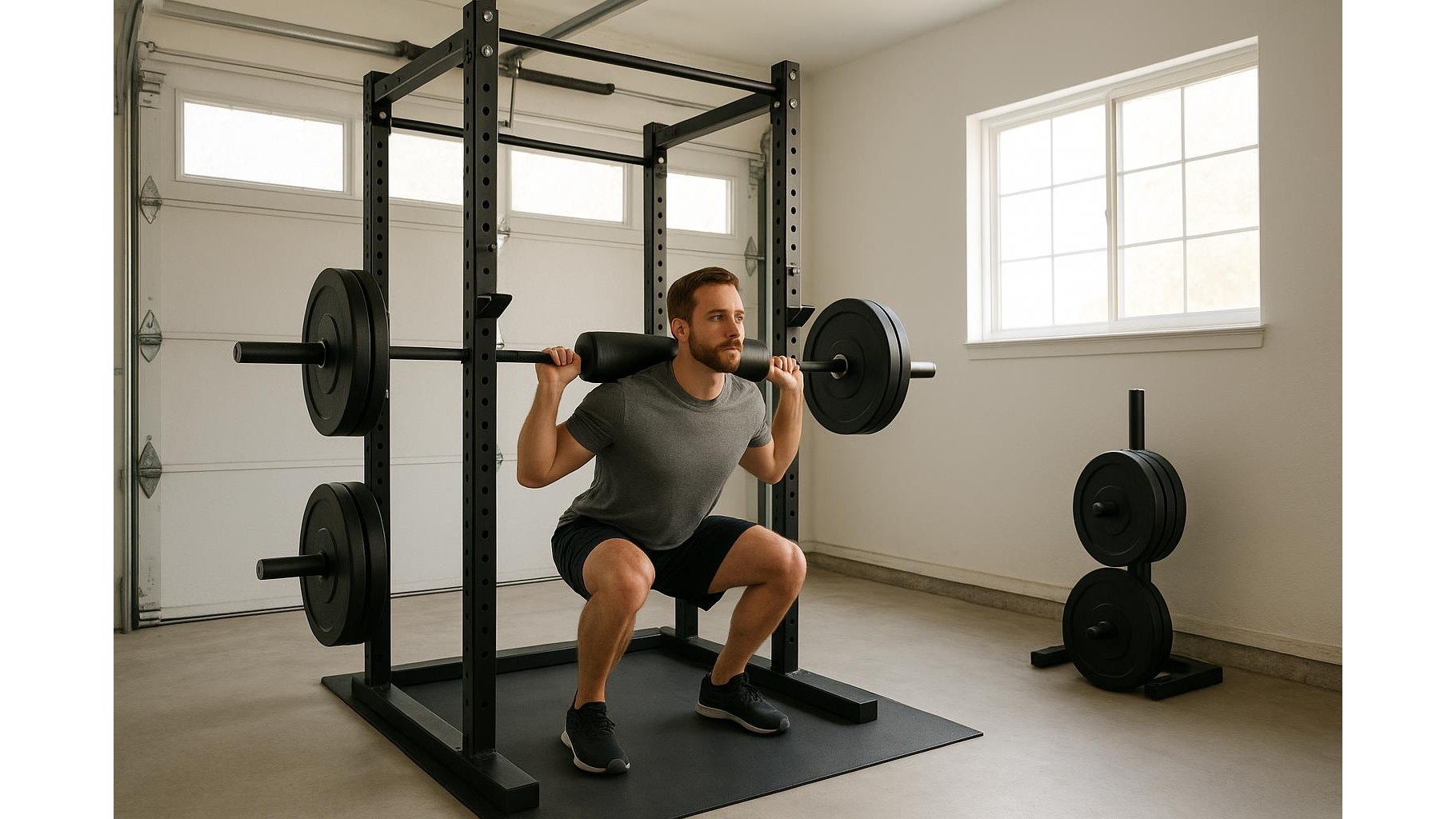
A safety squat bar (SSB) is a cambered barbell with a padded yoke that sits on your upper back and two handles that point forward. Unlike a straight bar, the sleeves sit slightly lower and in front of your centreline thanks to the camber. This design changes your squatting mechanics: the bar naturally encourages a more upright torso, shifts some load onto the quads and upper back, and makes it harder to fold over out of the bottom. Because you hold the front handles instead of gripping the bar behind you, your shoulders, elbows and wrists stay in a much friendlier position, which is a big deal for lifters with mobility issues or previous injuries.
How a safety squat bar changes your squat in a home gym
In a home gym, the main appeal of an SSB is how it alters the feel of the squat. The forward camber and high bar position force you to brace hard through your core and keep the chest up, turning every set into serious trunk training. Many lifters find they can maintain better form under fatigue, especially when training alone without a spotter. The yoke padding spreads pressure across the traps and upper back, which can make heavy sets more comfortable than a straight bar digging into bone. At the same time, the SSB is unforgiving of poor technique: if you relax or collapse, the bar will try to tip you forward. Used correctly, that feedback can help you groove stronger, safer movement patterns in a confined home setup.
Pros: joint‑friendly strength, versatility and safety
The biggest advantage of a safety squat bar for home use is that it lets you keep training hard when traditional squats are not an option. If you have shoulder impingement, tight external rotation, or elbow pain from low‑bar squats, the neutral front handles allow you to squat without cranking your joints into extreme positions. The more upright posture can also be kinder on some lower backs compared with aggressive forward lean. Beyond back squats, the SSB shines for split squats, lunges, good mornings and box squats, all done hands‑forward and stable, which is extremely helpful when you do not have a spotter. Many lifters also use it for high‑rep or tempo work, saving their shoulders for bench and overhead pressing while still loading the lower body heavily.
Cons: cost, space and priorities in a home gym
Despite the benefits, a safety squat bar is still a niche purchase. It is more expensive than a basic straight bar and takes up the same amount of horizontal storage space. In a small home gym, another 20 kg bar can make storage and movement around the rack more awkward. Most importantly, if your current setup is missing essentials like adjustable dumbbells, a solid bench, enough plates or a quality rack, those will almost always deliver more training options per pound or euro spent. The SSB also does not replace good technique: if your squat form is poor, the bar will not magically fix it. For some lifters chasing powerlifting‑specific performance, relying too heavily on SSB squats may not carry over perfectly to competition‑style straight‑bar squats.
Who should actually buy a safety squat bar first?
A safety squat bar makes the most sense for lifters who already have a solid foundation: a good rack, a straight bar, plates and a stable bench. It is particularly valuable if you struggle with shoulder mobility, have a history of upper‑body injuries, or feel beat up by traditional back squats but still want to train legs heavy at home. It is also an excellent tool for strength athletes, field sport athletes and busy parents who often train alone and want a safer way to push lower‑body volume and intensity. On the other hand, beginners still learning basic movement patterns and people with very limited space or budget will usually get more out of dialing in technique with a straight bar and investing in more versatile equipment before adding a specialised bar like this.
In summary, a safety squat bar can be a powerful addition to a well‑equipped home gym, offering joint‑friendly heavy squats, extra core and upper‑back stimulus, and a safer way to push hard when you train alone. However, it is still a specialty tool. If you are missing foundational gear or are just starting out, focus first on a strong rack, a reliable straight bar, plates and a bench, then consider the SSB as a targeted upgrade. Used with intention, it can extend your lifting career and keep heavy squats in your program even when your shoulders and elbows do not love the traditional bar position.