If you train in a garage, basement or spare room with poor ventilation, you quickly see how rust can attack your dumbbells, barbells and squat racks. Humidity, sweat and dust combine to create surface corrosion that looks bad, reduces resale value and can eventually weaken your gear. This guide walks you through simple routines, smart storage and effective products to keep your home gym equipment in top condition even in damp environments.
Why metal gym equipment rusts in humid rooms
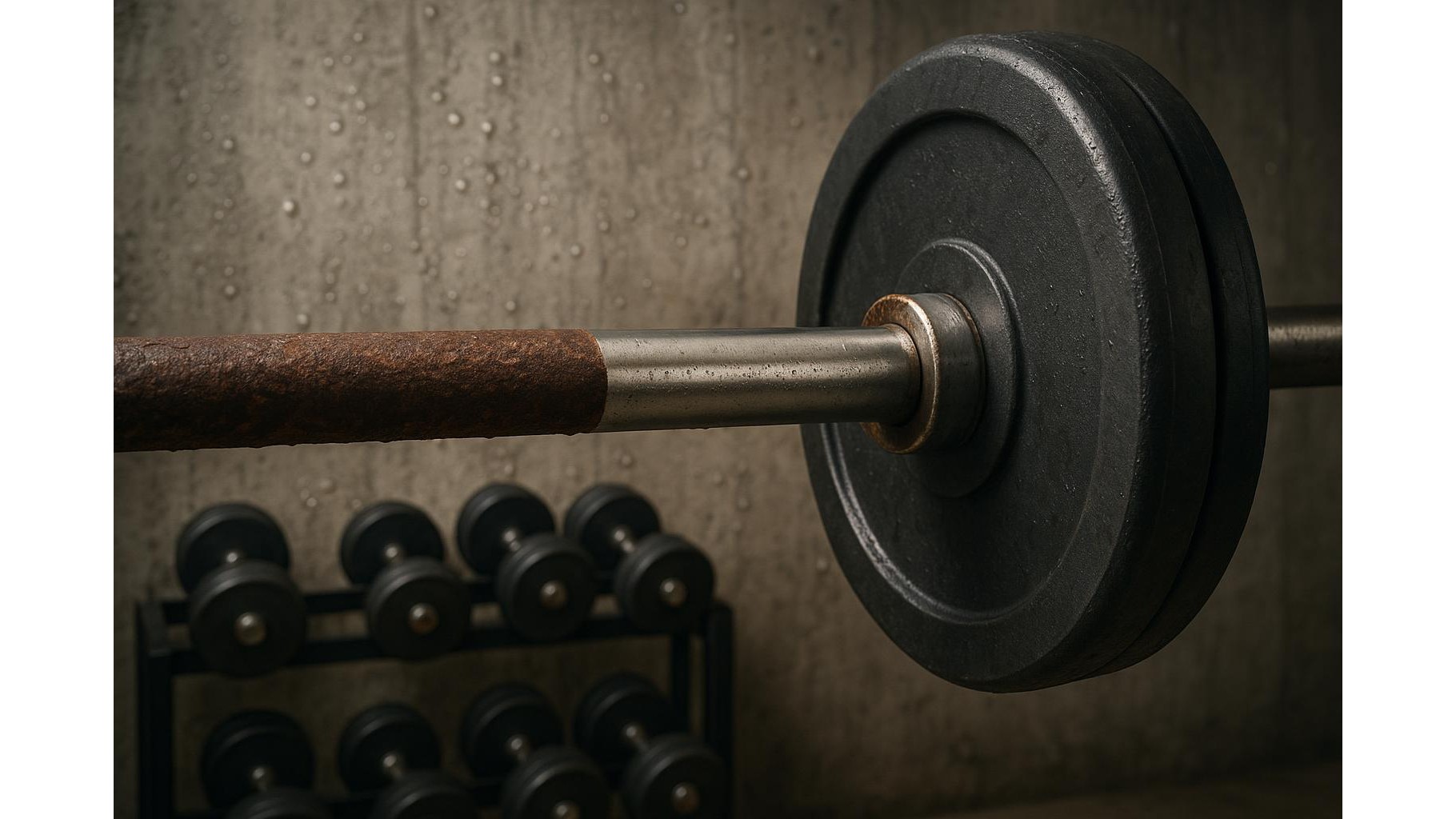
Most strength equipment is made of steel with different surface finishes: raw steel, black oxide, zinc or chrome. In a humid garage gym, moisture in the air condenses on cold metal, especially overnight. Add salty sweat from your hands and chalk dust and you get an ideal environment for corrosion. Light orange spots on knurling, bubbling paint on racks and pitted sleeves on barbells are early warning signs. Understanding these causes helps you build routines to interrupt the cycle: limit moisture, remove contaminants and protect the surface with a thin protective film.
Daily and weekly cleaning routines for bars and dumbbells
The most important step in rust prevention is regular cleaning. After every workout, quickly wipe bars, dumbbells and kettlebells with a dry microfiber cloth to remove sweat and chalk. Once a week, use a stiff nylon brush on barbell knurling to dislodge packed chalk, then wipe with a light household degreaser and dry thoroughly. For stubborn spots, a toothbrush and a bit of mild soap work well. Avoid soaking equipment or using harsh abrasives that can strip protective coatings. A consistent five-minute routine at the end of each session does more to control corrosion than any fancy product used once a month.
Protective products: oils, waxes and what to avoid
After cleaning, add a thin protective layer so moisture cannot sit directly on the metal. Simple light machine oil or a multi-purpose household oil works well on bare steel barbells and plates: apply a few drops to a cloth, wipe the shaft and sleeves, then buff off any excess so the bar does not feel greasy. For racks and painted surfaces, a light coat of furniture wax or car wax can help repel moisture without making the surface slippery. Avoid thick grease on moving parts you touch, and be cautious with aggressive solvent-based sprays that may damage rubber, plastic end caps or powder coating. The goal is a thin, invisible film that makes water bead and lets you wipe off sweat quickly.
Smart storage to limit humidity and condensation
Even in a damp basement, you can store home gym equipment in ways that reduce rust risk. Keep bars on a wall-mounted rack rather than on the floor, and avoid leaning plates against outside walls where condensation forms first. Use rubber mats under racks and plate trees to limit moisture wicking from concrete. If the room is particularly damp, consider a small electric dehumidifier or at least refillable moisture absorbers placed near the equipment. Allow some air circulation around your gear by not stacking items directly against each other. Simple changes in how you store barbells, plates and dumbbells can significantly slow down corrosion.
Dealing with existing rust and when to worry
If you already see rust, don’t panic: light surface rust is mainly cosmetic and can usually be removed. Start with a dry nylon brush to remove loose rust, then use a bit of light oil on a cloth and scrub the affected areas. For more stubborn spots on bare steel, very fine steel wool used gently can smooth the surface; wipe away residue and re-oil afterward. Focus extra attention on barbell sleeves, rack uprights at J-hook height and plate centers, as these are common rust zones. Deep pitting or flaking on load-bearing parts is more serious: if metal seems structurally damaged, especially near welded joints, consult the manufacturer or consider replacing the piece for safety.
Building a long-term rust control habit
Keeping rust under control in a garage gym or basement setup is less about perfection and more about consistent, simple habits. Wipe down equipment after every session, perform a weekly deeper clean and oil, and store your gear to minimise contact with moisture and condensation. Combine this with basic humidity management—ventilation, dehumidifiers and mats over bare concrete—and your bars, dumbbells and racks will stay functional and safe for years. A small investment of time after each workout protects the equipment you rely on to make progress.