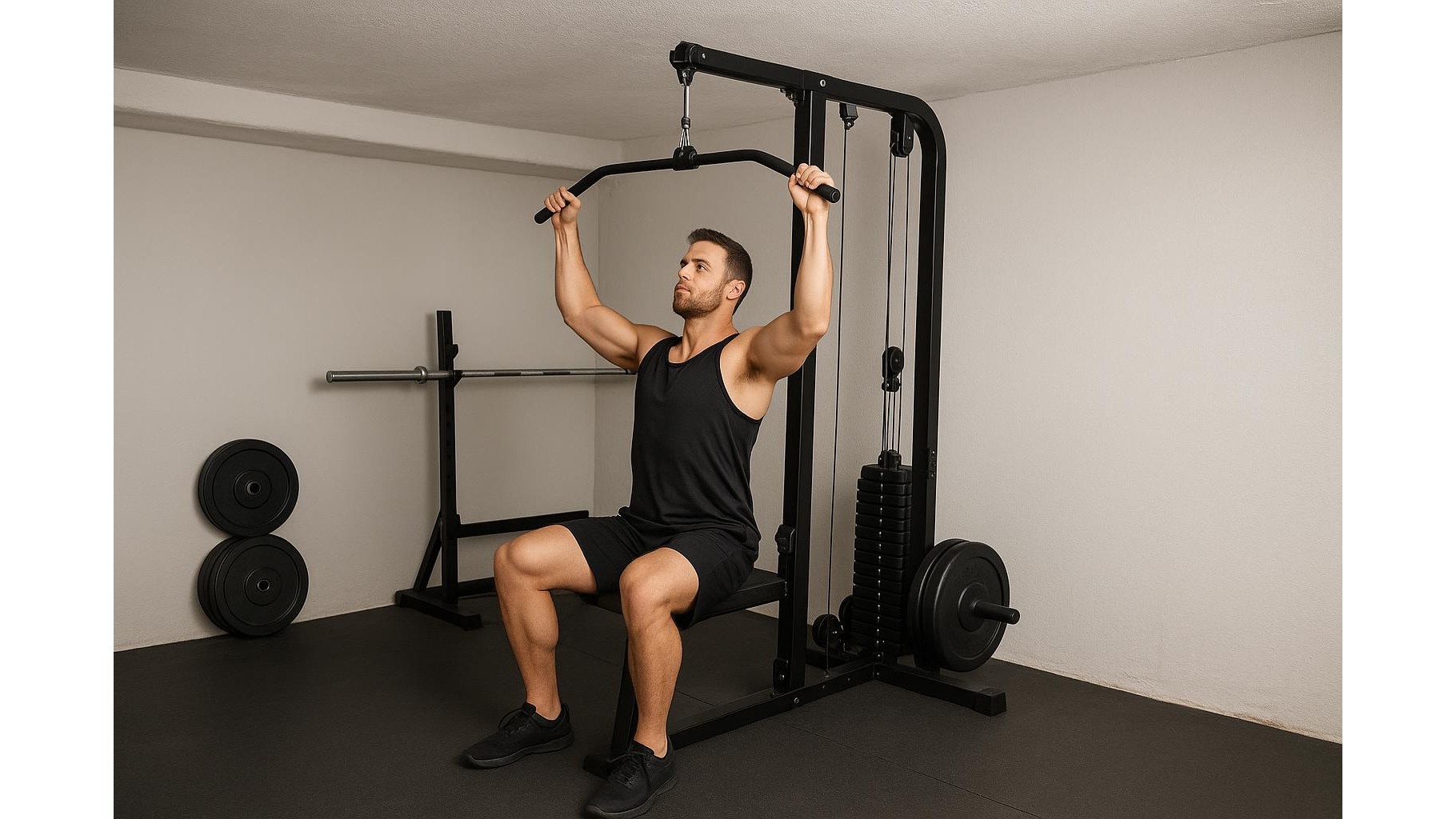
Designing a home gym around a lat pulldown and low row machine can transform a basic training corner into a complete back, arm and core station. The challenge is finding a compact tower that delivers smooth movement and meaningful resistance without overwhelming your space. This guide walks you through the key decisions – from height and footprint to plate-loaded vs weight-stack designs, cable quality, attachment options and solo-training safety – so you can choose a tower that actually fits both your room and your goals.
Measuring your space: height, footprint and clearance
Before you fall in love with any lat tower online, start with a tape measure. Most lat pulldown low row machines for home gyms sit between 200–220 cm tall, but basement ceilings, beams and sloping roofs can quickly become a problem. You need enough clearance not just for the frame but also for your body when fully stretched overhead. Check the footprint as well: even compact units typically require around 120–160 cm in length to accommodate the low row and space to brace your feet, and at least 100 cm in width once you account for a loaded bar and your elbows. Leave extra room behind and in front of the machine for safe movement and plate loading. If the unit will share space with a rack or cardio kit, map everything on the floor with tape first to avoid expensive layout mistakes.
Plate-loaded vs weight-stack: which resistance system suits you?
Home users typically choose between plate-loaded lat pulldown towers and weight-stack machines. Plate-loaded designs use standard or Olympic plates you may already own, keeping the upfront cost lower and allowing easy progression simply by adding more plates. They are usually lighter to move and can be more compact, but changing loads between sets takes longer and requires bending to manage plates. Weight-stack models feel more like commercial gym machines: resistance is adjusted quickly via a selector pin, which is ideal for drop sets or shared use with a partner. However, they tend to be heavier, more expensive and less flexible if you later want to exceed the built-in stack. For many home gym setups, a plate-loaded tower strikes the best balance of price, versatility and space efficiency, especially if you already have a plate collection.
Cable smoothness, pulleys and overall build quality
A lat tower lives or dies by its cable smoothness. Rough, jerky motion ruins technique and increases joint stress. Look for machines with nylon or aluminium pulleys that rotate smoothly and use high-tensile coated cables. Multiple pulley points introduce more friction, so good engineering matters even more on dual-function lat/low row stations. Check for a solid, wobble-free frame with a wide base and thick steel uprights; light, flexible frames can tip or sway during heavy pulldowns or rows. Bolting the tower to the floor or weight rack – if the design allows – adds security in tight home spaces. Pay attention to details such as welded joints, plate sleeves, guide rods and finish: these influence durability and how quiet the machine runs, which is crucial when training in an apartment or at night.
Attachments and adjustability for full-body training
A good lat pulldown and low row machine should support more than just two basic moves. At minimum, you will want a lat bar for wide- and medium-grip pulldowns and a low row bar or close-grip handle. Consider whether the tower accepts standard carabiners so you can add attachments like neutral-grip bars, rope handles for face pulls and triceps work, and ankle cuffs for hip abductions or glute kickbacks. Adjustable thigh pads on the pulldown keep you locked in place during heavy sets, while adjustable or removable footplates on the low row help you find a comfortable angle. The more adjustable the machine, the easier it is to accommodate different user heights and to program a wide range of pulling, arm and core exercises from a single compact footprint.
Safety must-haves for solo training at home
Most home gym users train alone, so safety features are not optional. A stable base and the ability to secure the machine to the floor or a rack greatly reduce the risk of tipping. Plate-loaded towers should have robust, well-angled weight horns to keep plates from sliding off, while weight-stack models need clearly labelled stacks and a reliable selector pin. Smooth, predictable cable travel helps prevent sudden jerks that could strain shoulders or elbows. Look for non-slip seat pads and thigh pads, plus textured or rubberised footplates on the low row. Manage your training area, too: keep the zone around the machine clear of loose plates and accessories. With a carefully chosen, compact tower and disciplined setup, you can perform heavy pulldowns and rows safely without a spotter.
Choosing the right lat pulldown and low row machine for a home gym means matching the tower to your ceiling height, available floor space, existing equipment and training style. Decide early between a plate-loaded or weight-stack system, prioritise cable smoothness and solid construction, and make sure the included attachments and adjustability reflect how you actually train. Finally, build in safety from day one, with stable installation and smart load management. Take the time to compare options against these criteria and you will end up with a compact, reliable tower that earns its place in your home gym for years.