Turning a spare room or garage into a home gym is a great way to stay consistent with your training, but it also introduces risks if you have children in the house. Heavy weights, cables, sharp metal edges and moving parts can all turn into hazards for curious little ones. The goal is not to dismantle your setup, but to make smart equipment upgrades and adopt safety habits that keep kids protected without compromising your workout quality.
Choose kid-safer equipment and layouts
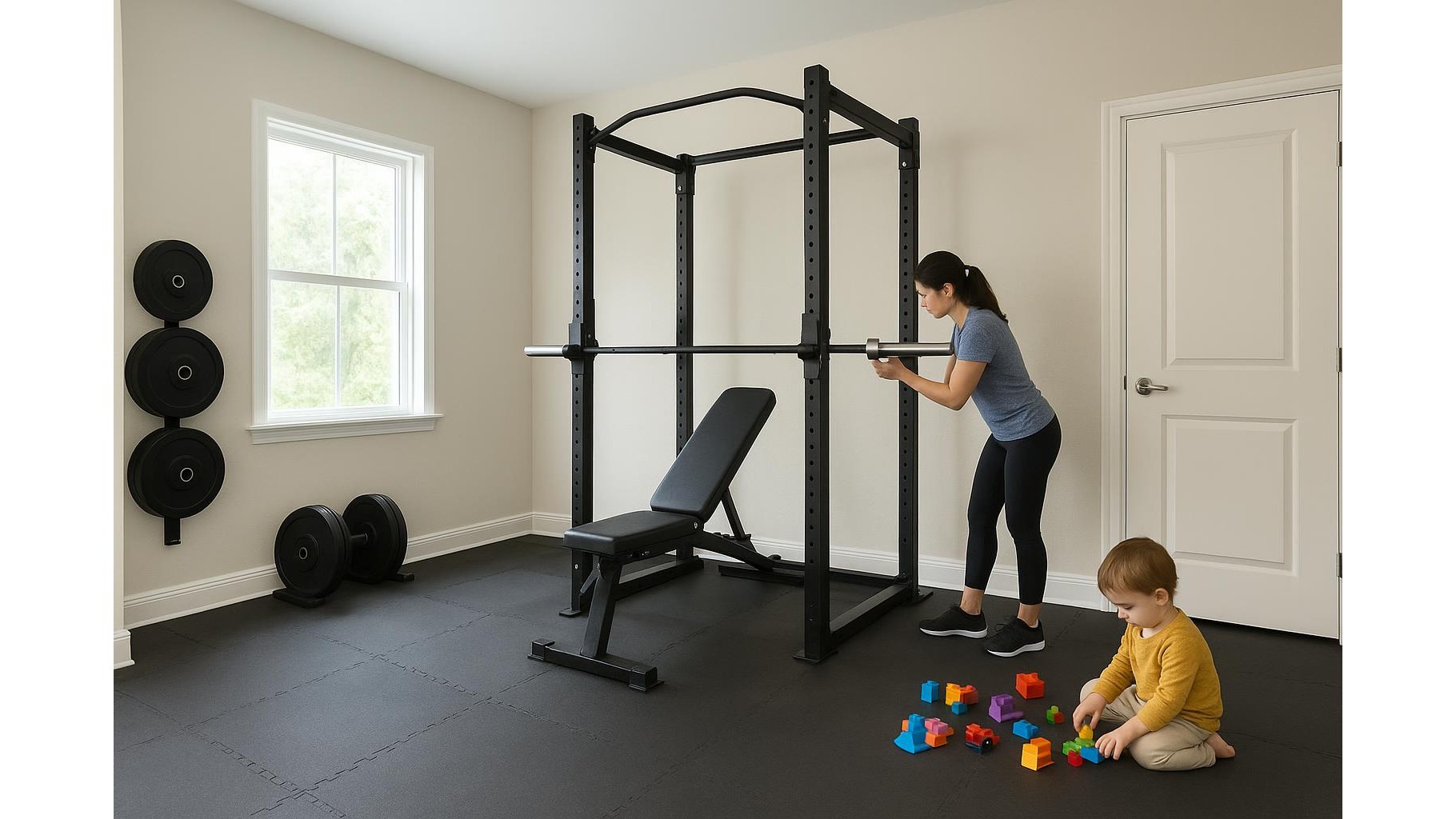
Start by auditing your current setup with a parent’s eyes. Prioritise stable machines over wobbly or DIY structures, and place the heaviest items against walls to reduce tipping risk. Whenever possible, choose equipment with enclosed weight stacks instead of exposed plates and cables, and prefer dumbbells with rubber coating rather than sharp, all-metal edges. Arrange your home gym so there is a clear, open training zone with no clutter, and keep benches and racks away from doors and high-traffic areas. A layout that minimises trip hazards and pinch points is one of the simplest upgrades you can make.
Upgrade your flooring for better falls and fewer slips
Flooring is often overlooked, but switching to foam or rubber gym tiles can significantly improve safety for both you and your children. Quality tiles provide better grip for lifting, reduce impact if a child falls, and help prevent weights from bouncing or rolling if dropped. Look for interlocking tiles that are at least 10–12 mm thick, with a textured, non-slip surface that is easy to wipe clean. Dark, solid colours also make it easier to spot small items on the floor, such as collars or clips, before bare feet or little hands find them. Proper flooring transforms a hard, echoey room into a safer, more controlled training environment.
Use smart storage to keep dangerous gear out of reach
One of the biggest risks in a home gym is loose gear. Invest in a wall-mounted storage system or rack that keeps barbells, weight plates and resistance bands securely off the floor and out of children’s reach. Vertical plate trees, dumbbell racks and hook systems make it easy to keep everything organised, while reducing trip hazards. Small items like collars, cable attachments and tools should be stored in a lockable cabinet or box, so kids cannot turn them into toys. Make it a rule that every session ends with a two-minute tidy: plates back on the tree, dumbbells on the rack, cables unclipped and stored. Consistent storage habits do as much for safety as any new piece of equipment.
Control access with simple locks and clear rules
Even the safest equipment can be dangerous if children can wander in unsupervised. Fit your gym door with a child-safety handle lock or high-mounted latch so kids cannot enter without you. If your gym is in an open area like a living room corner, consider a sturdy, pressure-mounted gate to create a physical boundary. Combine these physical barriers with clear household rules: explain that the gym is a “grown-ups only” space unless you are present, and that weights are never toys. During workouts, avoid leaving the room with bars loaded or machines half-set; finish a set, safely rack or lower everything, then step away. This habit reduces the chance of a child pulling on unstable equipment when your back is turned.
Train with awareness and model safe behaviour
No setup is completely child-proof, so your own training habits are crucial. Avoid heavy or technical lifts when you are solo with young kids who may need sudden attention. Instead, choose simpler movements or bodyweight sessions you can pause quickly. Keep a clear visual line to where your children are, and train with headphones at low volume or use a speaker so you can hear them. Most importantly, model the safety behaviours you want them to learn: you always re-rack weights, never run in the gym area, and keep fingers away from hinges and moving parts. Over time, children will associate the gym with structure and rules, not free play.
Making your home gym safer for kids doesn’t require a full renovation. A few well-chosen upgrades—better flooring, organised storage, and basic door security—combined with consistent safety rules and focused training habits, can dramatically reduce risk. By treating your gym as both a performance space and a family environment, you protect your children while preserving the convenience and effectiveness of your workouts.