Designing a modular home gym corner means building a setup that can evolve as your strength, space and budget grow. Instead of trying to buy everything at once, you start with a smart base, then add pieces that integrate smoothly over time. In this guide, we’ll walk through how to plan your layout, which equipment categories to prioritise first, and how to keep your training space flexible so it never feels cluttered or obsolete.
Start with your space, goals and budget
Before buying any equipment, map your home gym corner. Measure floor space, ceiling height and the clearance you have for overhead presses or pull-ups. Define your primary goals: fat loss, strength, muscle building, general fitness or all of the above. Then set a realistic starting budget and a rough upgrade path for the next 6–12 months. This helps you choose a few foundational items that offer maximum versatility instead of impulse-buying gear you rarely use. Even in a very small corner, a clear plan lets you fit in strength work, mobility, and conditioning without sacrificing living space.
Build a versatile foundation with free weights
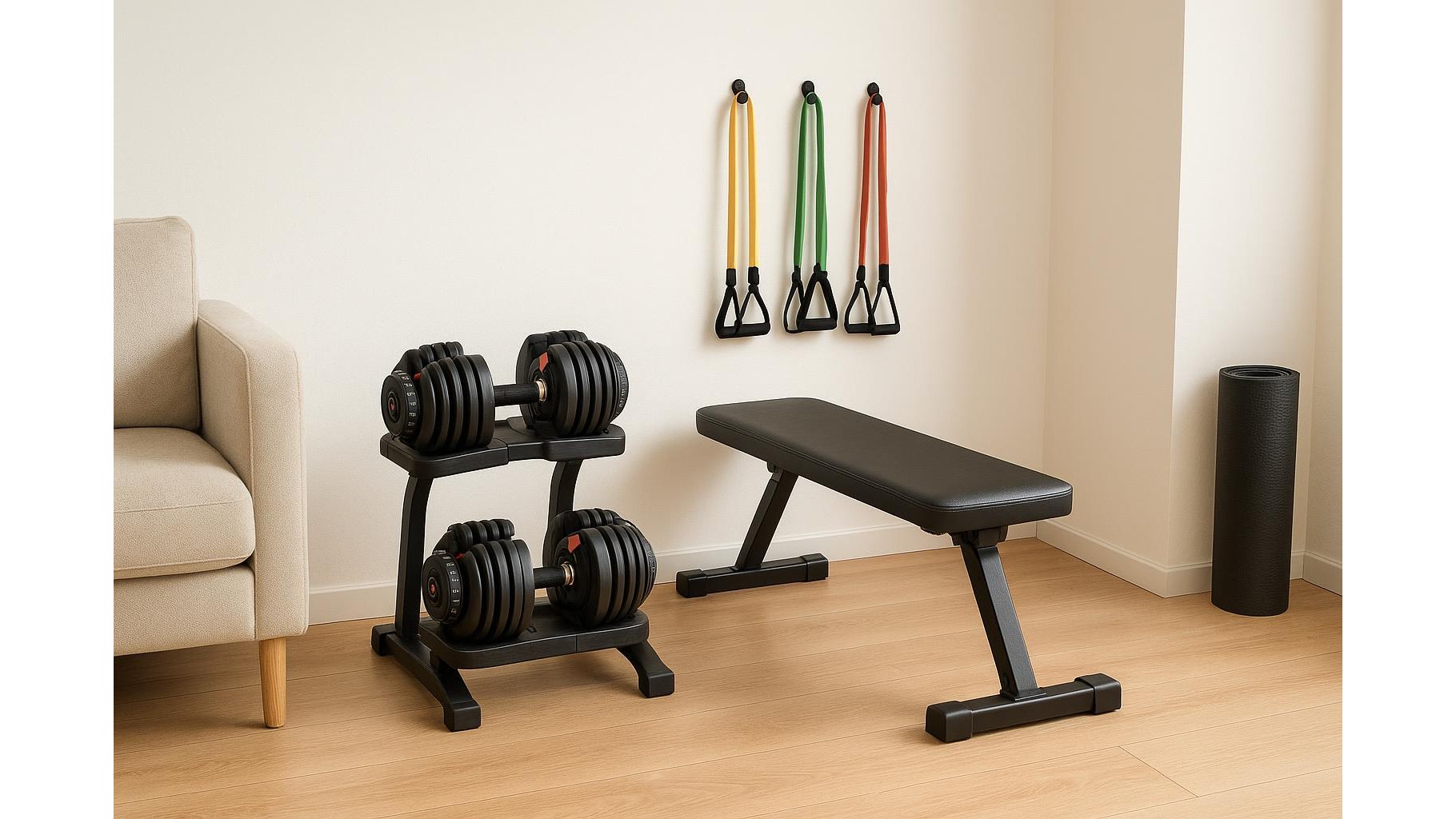
For most people, the core of a modular home gym is a mix of adjustable dumbbells, a bench, and compact resistance bands. Adjustable dumbbells allow you to perform pressing, rowing, squatting and hinge movements while taking up far less space than a full rack of fixed weights. Pair them with a stable, adjustable bench so you can train flat, incline and seated positions without multiple pieces of furniture. Add a set of resistance bands with handles and a door anchor to cover warm-ups, accessory work and travel workouts. This trio gives you a complete full-body setup that can fit into a single corner and forms the base for later add-ons like a rack or cable system.
Plan vertical storage to keep your corner tidy
A key to a truly modular setup is how you store your gear. Use vertical space: wall-mounted hooks for bands and jump ropes, small shelves or pegboards for accessories, and a slim rack or stand for dumbbells or kettlebells. This keeps your floor clear so you can move freely for lunges, yoga flows or mobility work. Consider placing your bench so it can slide under a desk or against a wall when not in use. Think of your home gym corner like a tiny studio: everything should have a defined place, and setups should be fast so you are more likely to train consistently instead of wasting time rearranging equipment.
Upgrade to strength-focused modules as you progress
As your strength improves, you can add more specialised strength training modules while keeping the footprint compact. A foldable or wall-mounted rack with safety arms lets you squat, bench and overhead press safely without taking over a whole room. Later, you might add a barbell and a few plates or a compact pulley/cable attachment that clips to a rack or doorframe for lat pulldowns, rows and triceps work. Every upgrade should plug into your existing base rather than replace it: the same dumbbells, bench and bands remain useful for accessory work, deload weeks and quick conditioning sessions.
Adapt your setup for conditioning and recovery
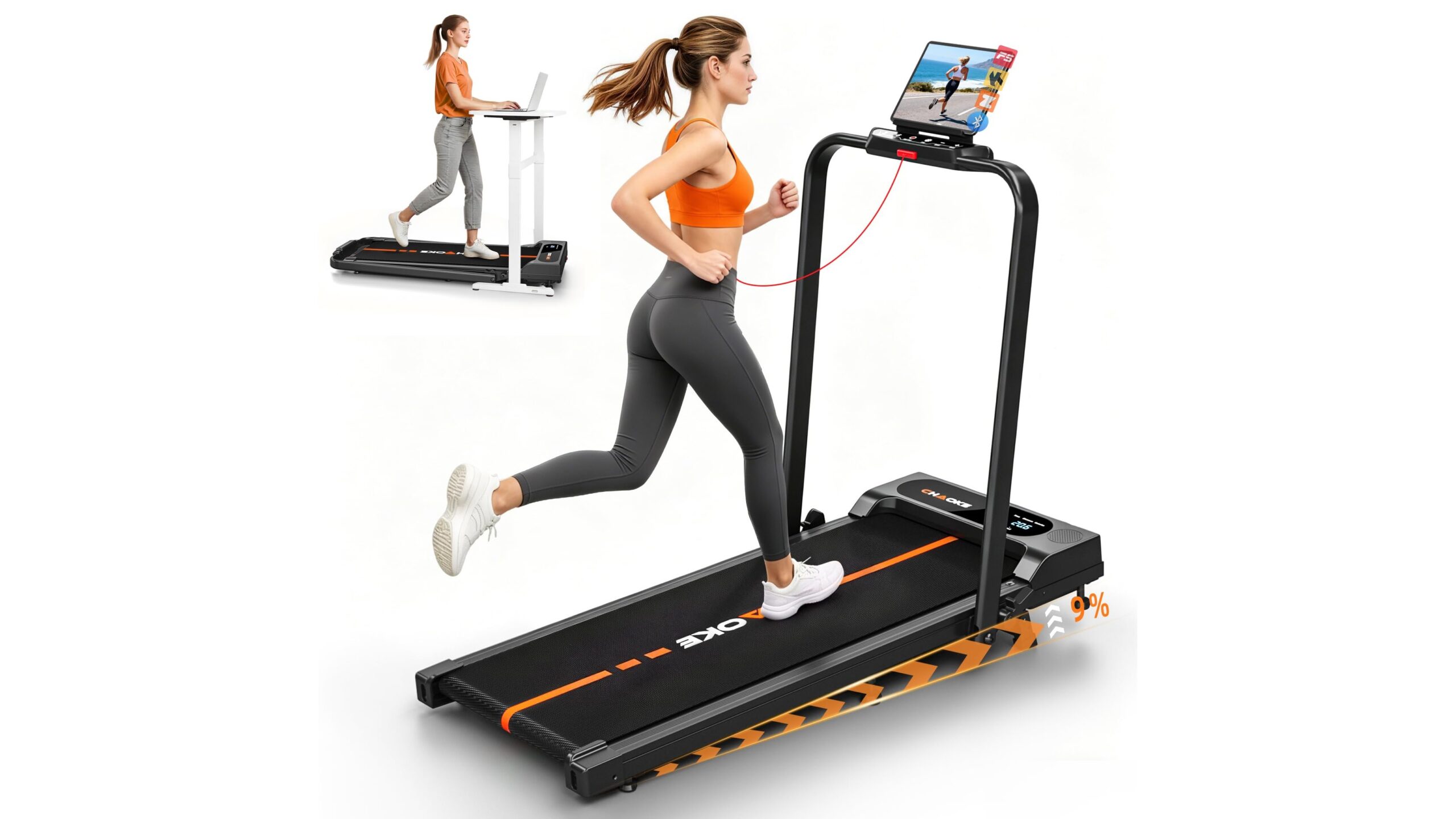
A modular home gym corner should also support conditioning and recovery. Instead of a large treadmill, you might use a skipping rope, light kettlebell or compact step for conditioning circuits that store on the wall. A foldable exercise mat can slide behind a cabinet for floor work, stretching and core training. Keep a small box with a massage ball, foam roller or resistance band loops for mobility and recovery sessions. The idea is to make it effortless to switch between lifting, cardio and mobility just by pulling out or hanging back a few items, transforming the same corner to match each type of training.
Review, rotate and refine your home gym corner
Every few months, reassess how you use your home gym setup. Track which pieces of equipment are in constant rotation and which sit untouched. Sell or store rarely used items and reinvest in more versatile tools that support your current goals. As your lifts get heavier or your training style changes, you might prioritise safety upgrades (like better supports) or comfort upgrades (like flooring tiles). A well-designed modular home gym corner is never truly finished: it keeps adapting to your progress, making your workouts safer, more efficient and more enjoyable over time.