Setting up a home gym in a small space is easier than ever, and a good suspension trainer is one of the most versatile tools you can buy. With a pair of adjustable straps, solid anchors and your own bodyweight, you can train strength, mobility and core stability without filling your living room with machines. This guide explains what to look for in your first suspension system, how to anchor it safely at home and which features matter most for full body workouts.
Table of contents
Why a suspension trainer belongs in every home gym
A quality suspension training system lets you perform dozens of full body exercises using minimal equipment. By changing your body angle to the floor, you can easily scale moves from beginner to advanced, making it ideal if you share your home gym with a partner of a different level. The constant instability of the straps forces your core and stabilisers to work harder than on machines, improving balance, posture and joint control. For small spaces, it’s unbeatable: it packs into a small bag, sets up in seconds and can replace a whole rack of dumbbells for many exercises.
Key safety features and build quality
When you are hanging your bodyweight from a set of straps, safety is non‑negotiable. Look for heavy‑duty webbing, reinforced stitching and clearly stated maximum load capacity that comfortably exceeds your bodyweight (ideally 150 kg or more). Quality carabiners should be made of metal, not plastic, with secure gates that cannot open accidentally mid‑set. Adjusters on the straps need to grip firmly so the handles do not slowly slide down as you train. Non‑slip rubber or textured handles improve grip when your hands get sweaty, while strong, padded foot cradles make exercises like hamstring curls, pikes and hip lifts safer and more comfortable. Prioritising build quality will reduce wear and tear and give you confidence to push harder.
Anchoring options for doors, ceilings and outdoors
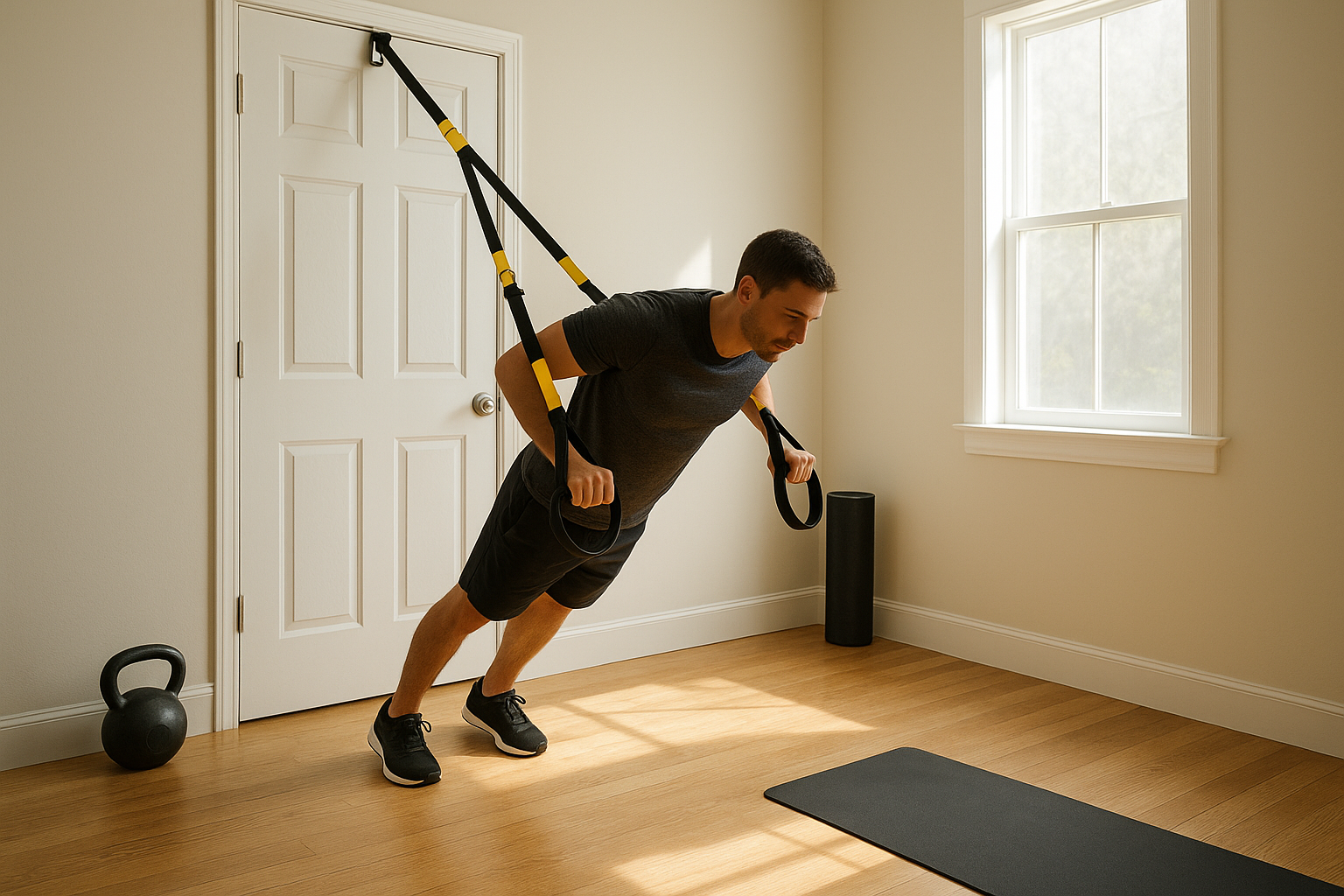
The best suspension trainer for a home gym offers flexible anchoring options. A door anchor—a padded stopper that goes over the top of a closed door—is essential if you rent or do not want to drill into walls. Make sure your chosen system includes one and that it sits securely without damaging the door frame. If you have a dedicated training space, a ceiling or wall mount gives the most stable feel and allows full range of motion in every direction; just ensure it is installed into solid brick or joists, not plasterboard alone. For outdoor sessions, look for a long extension strap you can loop around a tree, pull‑up bar or beam. A versatile anchoring kit helps you stay consistent whether you train in the bedroom, garage or garden.
Strap length, adjustability and portability
Good adjustability makes your suspension trainer much more useful. Choose straps with clear length markings and quick‑release buckles so you can switch rapidly from rows to presses to single‑leg moves without interrupting your workout. Longer straps give you more freedom to train from high or low anchor points, which matters if you plan to use different doors or beams around the house. If you are tall, check that fully extended straps allow for deep rows and lunges without your back hitting the floor. For small home gyms, portability is another key factor: a system that packs into a compact carry bag and weighs under a kilo is easy to store in a drawer or take to the park, hotel or office.
Using your suspension trainer for strength, mobility and core
Once your suspension trainer is safely installed, you can build a complete full body workout in just a few moves. For upper body strength, alternate between rows, chest presses and face pulls, changing your angle to adjust intensity. For the lower body, try assisted squats, Bulgarian split squats and suspended lunges to challenge balance and hip stability. Add planks with feet in the cradles, fall‑outs and body saws to develop serious core strength. You can also integrate mobility work: use the straps for supported deep squats, hip flexor stretches and shoulder openers. Start with slow, controlled reps, prioritising tension and alignment over speed; as your control improves, walk your feet further under the anchor to make each exercise harder.
Choosing your first home gym suspension trainer comes down to three things: solid safety features, flexible anchoring options and smooth adjustability that fits your space and body. Invest in a well‑built system with strong webbing, reliable carabiners and a clear weight rating, and take the time to learn how to mount it correctly. With just one compact piece of equipment you can train strength, mobility and core in almost any room, turning even the smallest corner of your home into an efficient, full body workout station.