Building a home gym around a cable station is one of the smartest ways to train. With the right specialty cable attachments, you can unlock dozens of extra movement patterns for hypertrophy, rehab and athletic performance without adding big machines. This guide explains which attachments deserve priority in a limited budget setup and how to match them to your goals.
Rope attachments for triceps, biceps and core
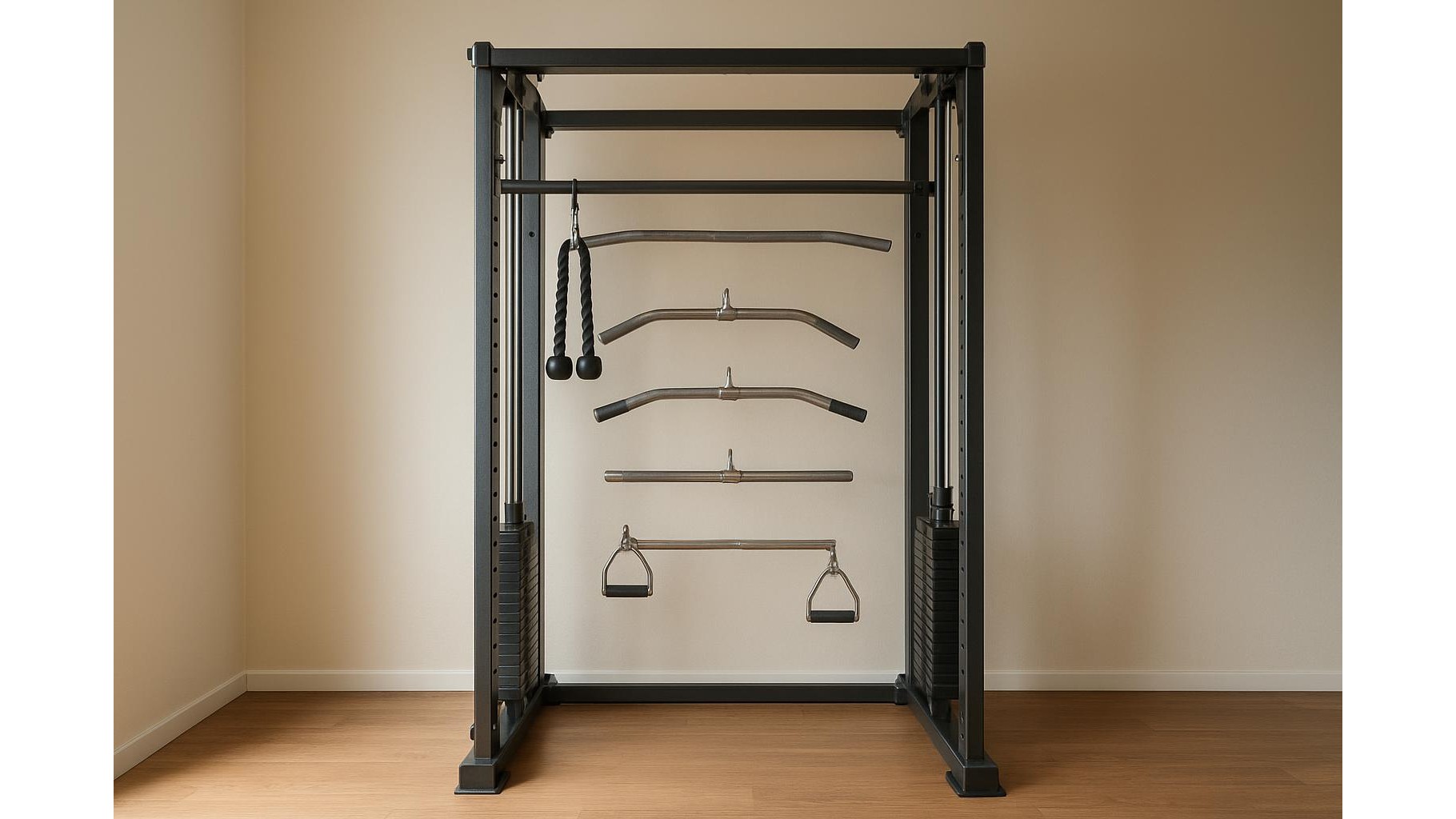
The classic tricep rope is usually the first specialty handle to add to a home cable stack. A thick, flexible rope lets your wrists rotate freely, reducing joint stress and helping you keep constant tension on the target muscles. For hypertrophy, it is ideal for triceps pushdowns, overhead extensions and face pulls; simply change the angle of pull to shift emphasis from long head to lateral head. You can also use it for hammer curls to load the brachialis and for anti‑rotation core work such as Pallof presses. If your goals include joint‑friendly training or high‑rep metabolic work, a rope is a must‑buy before more niche bars because it supports a huge range of upper‑body patterns in a compact, quiet format that suits small apartments.
Multi‑grip and neutral‑grip bars for back thickness
Once you have a rope, the next high‑value upgrade is a multi‑grip cable bar, often used for lat pulldowns and seated rows. Unlike a straight lat bar, a multi‑grip design offers neutral, semi‑supinated and wide grips in one piece. This helps you target different regions of the lats, mid‑back and rear delts while finding wrist positions that feel comfortable if you have shoulder issues. For strength and size, use heavier loads and slower eccentrics on pulldowns, then flip the bar to use the closer handles for row variations. Lifters chasing athletic performance benefit from these handles too, because neutral grips often transfer better to sport tasks like grappling, climbing or contact sports where you need strong, joint‑friendly pulling strength.
Single D‑handles for unilateral strength and rehab
For home athletes dealing with muscle imbalances or returning from injury, a simple single D‑handle is incredibly valuable. Training one side at a time lets you correct strength discrepancies between left and right, refine technique and protect irritated joints by micro‑adjusting your path of motion. On a cable station, a D‑handle turns into a full‑body tool: do unilateral rows, presses, flyes, lateral raises, curls, triceps extensions and even rotational core work. Keep loads moderate and focus on tempo if your priority is rehab or prehab, using higher reps to increase local endurance in stabilising muscles. For hypertrophy, use them for strict, deep‑range movements where a bar would lock you into a less natural path, especially on chest and back isolation exercises.
Ankle cuffs for glutes, hips and lower‑body activation
Ankle straps or ankle cuffs are small, inexpensive attachments that unlock effective lower‑body patterns on a cable column. If you want better glute development and hip control without buying more machines, ankle cuffs are the go‑to add‑on. They allow cable kick‑backs, hip abductions, adductions and hip flexion drills in multiple planes, all of which are excellent for rehab and injury prevention around the knees and lower back. Athletes can use standing hip drives and multi‑directional leg swings to train dynamic stability, while physique‑focused lifters can burn out glutes and medial glutes at the end of a leg session. Look for cuffs with strong Velcro, padding and solid D‑rings so they stay secure under higher tension without digging into your skin.
Straight bars, EZ bars and prioritising your shopping list
Finally, consider adding a straight cable bar or EZ‑style bar attachment to expand your pressing and curling options. Straight bars excel at heavy triceps pushdowns, biceps curls and straight‑arm pulldowns for the lats, while an EZ bar shape can be friendlier on elbows and wrists. However, for a constrained home‑gym budget, it makes sense to prioritise in this order: rope attachment first, then a multi‑grip or neutral‑grip back bar, next a pair of D‑handles, then ankle cuffs, and only after that extra bars that mostly duplicate movement patterns. This sequence maximises variety per pound spent, giving you tools for upper‑body hypertrophy, lower‑body activation and rehab‑friendly training long before you run out of useful new exercises.
Choosing the right specialty cable attachments is less about buying everything and more about matching tools to your goals. Start with versatile pieces like a rope, multi‑grip bar and single D‑handles to cover most hypertrophy and strength work, then add ankle cuffs and specialty bars to support rehab or sport‑specific needs. With a thoughtful selection, your cable station becomes a compact, quiet and highly adaptable hub for full‑body training at home.