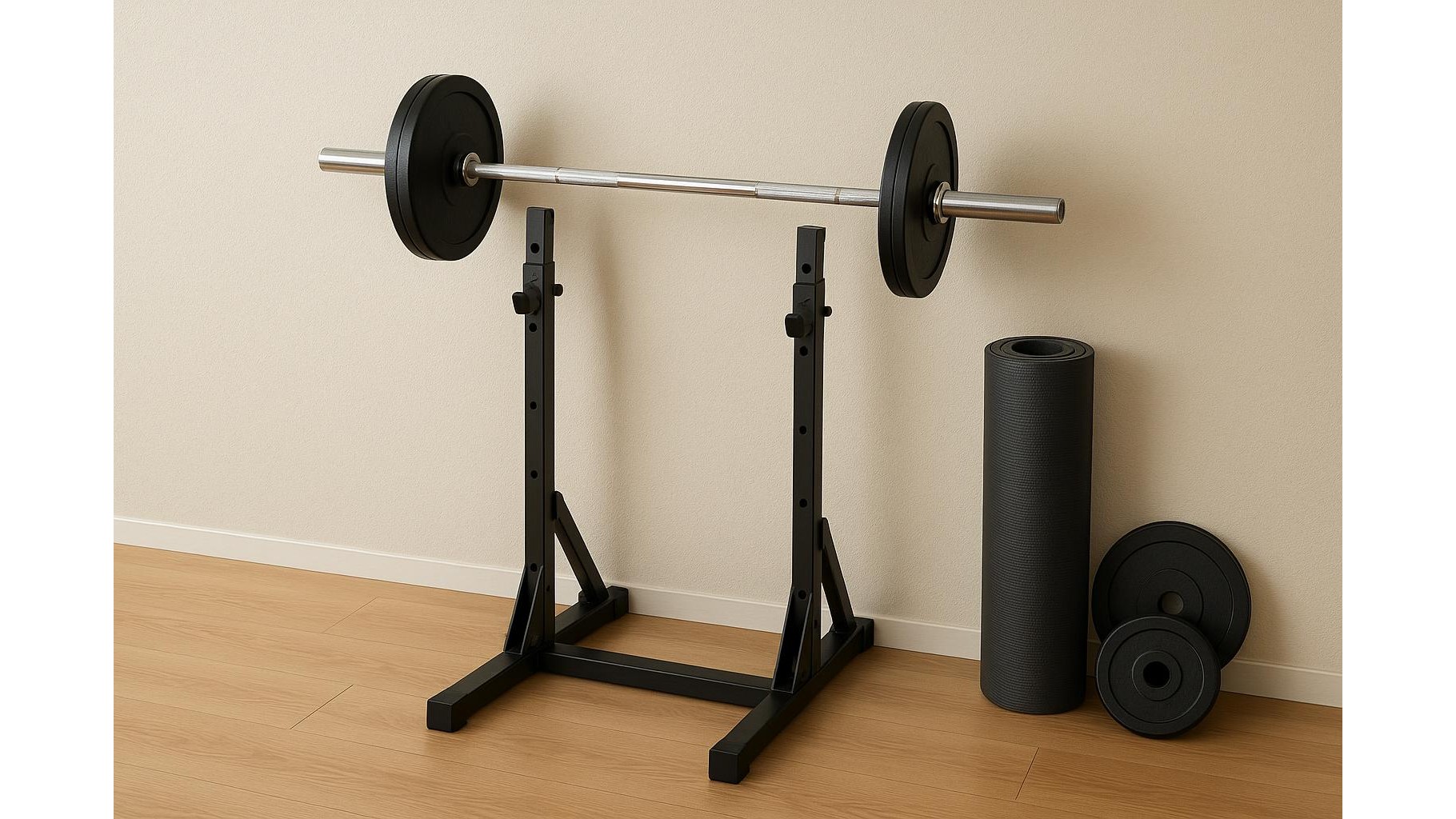
Designing a flexible home gym often comes down to how cleverly you use your floor space. Portable fold-out squat stands are a smart solution: they give you a stable base for squats, bench press and overhead work, yet can be folded away when you need the room for conditioning or yoga. Choosing the right model means balancing stability, adjustability and storage, while keeping a close eye on safety features and the footprint in your training area.
Why portable fold-out squat stands make sense at home
For most lifters training in a spare room, garage or living room, a full rack can feel like overkill. Fold-out squat stands offer a compact alternative that still supports serious lifting. Many designs fold flat or nest together so you can store them against a wall or in a cupboard after your session. This makes them ideal if you share the space with family or need to park a car. They also give you the freedom to reconfigure your layout quickly: roll out a mat for mobility, then bring the stands back for barbell work, keeping your home gym layout fluid and adaptable.
Key stability and safety features to look for
Stability is non‑negotiable when you put a loaded barbell on any kind of stand. Prioritise models with a wide base, anti‑tip design and clearly rated maximum load capacity. Look for thick steel tubing, quality welds and locking pins that engage firmly when the stands are open. Non‑slip feet help keep the uprights planted on smooth floors and protect your surface. If you plan to bench press, check that the J‑hooks or bar supports have a slight lip to prevent the bar from rolling off. It is also important to confirm that the stands can be locked securely in the unfolded position so there is zero risk of collapsing under load.
Planning footprint and storage in a flexible home gym
Before you buy, map out your training footprint. You need room not just for the stands, but also for the loaded barbell and space to walk out your squat. Measure the total width you will use: the stands, plus plates on each end of the bar. In a tight room, choose a design that folds flat and is easy to carry so you can store it behind a sofa, inside a wardrobe or along a garage wall. Consider the floor type too: on uneven concrete, a model with adjustable feet will help keep things stable. A good rule of thumb is that if you cannot move and rotate the stands easily with one person, they are probably too bulky for a genuinely portable setup.
Height adjustment for different lifters and exercises
Whether you are tall, short or sharing equipment with other lifters, height adjustment is crucial. Check that the stands offer enough range to cover low bar and high bar squats, overhead press and bench press for your body height. Clearly marked adjustment holes make it easier to repeat your preferred settings from session to session. Look for designs with close spacing between holes for more precise bar position, which can be especially helpful when benching. If multiple people use the home gym, you will appreciate quick‑release pins or levers that allow fast changes between lifters without tools, keeping your training flow smooth.
Practical safety checks before every session
Even with a solid design, you should build a routine of safety checks into every workout. Before you load the bar, verify that each stand is fully unfolded and locked, that the pins are properly seated and that the bar rests evenly on both sides. Give the uprights a firm shake to confirm they do not wobble. Check the floor under each foot for dust or moisture that could reduce grip. For heavier lifts, position the stands so you have clear space behind and to the sides in case you need to bail. Over time, inspect moving parts for wear and tighten any bolts that start to loosen. These simple checks keep a portable setup as safe and confidence‑inspiring as a fixed rack.
Choosing the right portable fold-out squat stands for your home gym is about understanding how you train and how your space is used day to day. Focus on a stable base, secure locking mechanisms, a footprint that matches your room, and enough height adjustment for every lifter and main barbell lift. Combined with consistent pre‑session safety checks, a well‑chosen pair of stands will let you squat, press and bench confidently, then fold everything away in minutes, keeping your home gym layout truly flexible.