Building a home gym is exciting, but nothing ruins the mood faster than clanging iron and bouncing plates waking up your kids or upsetting the neighbours. Choosing the right low-bounce bumper plates is one of the simplest ways to keep your lifting quiet while protecting your floor and equipment. This guide walks you through what matters most – from durometer rating to thickness, collar fit and plate diameter – so you can lift heavy at home without turning your flat into a war zone.
Why low-bounce bumper plates matter in a home gym
In a shared building or small house, every dropped barbell can sound like an earthquake. Low-bounce bumper plates are designed with denser rubber and tighter tolerances to reduce both rebound and noise. Compared with cheap, soft plates, quality bumpers spread the impact over a slightly longer time, which lowers the peak force transmitted to your concrete or wooden floor and produces a dull thud instead of a sharp crack. They also protect your barbell sleeves from damage. For Olympic lifts, deadlifts from blocks or rack pulls where controlled drops are common, investing in proper bumpers lets you train confidently without constantly worrying about complaints from the next room.
Understanding durometer rating and bounce level
The most important technical spec for low-bounce plates is the durometer rating, which measures rubber hardness on a Shore scale (usually Shore A). Higher durometer means harder rubber, less bounce and a more compact plate. For a neighbour‑friendly home gym, look for bumpers in the 88–94A range: this is hard enough to minimise rebound while still absorbing impact to protect your floor. Avoid very soft, crumbly recycled rubber plates if noise and bounce control are your priority; they may seem quiet, but their thickness and extra flex can create more wobble on the bar and inconsistent drops. When a manufacturer doesn’t list durometer, check reviews specifically mentioning “low bounce”, “hard rubber” and “competition-style” construction as quality proxies.
Plate thickness, bar loadability and storage in small spaces
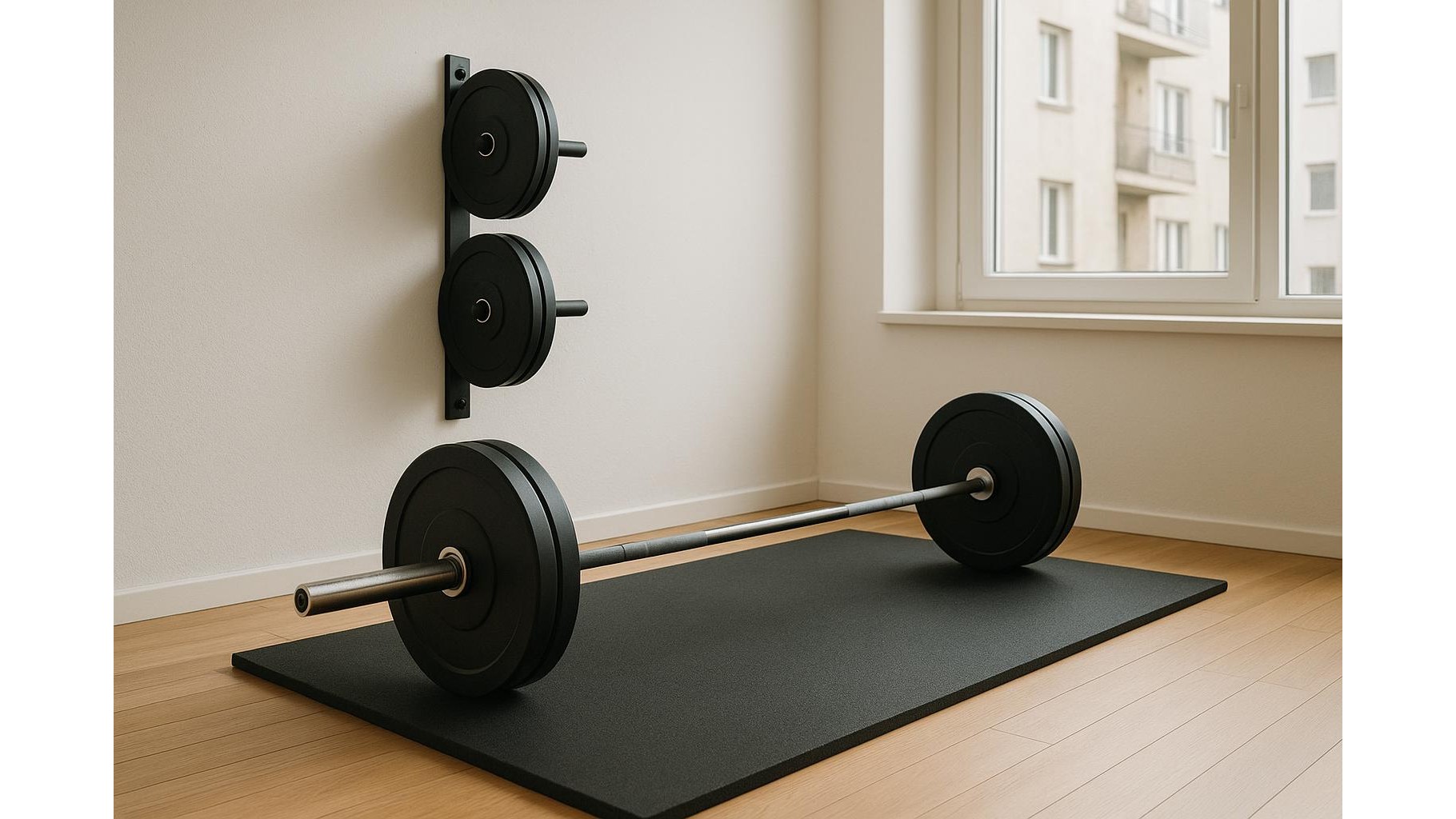
In compact home gyms, plate thickness is a bigger deal than most beginners realise. Thinner, denser bumper plates let you load more weight on the bar before running out of sleeve length, and they also take up less space on your storage tree or wall rack. High‑density training or competition‑style bumpers are typically much slimmer than budget hi-temp options, especially in heavier sizes (20–25 kg). For example, a good 20 kg bumper might be around 50–55 mm thick, whereas low‑cost recycled plates can exceed 70 mm. The thicker the plates, the more they tend to flex and wobble on the bar when dropped, which amplifies both vibration and noise. If you deadlift heavy or do Olympic lifts, prioritise a set with consistent thickness and a low overall stack height per side.
Collar fit, centre ring design and barbell compatibility
Another key feature for a quiet, stable barbell is how tightly the plates fit on the sleeve. Quality bumpers use a machined or pressed steel centre ring (or hub) with very tight tolerances around 50.4 mm, which minimises rattling and twisting when you move the bar. Loose, sloppy holes create metal‑on‑metal clank every time you pull from the floor or rerack a squat. Look for plates described as having a “tight collar fit” or “low tolerance” centre ring, and always pair them with a barbell that has standard 50 mm Olympic sleeves. Add proper locking collars for another small but important noise reduction: they keep plates firmly against the sleeve shoulder so they don’t slide and smack during your sets.
Diameter, training style and protecting your floor
Standard bumper plate diameter for Olympic lifting and CrossFit‑style training is 450 mm. This ensures the barbell sits at the correct starting height for deadlifts and cleans, and it spreads the impact over a larger surface area when you drop from hip or shoulder height. Mixing full‑diameter bumpers with smaller iron plates can work, but iron should always be inside the bumpers so the rubber takes the hit. To further protect your floor and reduce noise, combine low‑bounce plates with rubber flooring or lifting mats of at least 10–20 mm thickness, and consider a simple DIY platform using plywood and stall mats if you lift very heavy. The right diameter, combined with good flooring, is your best defence against cracks in concrete and unhappy downstairs neighbours.
Balancing budget, durability and performance
When choosing bumper plates for a home gym, it’s tempting to buy the cheapest set, but that usually means softer rubber, thicker plates and sloppy hubs – all enemies of quiet, controlled lifting. Instead, think in terms of long‑term value: a moderately priced, high‑durometer set with solid steel inserts will outlast multiple budget sets while offering better noise control and bar stability. Start with the weights you actually use most (for example, pairs of 5, 10 and 20 kg) and add more over time. Check for consistent diameter across all sizes, published durometer ratings, and honest customer feedback on bounce and smell. With a bit of research, you can assemble a compact, durable and neighbour‑friendly home gym that lets you train hard at any hour without sacrificing your relationships with the people on the other side of the wall.
In summary, choosing the right low-bounce bumper plates is about more than colours and logos: it comes down to durometer rating, plate thickness, collar fit and standard diameter, supported by proper flooring. Prioritising these factors will keep your bar stable, your floor safe and your training sessions impressively quiet, so you can focus on getting stronger instead of worrying about the noise every time the barbell hits the ground.