Building stronger glutes at home has never been easier, and the humble hip circle band is one of the most effective tools you can add to your home gym. Compact, affordable and versatile, these small loops of resistance can completely change how your lower-body sessions feel. Choosing the right model, however, is essential if you want enough resistance, good comfort and long‑term durability.
Why hip circle bands are essential for glute work
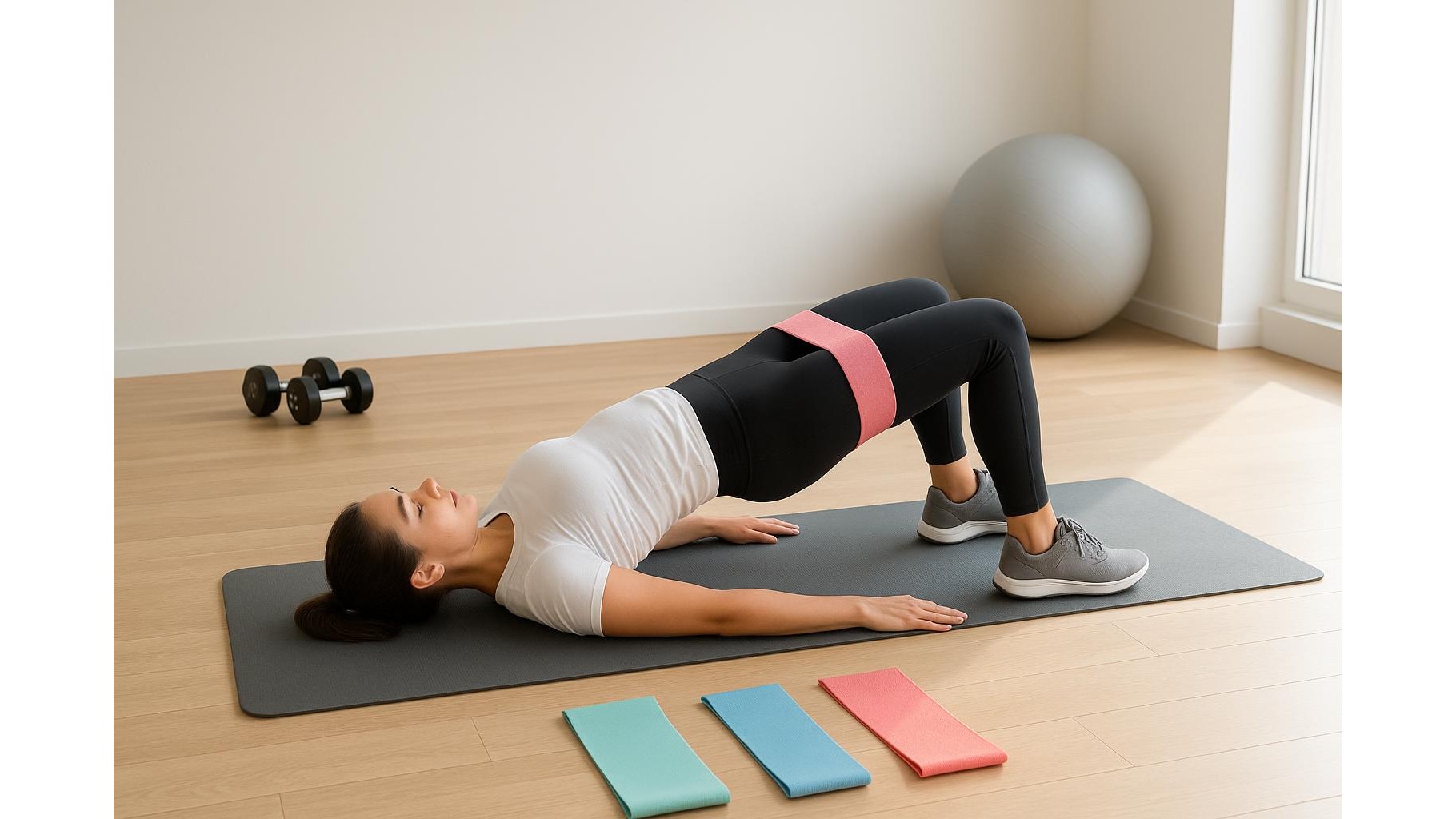
Hip circle resistance bands are designed to sit above or below the knees and create outward tension as you squat, hinge or walk. This forces the glute medius and glute maximus to switch on, helping to correct knee collapse, improve hip stability and increase muscle activation. For home workouts, they are ideal because they take up zero space, weigh almost nothing and can be used alone or combined with dumbbells and barbells. A good hip band lets you scale simple bodyweight moves like squats, bridges and lateral walks into genuinely challenging strength work.
Fabric vs latex hip bands: which material is better?
When choosing a hip circle band for glute training, you will mainly see two families: fabric bands and latex bands. Fabric hip bands are usually made from a cotton or polyester blend with woven elastic. They tend to be wider, more comfortable on the skin and much less likely to roll up during squats or crab walks. Latex loop bands are thinner and can offer a more gradual stretch, but they are also more prone to snapping, rolling and irritating the skin. For most home gym users who prioritise comfort and durability over ultra‑precise resistance steps, a high‑quality fabric hip circle is the better choice, especially for high‑rep glute work.
Choosing the right resistance level for your goals
Many hip circle sets come with multiple levels such as light, medium and heavy. A common mistake is jumping straight to the heaviest band, which often leads to poor form and minimal glute activation, as the hip muscles cannot achieve full range. For warm‑ups, dynamic mobility or long glute activation sets, a lighter band is usually ideal. Medium resistance works well for most people during squats, deadlift variations and hip thrusts, while heavier bands are better suited to static holds or advanced users. If you are just building your home gym, look for a set with at least three clearly labelled resistances so you can progress over time without constantly buying new bands.
Getting the right size for your body type
Unlike long resistance bands, hip circle bands are fixed‑loop designs, so sizing matters. Bands that are too tight can dig into the thighs, limit your movement and encourage compensation through the lower back. Bands that are too loose, on the other hand, may provide almost no challenge, especially in side steps and abduction work. Many brands use simple S/M/L sizing charts with approximate thigh or hip measurements; if you are between sizes, choosing the larger option is often more comfortable. For shared home gyms, a set that includes different circumferences as well as different resistances ensures that everyone can find a band that fits well and stays flat during movement.
How to integrate hip circle bands into home lower‑body workouts
To make the most of your hip circle band, slot it into your existing lower‑body training as both a warm‑up and a main tool. Use a light band above the knees for exercises like glute bridges, monster walks and bodyweight squats before you lift heavier loads; this wakes up the hip stabilisers and encourages better knee tracking. During your main sets, a medium band can be worn in the same position for goblet squats, split squats and hip thrusts to increase lateral tension. Always focus on pushing the knees slightly out against the band rather than letting it pull them inward. Finish your session with high‑rep banded abductions and lateral walks to fully fatigue the glutes without stressing the lower back.
In summary, selecting the right hip circle bands for glute training in a home gym means paying attention to material, resistance and sizing rather than just price or colour. Fabric bands generally offer the best blend of comfort and durability, while a small range of resistance levels allows you to warm up, train hard and progress safely. Choose a size that suits your body type, prioritise smooth movement over maximum tension, and integrate the band into both activation drills and main strength sets. With a considered choice and consistent use, a simple hip circle can significantly boost your glute gains and overall lower‑body stability.