When you build a home gym, your barbell becomes the tool you touch most. Yet many lifters focus only on load capacity and spin, overlooking barbell knurling—the textured pattern that dictates grip, comfort and callus formation. Choosing the right knurl for a garage or spare‑room setup can mean the difference between confident pulls and shredded hands. This guide breaks down knurl patterns, aggressiveness, coatings and whether you really need a centre knurl for the way you train at home.
What barbell knurling actually does
Knurling is the cross‑hatched or patterned texture machined into the bar to increase friction between your hand and the steel. On heavy compound lifts—deadlifts, rows, presses—good knurl lets you focus on driving the weight instead of squeezing for dear life. In a home gym, where you might train without chalk or on hot days in the garage, knurling has to balance grip and comfort. Too passive and the bar will slip as you sweat; too aggressive and you will chew up your palms, making frequent sessions or desk work afterwards uncomfortable. Unlike commercial gyms where you can just grab another bar, your home bar has to be a true all‑rounder.
Types of knurl patterns and how they feel
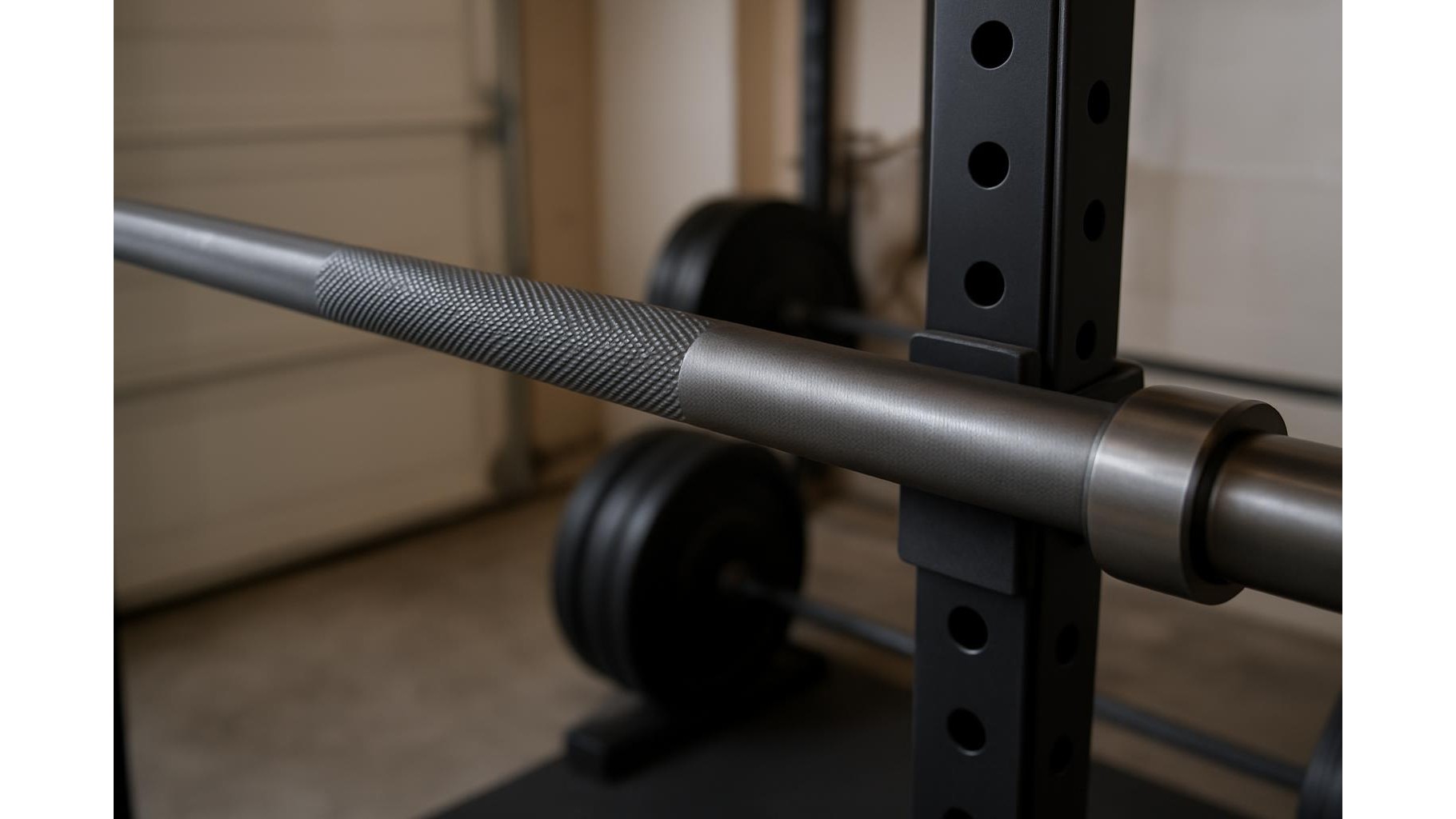
Most barbells use a volcano, mountain or hill style knurl. Mountain knurling has sharp peaks that bite into the skin; it is excellent for max deadlifts but can be brutal during high‑volume sets. Volcano knurling softens those peaks into tiny craters, spreading force over a slightly larger area; this gives serious grip with less tearing, which is ideal for mixed training in a home setup. Hill knurling is much smoother with rounded bumps—more comfortable but often too slippery once hands or bar get sweaty. For most home lifters who do a mix of presses, pulls and some Olympic variations, a medium‑depth volcano pattern is a smart compromise, offering security without feeling like sandpaper.
Centre knurl or no centre knurl for home use?
The centre knurl is a small band of knurling in the middle of the bar. On powerlifting bars it helps the bar grip your upper back during low‑bar squats, preventing sliding. This is valuable if you squat heavy, use minimal chalk and have a slick shirt. However, in a home gym where you may also perform front squats, cleans or high‑rep workouts, centre knurl can rub harshly on your neck and collarbones, causing irritation. If your training is squat‑heavy with mostly low‑bar positioning, a mild centre knurl makes sense. If you focus on Olympic lifts, CrossFit‑style sessions or general strength, a barbell without centre knurl—or with a very passive strip—will be kinder to your skin and more versatile on the same small training space.
Aggressiveness, calluses and frequency of training
The aggressiveness of knurling comes from the depth and sharpness of the cuts. Aggressive knurl locks in your grip but will rapidly build calluses and can cause tears, especially during volume deadlifts or conditioning. In a commercial gym you might only hit heavy pulls once or twice a week, but in a home gym it is common to grab the bar almost daily for shorter sessions. That higher frequency rewards a medium knurl: enough bite to feel secure without punishing your hands. If you already have office or delicate hands, choose a moderate pattern and manage grip by using chalk or liquid chalk for heavier sets rather than jumping straight to a powerlifting‑sharp bar that makes every warm‑up feel like a cheese grater.
How coatings change grip and comfort
Barbell coatings dramatically affect how knurling feels. Bare steel gives the best raw grip and a very tactile knurl, but it demands regular oiling in a garage to prevent rust. Black oxide keeps much of that feel with mild corrosion resistance, while zinc or hard chrome smooth the bar slightly and can make already passive knurl feel even milder. Modern cerakote bars add strong rust protection and colour options, but the coating fills in some of the knurl depth—good if you want a softer touch, not ideal if your hands run sweaty and you avoid chalk. When choosing for a home gym, match coating to both your climate and your grip needs: humid garage lifters will appreciate corrosion resistance, while those training indoors might prioritise raw feel and feedback through the knurl.
Putting it all together for your home gym
To choose barbell knurling that truly fits your home gym, start from how you train, not from marketing labels. If you mainly deadlift heavy and compete in powerlifting, a more aggressive knurl and light centre knurl may be worth the skin trade‑off. If you chase general strength, bodybuilding and conditioning, a medium volcano‑style knurl, possibly without centre knurl, will support long sessions without wrecking your hands. Factor in coating based on your storage conditions, and remember that small design choices—knurl depth, pattern and centre strip—will dictate how often you actually enjoy grabbing the bar. Choose wisely once, and you will have a bar that feels like an extension of your hands for years of home training.