Building a compact home gym often means relying on a cable machine to cover as many movements as possible. Adding the right ankle strap attachments for cable machines can unlock targeted work for your glutes, hamstrings and hip stabilisers without taking up extra floor space. This guide walks you through what to look for in comfortable, durable ankle straps so you can train safely and efficiently at home.
Why ankle straps matter in a home gym setup
In a home gym, every accessory has to earn its place. Ankle straps for cable machines are small, but they dramatically expand what you can do with a single stack or pulley tower. With a good pair of straps you can perform hip abductions, kickbacks, leg curls and adductor work without adding bulky machines. The right attachment keeps the load distributed around your ankle and lower leg, reducing pressure points and allowing you to focus on muscle activation. Poorly made straps, by contrast, dig into the skin, twist under load and can even slip off mid‑set. Prioritising quality here means more comfort, better consistency and less risk of irritation or strain around the ankle joint.
Key features to look for: comfort, padding and fit
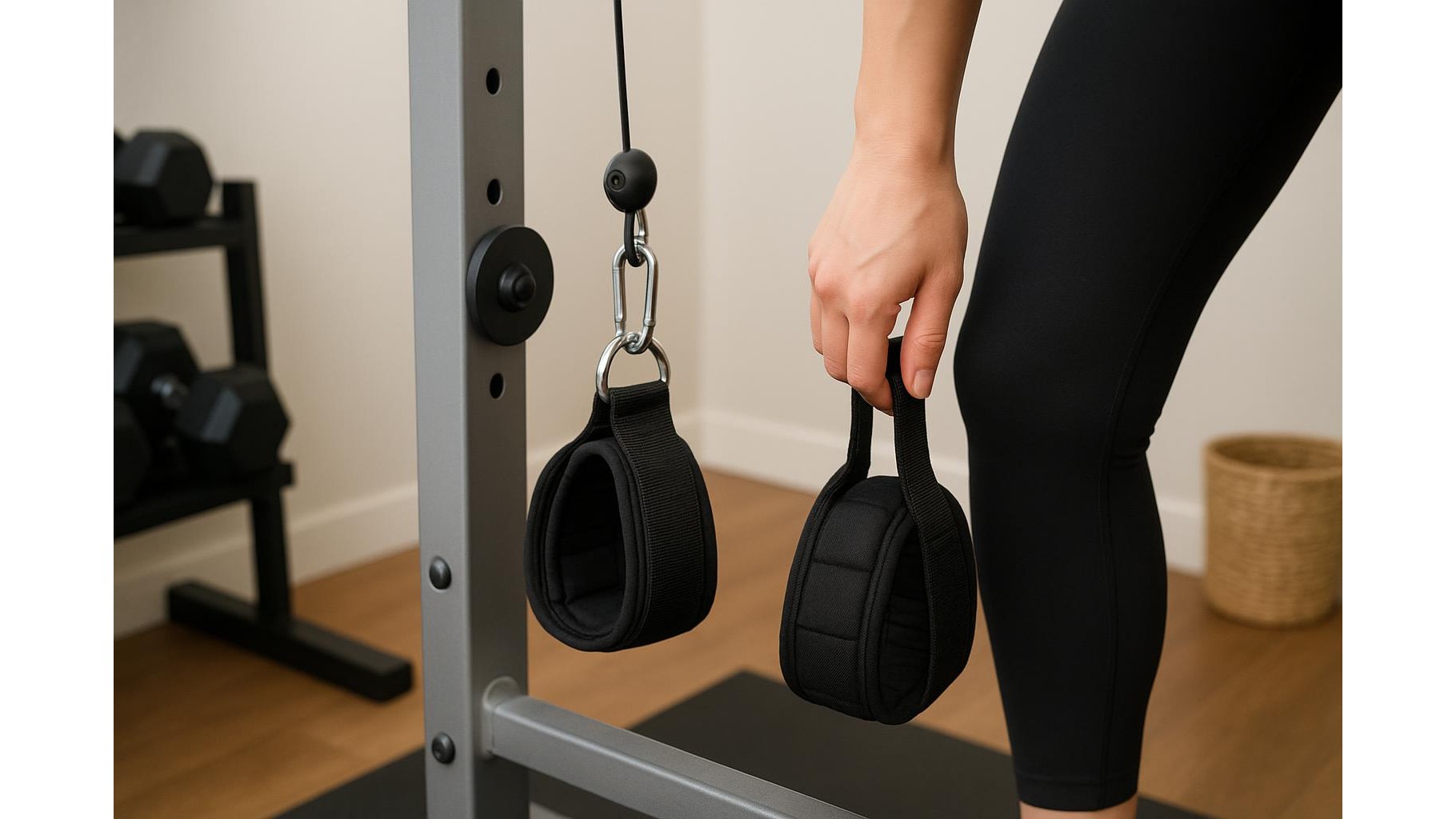
Comfort is the first box to tick when choosing ankle strap attachments. Look for models with generous neoprene or foam padding that wraps fully around the ankle rather than a thin strip that concentrates pressure. A wider cuff spreads the load and helps avoid bruising, especially at higher cable weights. The closure system also matters: heavy‑duty hook‑and‑loop (Velcro) with a long adjustment range will accommodate different ankle sizes and let you wear the straps over socks or leggings. For home users who train several times per week, breathable materials are a plus, as they reduce sweat build‑up and are easier to wipe down after sessions. A secure but comfortable fit should feel snug without cutting into the Achilles tendon or front of the ankle.
Durability, hardware and safety considerations
Home gyms may not see commercial‑gym traffic, but your cable ankle straps still need to survive thousands of reps. Focus on double‑stitched seams, strong nylon or reinforced fabric and robust metal hardware. Many quality straps use D‑rings as connection points; ideally, there will be two rings so the force is shared evenly and the strap stays aligned with the cable during movements like kickbacks. Avoid flimsy plastic clips that can crack under tension. Check the manufacturer’s suggested weight rating if available, and choose straps that clearly state they are suitable for heavy cable work. Durability is not only about lifespan: secure stitching and strong rings also prevent sudden failures that could cause you to lose balance or strain a hip while the stack is loaded.
Choosing straps for specific goals: glutes, hamstrings and hips
Your training goals should guide your choice of ankle cable attachments. If your main focus is glute training – kickbacks, diagonal kickouts and hip extensions – look for straps that sit a bit higher on the lower leg, with a taller cuff that resists twisting as you drive the leg back. For hamstring curls, you want a strap that hugs just above the heel so the cable tracks smoothly through the range of motion. If you’re targeting hip stabilisers with abduction and adduction work, a snug, symmetrical fit is crucial: here, dual D‑rings and a well‑padded inner surface minimise rotation and keep your knee tracking correctly. In all cases, make sure the strap can be adjusted quickly so you can swap it between legs and users without disrupting your training flow.
Practical tips for use, setup and maintenance
Once you’ve chosen your ankle straps for home gym cable machines, a few habits will help you get the most out of them. First, take time to adjust the strap so it does not slide down during the set; overly loose straps increase shear on the skin and make form harder to control. Start with lighter loads when trying new angles or exercises to make sure the strap and cable path feel secure. For compact setups using single‑pulley stations or functional trainers, consider keeping the straps clipped to a carabiner near the machine so they are always within reach. After each session, quickly wipe the padding with a damp cloth and let it air‑dry to prevent odour and breakdown of the materials. Inspect stitching and D‑rings periodically so you can replace the straps before wear becomes a safety issue.
Balancing quality and budget in a compact home gym
Because ankle strap attachments are relatively low‑cost compared with larger machines, it makes sense to invest slightly more for better comfort, materials and hardware. In a small home gym, you want accessories that feel good enough to use frequently so you actually get value from your cable station. Look for pairs sold together rather than single straps, as using one on each leg can speed up supersets and circuits. Read product descriptions carefully for details on padding thickness, fabric type and closure length rather than choosing purely on price. By prioritising fit, durability and compatibility with your cable machine, you’ll add a versatile, space‑efficient tool that supports progressive lower‑body training for years to come.
Well‑chosen cable machine ankle straps make it far easier to train glutes, hamstrings and hip stabilisers effectively in a tight home space. Focus on padded comfort, strong construction and goal‑specific design so you can perform a wide range of lower‑body movements without discomfort or safety worries. A small upgrade in this one accessory can significantly improve the quality and variety of your home leg workouts, helping you get more from the equipment you already own.