Building a home gym in a tight space means every piece of equipment has to work harder for you. A good alignment-marked training mat does more than cushion your joints: it gives you visual guides to place hands, feet and knees consistently, helping you improve form in strength training, yoga and mobility sessions. This guide explains what to look for in a non-slip mat with printed alignment lines so you can train safely and efficiently at home.
Table of contents
Why alignment markings matter for home workouts
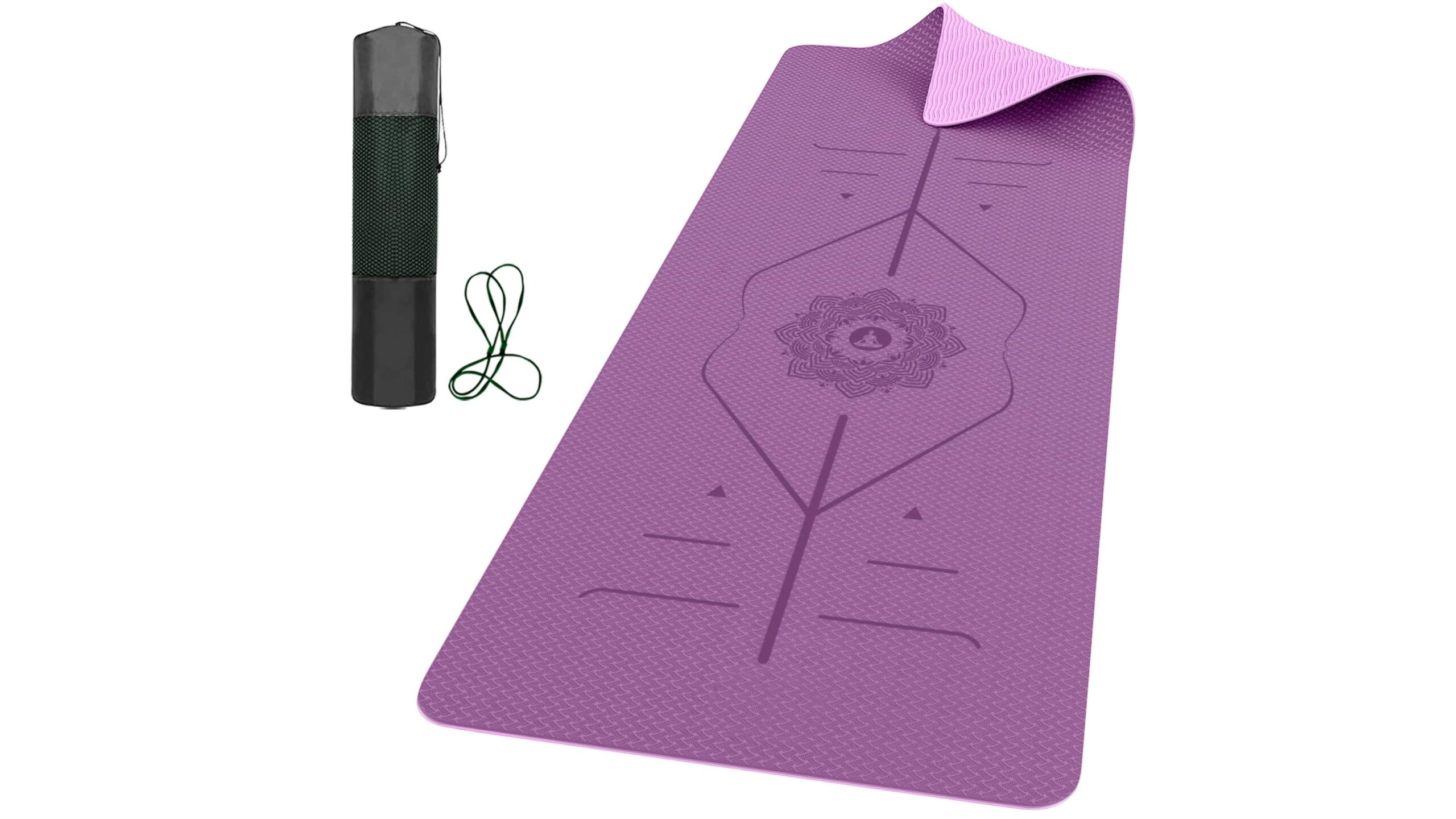
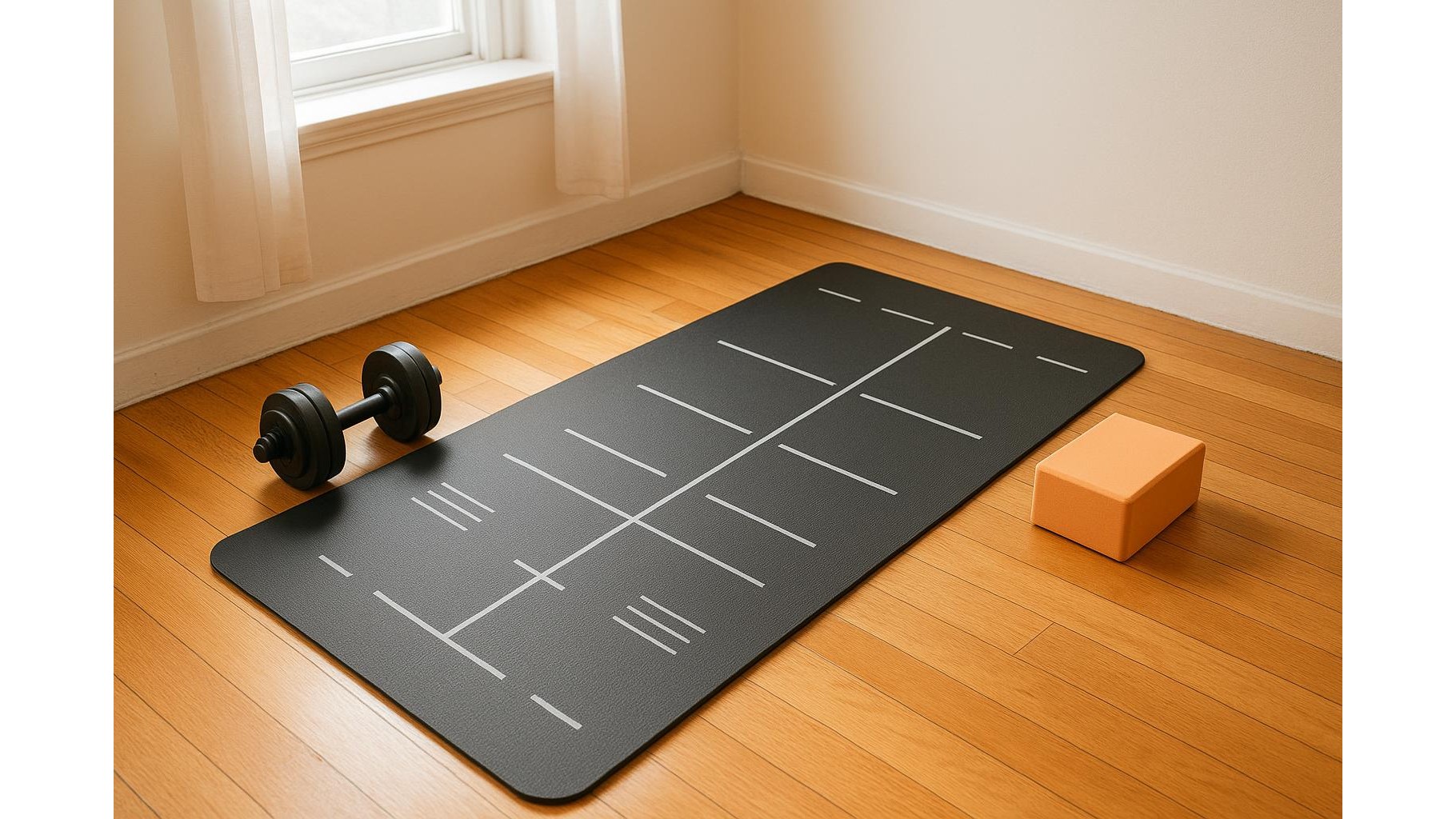
When you train alone at home, you do not have a coach walking around you to correct your posture. An alignment-marked training mat acts as a built-in coach, giving you reference lines and zones for key positions: shoulder-width stance, hip-width foot placement, and even hand distance in push-ups or planks. These printed alignment guides help you avoid common mistakes like uneven foot spacing in squats or twisted hips in lunges. Over time, the visual feedback improves your body awareness, making it easier to reproduce solid technique on any surface, not only on the mat.
Key features: grip, thickness and material
The first thing to check in a home gym mat is grip. You want a non-slip surface on top and a stable base underneath so the mat does not slide on tiles or laminate during dynamic moves like mountain climbers or burpees. Look for materials such as TPE or dense natural rubber, which balance traction with comfort. Thickness matters too: around 4–6 mm is a sweet spot for mixed use, offering enough joint protection for kneeling or floor presses without becoming wobbly for single-leg work. If you mainly practise restorative yoga or mobility, a slightly thicker mat can be more comfortable, whereas heavy strength work benefits from a firmer, denser mat.
Understanding alignment lines, zones and scales
Not all alignment graphics are equal. A good alignment system is clear but not distracting. Look for central lines that run the length of the mat to help you centre your body in poses like downward dog, bridges and dead bugs. Horizontal markers across the mat are useful for tracking hand and foot width in squats, push-ups and presses. Some mats feature zones or target points for feet and hands, making it easier to repeat your set-up every session. Scales or subtle measurement markers along the edges are helpful if multiple people use the mat, or if you want to track gradual stance changes as your mobility improves.
Size, storage and home gym practicality
In a compact home gym, you need to balance mat size with available floor space. A standard width is usually fine, but if you do a lot of side lunges or wide stance work, an extra-wide mat gives more freedom while still defining a training zone. Choose a length that allows you to lie fully extended without hanging off the edges, especially important for core work and stretching. Consider storage too: a mat that rolls tightly and includes straps is easier to tuck behind a sofa or in a cupboard. If your space doubles as a living room or bedroom, a mat with low-profile alignment graphics in neutral colours blends in better while still offering the guidance you need.
How to match your mat to your training style
Your ideal alignment-marked training mat depends on how you train. For strength and conditioning, prioritise stability and durability: a firmer mat with clear, simple alignment lines helps with squats, deadlifts with light weights, presses and core drills. For yoga and Pilates, choose a mat with more detailed pose guides and excellent grip for standing and balancing postures. If you focus on mobility and rehab, extra cushioning and high-contrast lines that are easy to see from the floor can be helpful. Whatever your style, check that the markings support your movements without overwhelming the surface with busy graphics.
Choosing the right alignment-marked training mat for your home gym is about more than aesthetics. By prioritising non-slip materials, appropriate thickness, clear alignment lines and zones, and a size that fits your space, you can turn a simple mat into a precise training platform. This small upgrade can dramatically improve your form, boost consistency across sessions and make your home workouts feel more professional, even if you are training in the corner of a bedroom.