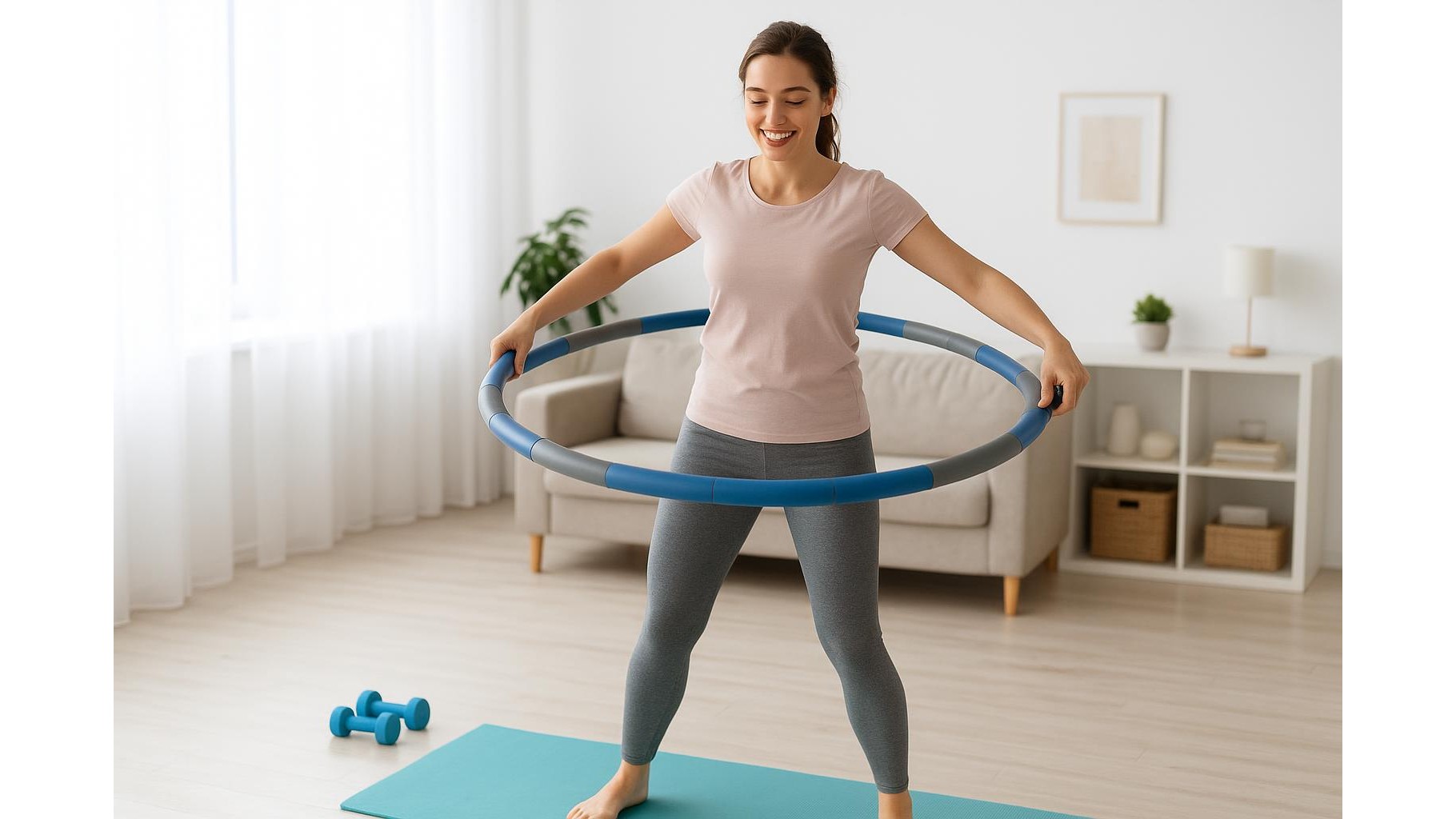
A foldable weighted hula hoop can be a smart addition to your home gym if you want low‑impact cardio, core activation and a fun way to move more. Unlike old‑school plastic hoops, today’s models pack small, click together in seconds and come in different weights to match your goals, from gentle mobility to more intense fat‑loss routines.
Why a foldable weighted hula hoop is ideal for home use
For home workouts, space and noise matter. A foldable weighted hula hoop disassembles into compact segments you can store in a drawer or gym basket, making it ideal for small flats or shared spaces. The added weight creates more muscle engagement through your core, hips and glutes without the joint impact of jumping or running, so it suits beginners, postpartum users (with medical clearance) and anyone returning from a break. Foldable designs are also travel‑friendly: you can pack a hoop in your suitcase, reassemble it in your hotel room and keep your low‑impact cardio habits on track wherever you are.
Choosing the right weight and size for your body
The most important factors are hoop weight and diameter. Lighter hoops (around 0.9–1.2 kg) are kinder to beginners, smaller frames and anyone who bruises easily. Heavier options (1.5–2 kg and above) add more resistance but can be uncomfortable and are not automatically better for fat loss—fat‑burning depends more on session length and consistency. As a rule of thumb, the hoop’s top edge should sit roughly between your waist and mid‑chest when held upright; larger diameters rotate more slowly and are easier to keep spinning. If you are new, prioritise comfort and control over maximum weight. A slightly lighter, larger hoop that you can keep going for 10–15 minutes will deliver more usable training than a very heavy model you can only manage for 30 seconds.
Materials, padding and comfort features to look for
Most weighted hula hoops for home use combine a firm plastic core with a padded outer layer. Look for thick, high‑density foam or soft rubber that feels stable but forgiving on your hips and ribs. Poor‑quality padding compresses quickly and can expose hard plastic, increasing the chance of bruising. Textured or wave‑shaped inner surfaces can give extra grip and stimulation, but very pronounced ridges may feel harsh if you are sensitive. Check that segments lock together securely without wobble and that the surface is easy to wipe down after sweaty core workouts. If you plan to share the hoop with family members, a more moderately contoured, generously padded model usually offers the best balance of comfort and durability.
Adjustability, storage and practical home‑gym details
A key benefit of a foldable hoop is adjustability. Many models let you remove or add sections to change the circumference, which effectively customises the fit for different heights and waist sizes. This is useful if more than one person will use the hoop or if you want a slightly smaller, faster‑spinning setup as your skill improves. Consider how the segments connect: push‑button systems are quick but should click audibly and feel secure; twist‑lock designs can be sturdier but slower to assemble. For storage, count how many pieces the hoop breaks into and whether it comes with a carry bag to keep your home gym tidy. Since you’re training at home, think about flooring too: using the hoop on a non‑slip surface, with enough clearance around you, makes sessions smoother and safer.
Matching your hoop to fat‑loss, core work or gentle mobility
Your primary goal should guide your choice. For fat‑loss and cardio, prioritise a hoop that feels comfortable enough to use for 15–30 minutes at a time—usually a medium weight with a stable, well‑padded design—so you can maintain regular, slightly breathless sessions. For focused core training, look for a model that challenges your stability without causing pain, then combine basic hooping with rotations, changes of direction and simple lower‑body moves such as side steps or squats. If you mainly want gentle mobility and mind‑body benefits, choose the lightest, softest hoop you enjoy spinning and use it as a warm‑up or active recovery tool, focusing on relaxed breathing and smooth hip circles. Whatever your goal, consistency beats intensity: a hoop that fits well, stores neatly and feels inviting to pick up will support your home‑workout routine far better than a heavy, intimidating one that gathers dust.
In summary, the best foldable weighted hula hoop for your home gym is one that matches your body, your space and your training goals. Balance weight and diameter so you can hoop for longer without discomfort, favour quality materials and solid padding, and choose an adjustable, easy‑to‑store design that suits your environment. With a thoughtful selection, you’ll have a low‑impact, joint‑friendly tool that makes daily movement more enjoyable and keeps your core, hips and cardio work on track from the comfort of home.